
Introduction
The financial freedom sounds like a finish line, but for most people it feels more like a daily steering wheel.
One month you’re focused on bills, the next month you’re saving, and then something unexpected hits.
That’s normal.
The key is building enough control and resilience that money stops running your life.
So what does financial freedom mean in everyday terms?
It usually means you can cover your essentials, handle surprises, and still move toward your goals without constant panic.
And that “freedom” doesn’t arrive as one big milestone.
It’s a system you set up over time: spending rules, an emergency buffer, smart debt payoff, and consistent investing.
When these pieces work together, your choices get wider.
Key Takeaways
- Financial freedom means covering essentials, handling surprises, and still progressing toward goals without constant money panic.
- Define a measurable Freedom Budget using real monthly expenses, then map it to time, income, and independence goals.
- Build cash-flow control by tracking spending, categorizing needs/wants/future goals, and setting an emergency fund target that fits your risk.
- Prioritize high-interest debt to reduce ongoing drains and opportunity cost; choose snowball or avalanche and stick with it consistently.
- Invest consistently with a plan matched to your timeline and risk tolerance, so you don’t panic-sell during market swings.
Define your financial freedom target
Before you chase financial freedom, you need a clear target you can actually measure.
Start by choosing what you want most: more time, more income, or more independence.
Time freedom might mean you can cut back work hours.
Income freedom often means your investments or side income cover more of your monthly needs.
Independence is about not being forced into bad decisions when life changes.
Next, estimate your “Freedom Budget” using real monthly expenses, not wishful thinking.
Take your current essentials – housing, utilities, groceries, transportation, and minimum debt payments – and estimate a realistic monthly amount you’d need to live comfortably.
Then add a small, steady allowance for goals like travel, helping family, or career learning.
If your freedom plan can’t be expressed in monthly numbers, it’s hard to stick to.
- Time: decide which lifestyle changes reduce your required work.
- Income: decide how much passive or side income you need.
- Independence: decide what financial stress you want to eliminate.
Build a foundation with cash flow control
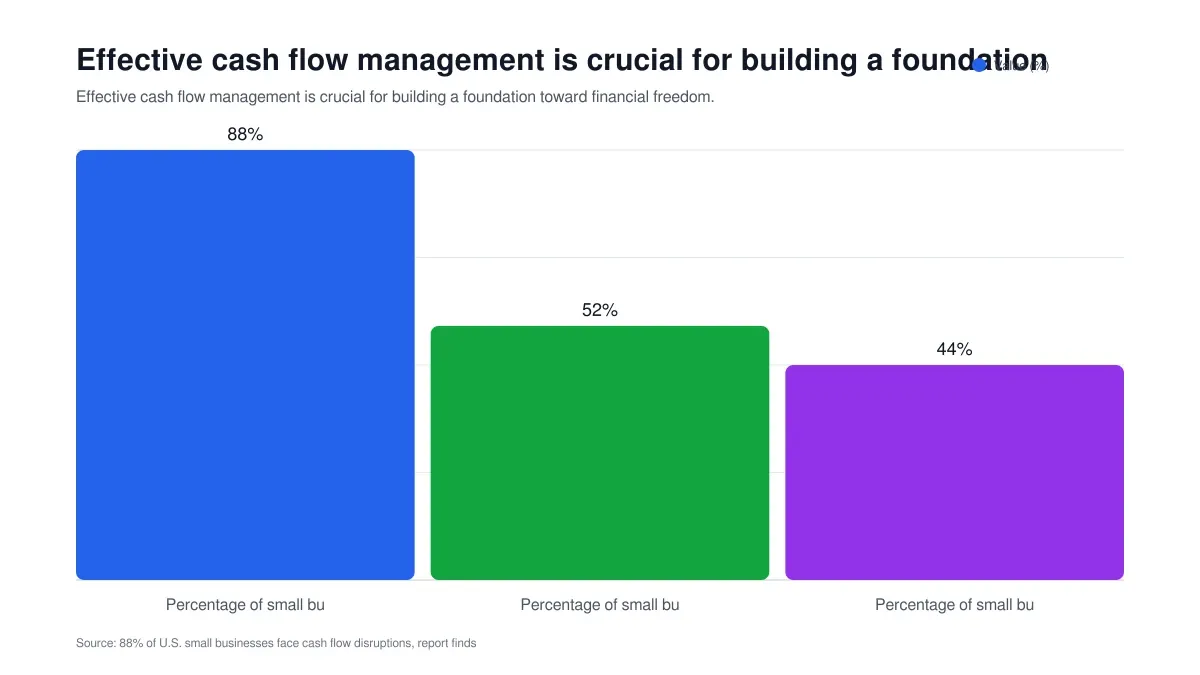
If your cash flow is chaotic, it’s hard to build financial freedom.
That’s why you should track spending first, even if you already “have a budget in your head.” Put your transactions into categories and look for patterns: what’s truly necessary, what you can trim, and what you keep paying because you forgot it existed.
Cash flow control isn’t about being perfect.
It’s about being aware.
Then separate spending into needs, wants, and future goals. Needs are the bills that keep you housed and fed.
Wants are everything else you enjoy.
Future goals are the spending you do on purpose – like saving, investing, or building a fund for a down payment or education.
When you treat future goals like a bill, you stop relying on luck.
Now create an emergency fund plan that fits your risk level.
If your job or income is stable, you may need a smaller buffer.
If your income varies, you’ll likely want more.
A good rule of thumb is to start with a realistic first target, then grow it steadily.
A cash buffer is what keeps a job loss or surprise expense from turning into debt.
- Start small, then increase your target as your budget improves.
- Keep the emergency money in a place that’s accessible but not easy to spend impulsively.
Eliminate debt that blocks progress
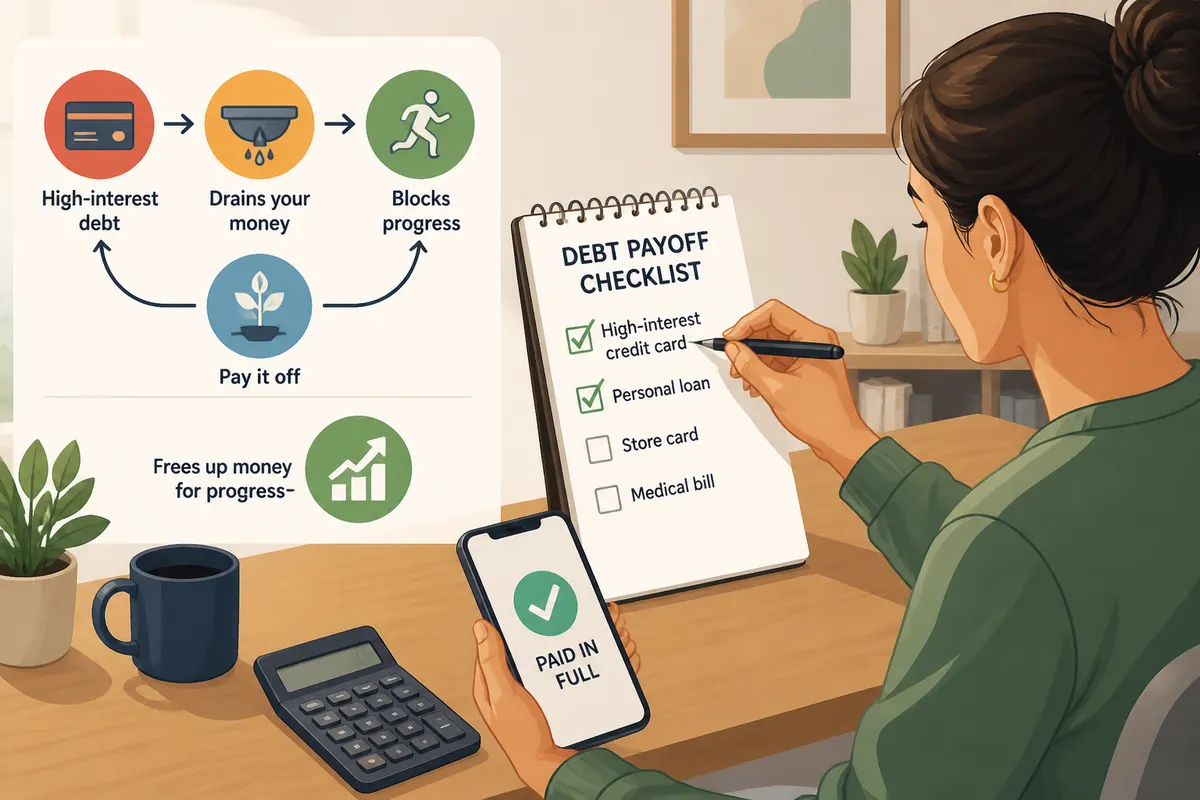
Debt can quietly steal your momentum.
Even if it doesn’t feel urgent, high-interest debt can become an ongoing drain that makes saving and investing harder.
That’s why you should prioritize high-interest debt first.
It’s not just math, either – it’s opportunity cost, meaning the chance to use your money for progress instead of interest charges.
When you’re choosing how to pay off debt, you’ve got two popular methods: snowball and avalanche.
Snowball focuses on paying off the smallest balance first, which can boost motivation quickly.
Avalanche targets the highest interest rate first, which often reduces total interest paid.
Which one should you choose?
Pick the method you’ll follow consistently, because consistency beats “perfect” strategy.
| Payoff Method | How It Works | Best For | Main Tradeoff |
|---|---|---|---|
| Snowball | Pay minimums on all debts, then attack the smallest balance. | You need quick wins to stay motivated. | Total interest reduction may be slower than avalanche. |
| Avalanche | Pay minimums on all debts, then attack the highest interest rate. | You’re comfortable staying focused without early payoff. | Motivation can dip while you tackle bigger balances. |
Also, watch for debt “creep.” Cut spending that funds interest, pause new borrowing, and set a payment date you can automate.
Your goal isn’t just to pay balances down – it’s to stop debt from returning.
Invest consistently for long-term independence
Investing is where financial freedom often starts to feel real.
But you don’t need to guess the market to move forward.
You need a plan to invest consistently, aligned with your timeline and comfort with risk.
Think of risk tolerance as how much ups and downs you can handle without panicking and selling at the worst moment.
Match investments to your timeline and risk tolerance.
If you’ll need money soon, you generally want lower-volatility options.
If you can leave money alone for years, you can often handle more market movement.
Don’t let headlines push you into changes you can’t explain to yourself later.
Also, use diversification and low-cost approaches to reduce surprises. Diversification means spreading your money across different assets so one poor performer doesn’t wreck your plan.
Low-cost investing matters because fees compound too.
If your investments cost less to hold and manage, more of your return stays with you.
- Pick a consistent contribution schedule, like monthly automatic investing.
- Diversify across assets, not just companies or “hot trends.”
- Review occasionally, but avoid frequent trading based on fear or excitement.
Finally, remember that investing doesn’t replace emergency savings or debt payoff.
Instead, it builds long-term independence after you’ve reduced the risks that force bad decisions.
Increase earning power and protect your capacity

Even with smart budgeting and investing, your path to financial freedom improves when your earning power grows.
That doesn’t always mean switching careers overnight.
Often, it’s about building skills you can use immediately, creating proof of your impact at work, and looking for roles that pay closer to your value.
Small raises and better opportunities can make a big difference over time because they feed every other step.
You can also grow income through value creation on the side – if your schedule allows it.
Think of freelancing, consulting, or monetizing a useful skill you already have.
The point is to earn more without increasing stress beyond what your budget can handle.
If your side income needs too much energy, it can backfire.
At the same time, protect your financial future with insurance and contingency planning.
That means understanding what could financially derail you – like major health issues, disability, or property damage – and making sure you’re not fully exposed.
You don’t need every possible policy.
But you do need a plan that matches real risks in your life and family.
Your budget is your plan.
Insurance is how you protect that plan when the unexpected happens.
While you’re at it, build contingency plans for income gaps and big expenses so you don’t reach for credit cards under pressure.
Maintain progress with a measurable freedom plan
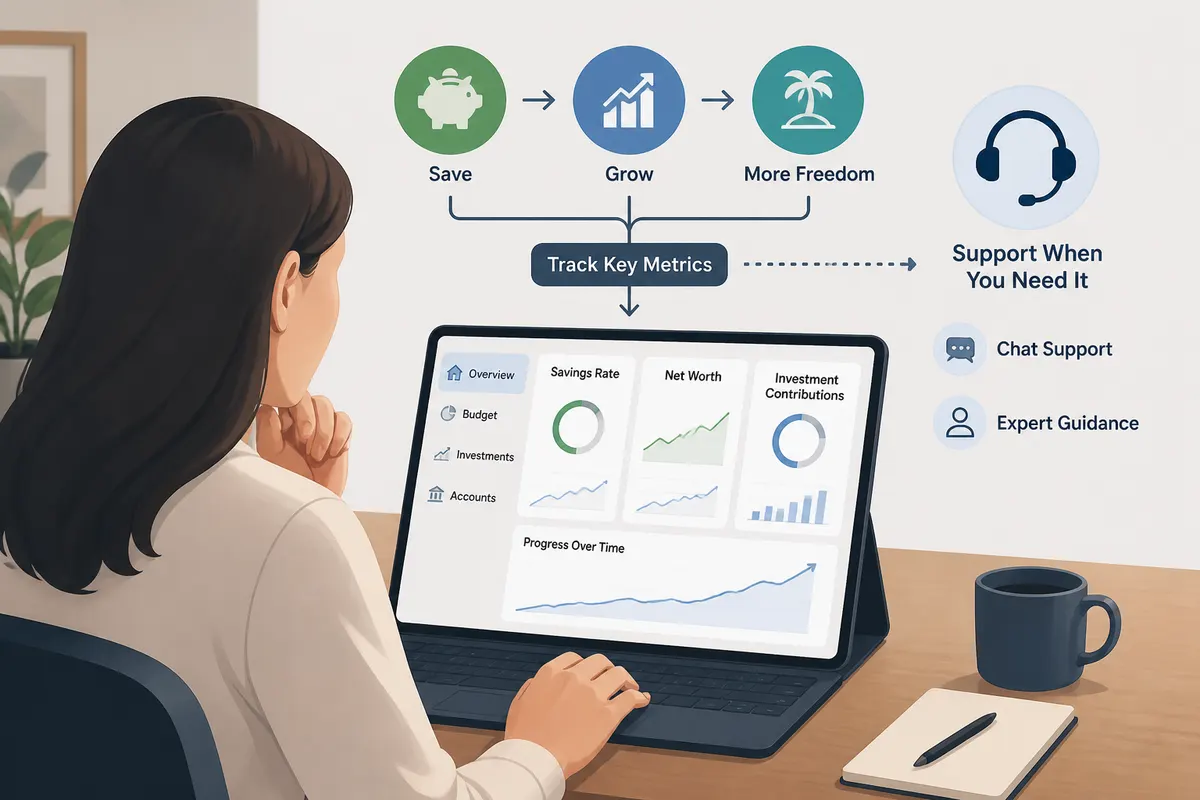
Financial freedom isn’t a one-time build.
It’s a maintenance routine.
That’s why you should set benchmarks you can track, like a savings rate, net worth, and investment contributions.
Savings rate is simply how much of your income you save each month.
Net worth is what you own minus what you owe, which gives you a clear snapshot of progress.
Then run a quarterly review to adjust for life changes and market swings.
You don’t need to check daily or chase short-term performance.
Instead, ask practical questions: Did your income change?
Did expenses rise?
Are you still on track to build your emergency fund?
Are you contributing consistently to investments?
If something is off, you adjust the plan, not your identity.
- Track your numbers monthly, but review deeper every quarter.
- Update your budget when life changes, like moving, new childcare costs, or a different job.
- If markets wobble, focus on your contribution schedule rather than timing.
When you keep the plan measurable, you avoid the “I’ll figure it out later” trap that derails many good intentions.
Conclusion
Financial freedom works best when you turn it into steady habits you can sustain.
You start by understanding what freedom means for your life, then you set a Freedom Budget based on real monthly expenses.
From there, you control cash flow, build an emergency fund, eliminate blocking debt, and invest consistently for long-term independence.
Finally, you protect progress with better earning power, sensible insurance, and a measurable freedom plan you review regularly.
When you do these things, money becomes less of a threat and more of a tool.
That’s the real win behind financial freedom: you gain options when life changes, instead of losing control.
Keep it simple, keep going, and let the system do the heavy lifting.