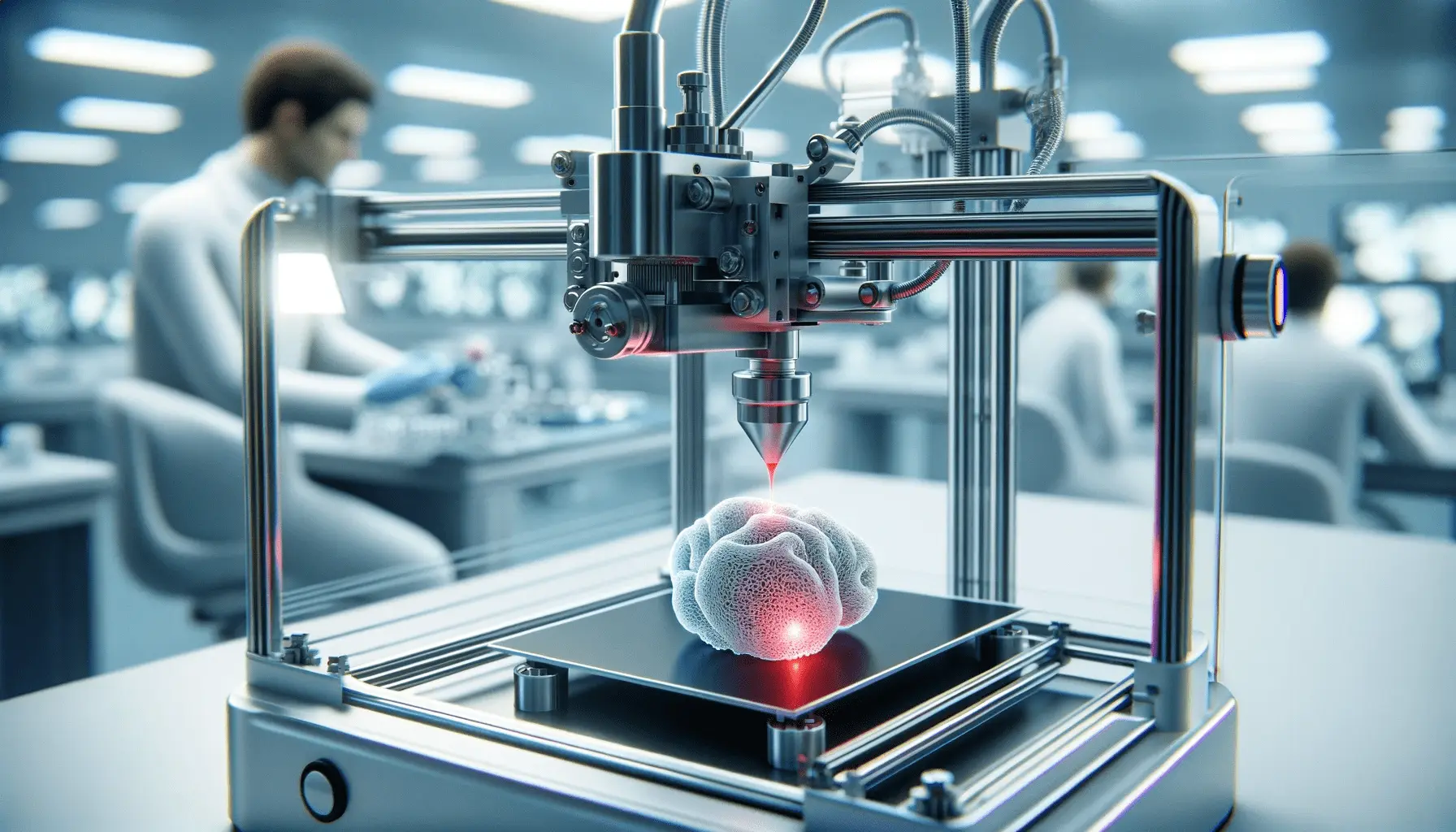
In a world where the demand for organ transplants significantly outweighs the supply, the advent of creating organs on demand through genetic engineering and 3D printing technologies is a beacon of hope. This piece explores the strides made in this groundbreaking domain, its potential, and the promise it holds for a future devoid of organ shortages.
The Backdrop:
The grim reality is that many individuals on the waiting list for organ transplants often face a race against time, a race not everyone wins. Annually, around 130,000 organ transplants are conducted worldwide, yet the queue of desperation continues to grow. The concept of organs on demand is not just revolutionary but a humanitarian need, poised to save countless lives1.
The Bioprinting Breakthrough:
Bioprinting has emerged as a promising frontier. By employing 3D printing technology, researchers are creating biocompatible structures and tissues. Techniques such as in situ bioprinting, which entails 3D printing within the body, have seen substantial progress, bringing us closer to personalized tissue and organ replacements2.
Engineering Organs in Labs:
Beyond printing, the realm of genetic engineering is being navigated to develop organoids or miniature organs. These are cultured from stem cells and have the potential to mimic specific organs. The ambition doesn’t end here; the long-term vision is to cultivate custom organs in factories, a venture that could redefine organ transplantation3.
The Animal Avenue:
An interim solution has surfaced through xenotransplantation, where animal organs, specifically from pigs, are being genetically edited to enhance compatibility with the human immune system. Although in nascent stages, this avenue witnessed a landmark case where a gene-edited pig’s heart was transplanted into a human, keeping the recipient alive for two months. This breakthrough underscores the potential of xenotransplantation in mitigating the organ shortage crisis1.
Advancing Toward Clinical Trials:
The journey toward actualizing organs on demand is advancing with some 3D printed organs like artificial skin and blood vessels nearing clinical trials. The horizon is further expanding with progress on 3D printed hearts, livers, and kidneys, moving us closer to a reality where organ shortages will be a tale of the past4.
Conclusion:
The convergence of genetic engineering and 3D printing is carving a hopeful trajectory towards addressing the critical challenge of organ shortages. As research intensifies and technologies advance, the dream of organs on demand is morphing into a tangible possibility, poised to save innumerable lives and revolutionize medical science.