
Introduction
Ever feel like you’re working hard, yet your money never seems to move forward fast? Smart money habits are the boring-but-powerful answer. They help you spend with intention, save reliably, and invest in a way that can compound over time.
In this guide, you’ll learn seven smart money habits that support long-term financial freedom. Each habit focuses on a real-world decision you can make today, whether you’re trying to build savings, reduce debt, or finally get consistent with investing. The best part is that none of these habits require you to be perfect. You just need a simple system you can repeat.
Key Takeaways
- Track where your money actually goes (last 30 days), using simple categories to spot the biggest recurring leaks.
- Pay yourself first by automating transfers to savings, retirement, or debt right when you get paid – start small if needed.
- Build an emergency fund in stages and keep it separate (e.g., high-yield savings) to avoid selling investments or using credit cards.
- Avoid lifestyle inflation: when income rises, pre-allocate a portion to long-term goals so spending doesn’t automatically expand.
Track where your money actually goes
Before you change anything, you need clarity. Tracking where your money actually goes turns “I think I spend too much” into something you can fix. Start with the last 30 days of spending, using your bank app, card statements, and any cash purchases you remember.
Then group transactions into plain buckets like housing, food, transport, debt payments, and “everything else.” If you can’t clearly explain a category, that’s usually a sign it’s too vague. Keep it simple and aim for accuracy, not judgment. When you see patterns, you can target the biggest leak first.
Here’s a quick way to get moving:
- Pick one place to track, like your main checking account.
- Use categories you can understand in one glance.
- Mark spending that repeats every month.
- Circle the top two categories by total cost.
Pay yourself before spending
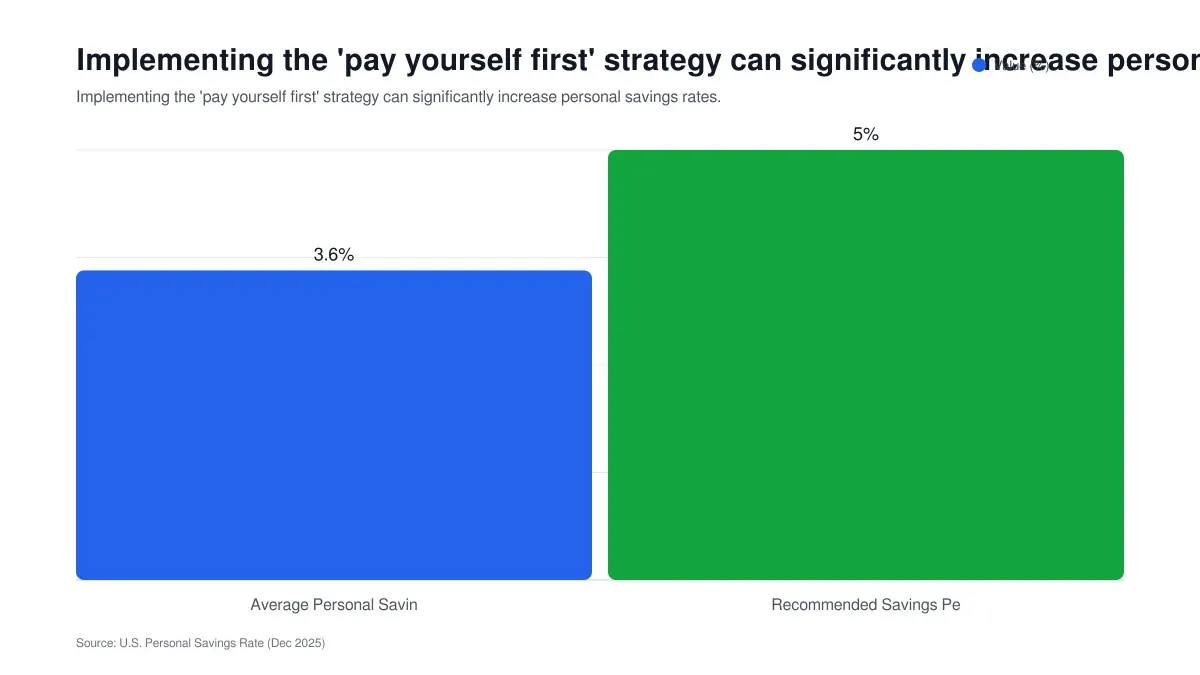
If savings depends on what’s left at the end of the month, it often never happens. “Pay yourself first” means you set money aside right after you get paid, before your lifestyle gets its turn. This works because most of us adjust our spending to our habits, not our intentions.
You can automate it, which removes willpower from the equation. Set an automatic transfer to savings, a retirement account, or a debt payoff plan so the money leaves your account on payday. If you’re not ready to automate, start with a manual transfer the same day you’re paid.
To make this habit easier, choose a starting target you can keep. A good approach is to begin small, like 5% to 10%, then increase it when you get raises or free up cash. Here’s a simple split you can adapt:
| Goal | What to prioritize first | Simple starting split |
|---|---|---|
| Build savings | Emergency fund contributions | 5% to 10% to savings |
| Reduce debt | High-interest debt payoff | Up to 10% to debt, then expand |
| Long-term investing | Retirement or broad index investing | 5% to 15% based on your budget |
Build an emergency fund before chasing big returns
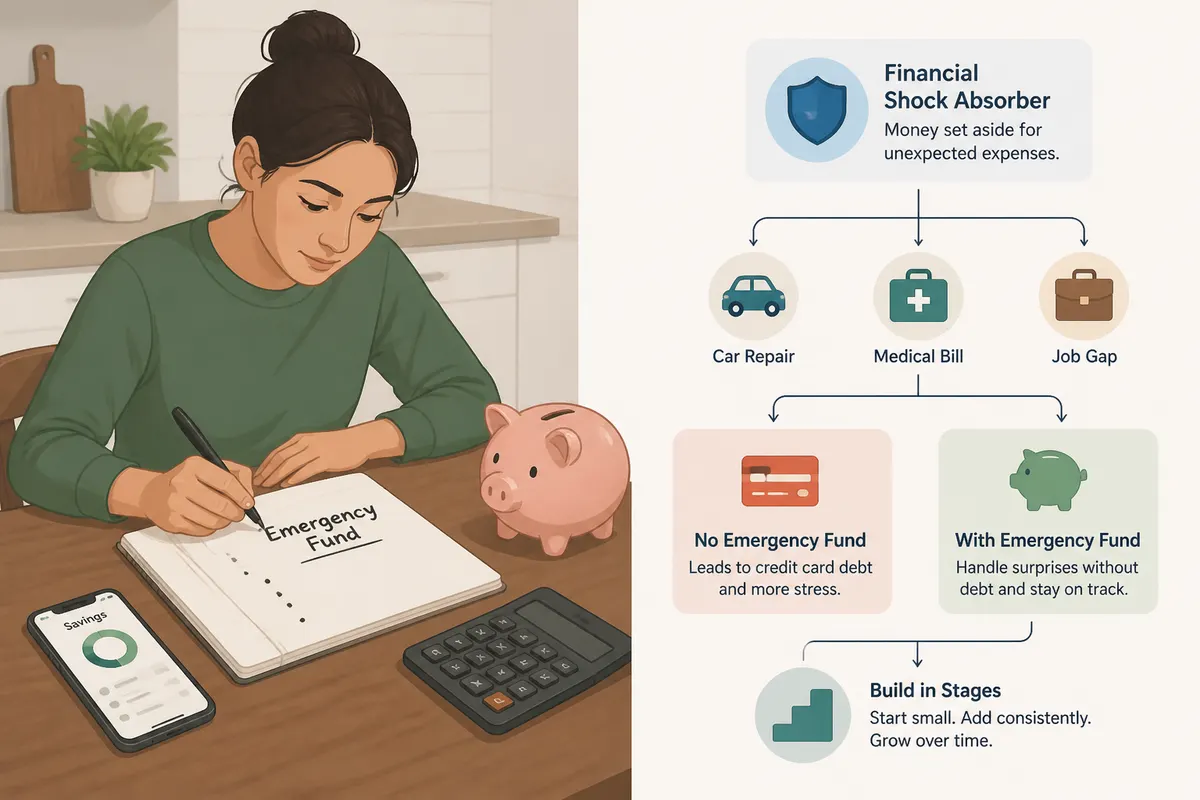
An emergency fund is your financial shock absorber. It’s money set aside for surprises like a car repair, medical bill, or job gap. Without it, even small problems can force you to use credit cards, which often turns a temporary issue into long-term debt.
Many people aim to build savings in stages rather than all at once. Start by saving a modest buffer, then grow it over time. A common first step is enough to cover a short stretch of basics, then later you build toward a larger cushion that fits your household.
Keep your emergency fund separate from investing money. Use an account that’s easy to access, like a high-yield savings account, so you can grab it quickly without selling investments at a bad time. The goal is not to “beat” the market, it’s to avoid costly detours.
“The best return is the one you don’t need to chase because you can handle surprises.”
When your emergency fund is growing, you’ll feel calmer about investing too. That calm helps you stay consistent instead of reacting to market swings.
Avoid lifestyle inflation
Lifestyle inflation is what happens when your income rises, but your spending rises even faster. It can feel normal at first, but it quietly blocks your progress. You end up “earning more” yet saving the same amount or less, which slows your path to financial freedom.
A simple guardrail helps. When you get a raise, decide ahead of time what portion goes to long-term goals, and keep your day-to-day spending rules similar for a while. For example, you might increase rent or upgrades later, but start by routing part of the raise to savings or retirement immediately.
Also, watch for lifestyle triggers like new subscriptions, frequent takeout, or upgrading “just because.” These purchases feel small. But repeated small spending adds up fast, especially when it becomes your new baseline.
Try this quick checklist before you upgrade:
- Will this be affordable if my income stays flat?
- Did I increase savings first, or last?
- Is it replacing something, or adding something new?
- Can I wait 30 days and see if I still want it?
Use debt carefully and attack expensive debt first
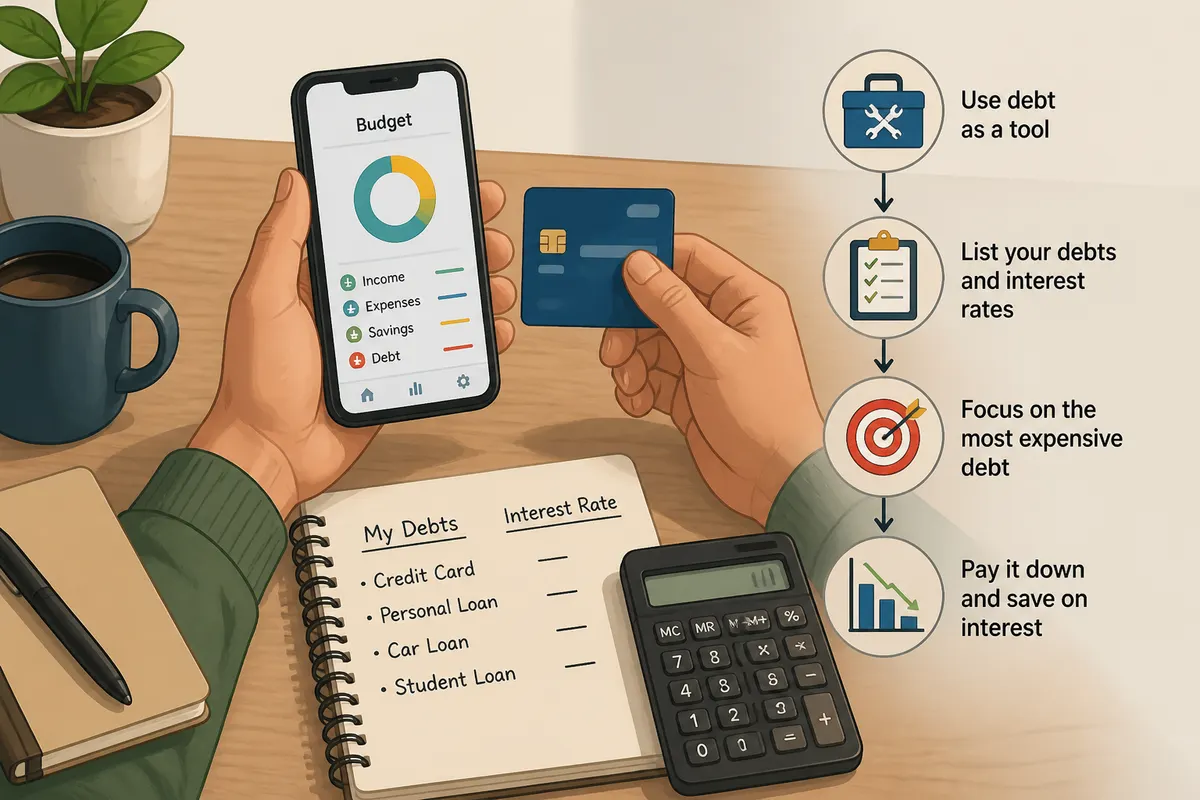
Debt can be useful, like when it helps you buy a home or invest in education. But not all debt is equal, and interest costs can quietly drain your budget. The smart money habit here is to treat debt like a tool, not a lifestyle.
Start by listing your debts and their interest rates. Then focus on the most expensive debt first, often credit cards and high-interest personal loans. Paying extra toward the highest rate reduces the interest you pay, which is a direct improvement to your net worth over time.
If you have multiple debts, you can use a simple payoff plan. Many people use the “avalanche” method, meaning highest interest rate first. Others use the “snowball” method, meaning smallest balance first for motivation. Either can work, but expensive-interest debt usually wins mathematically, so aim to pay that first when possible.
Be careful with new borrowing while you’re paying down old debt. Even a small new balance can slow your progress. When your budget tightens, pause non-essential spending and protect your minimum payments.
| Debt Type | Typical Risk | Smart Habit |
|---|---|---|
| Credit Cards | High interest, fast compounding | Pay extra toward the highest rate balance |
| Auto Loans | Moderate rates, fixed payment | Keep payments steady, avoid refinancing just for small perks |
| Student Loans | Varies by program, flexible options may exist | Know your repayment rules, avoid missing key deadlines |
| Mortgages | Lower rate, long timeline | Focus on budget and emergency savings first |
Invest consistently, even with small amounts
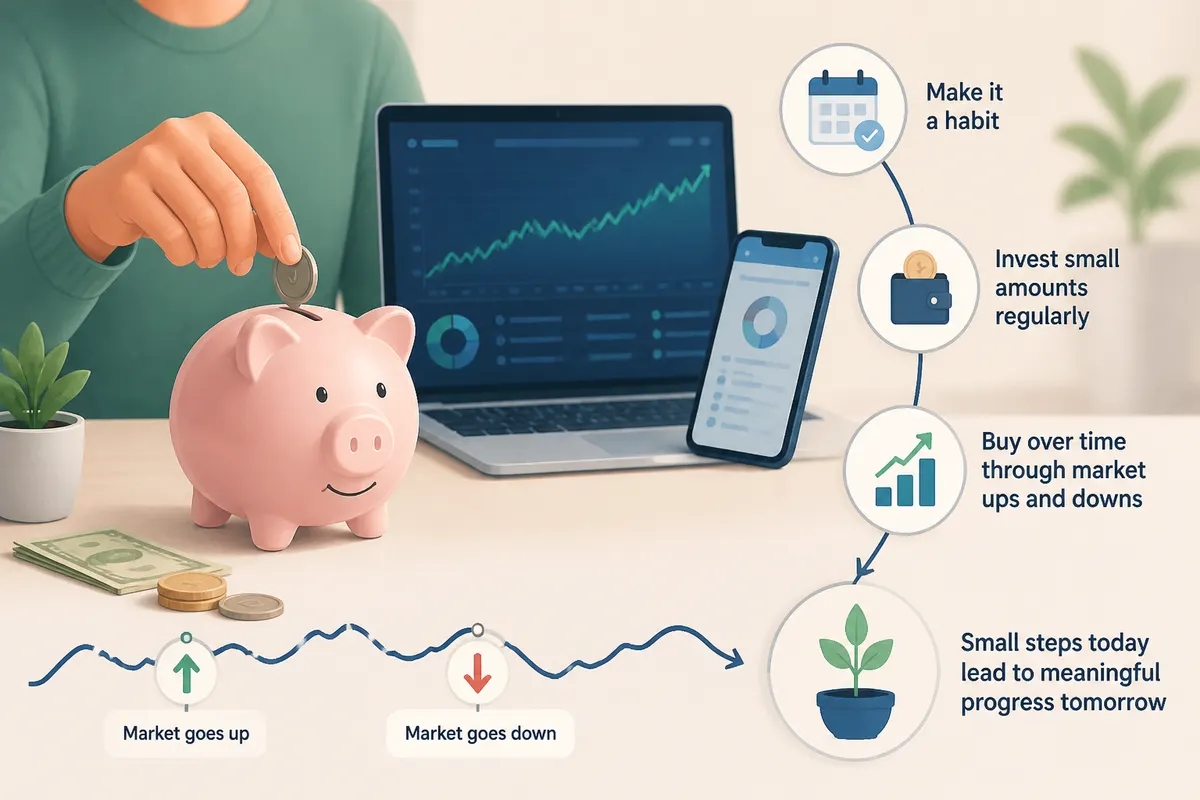
Consistency beats intensity for long-term investing. The market will rise and fall, but a steady plan helps you buy over time and reduces the pressure to time every move. This habit is especially valuable when you’re starting with small amounts, because automation can turn small contributions into meaningful progress.
Choose an investment approach that matches your time horizon. If you’re investing for retirement or long-term goals, you can usually assume you won’t need the money soon. That gives you room for long-term growth and helps you avoid panic selling during downturns.
Use a simple process: set up automatic contributions, pick diversified funds, and keep your risk level appropriate for your goals. If your employer offers a retirement plan, check whether there’s a matching contribution, since that can be a strong incentive to participate.
You don’t need a big lump sum to start. Even small monthly investments build the habit and the track record of sticking with your plan. If your budget is tight, start with a small amount that you can maintain for at least a year. Then raise it when your income increases or when you pay down debt.
“Investing regularly is less about predicting the future and more about staying in the game.”
Review your money system every month
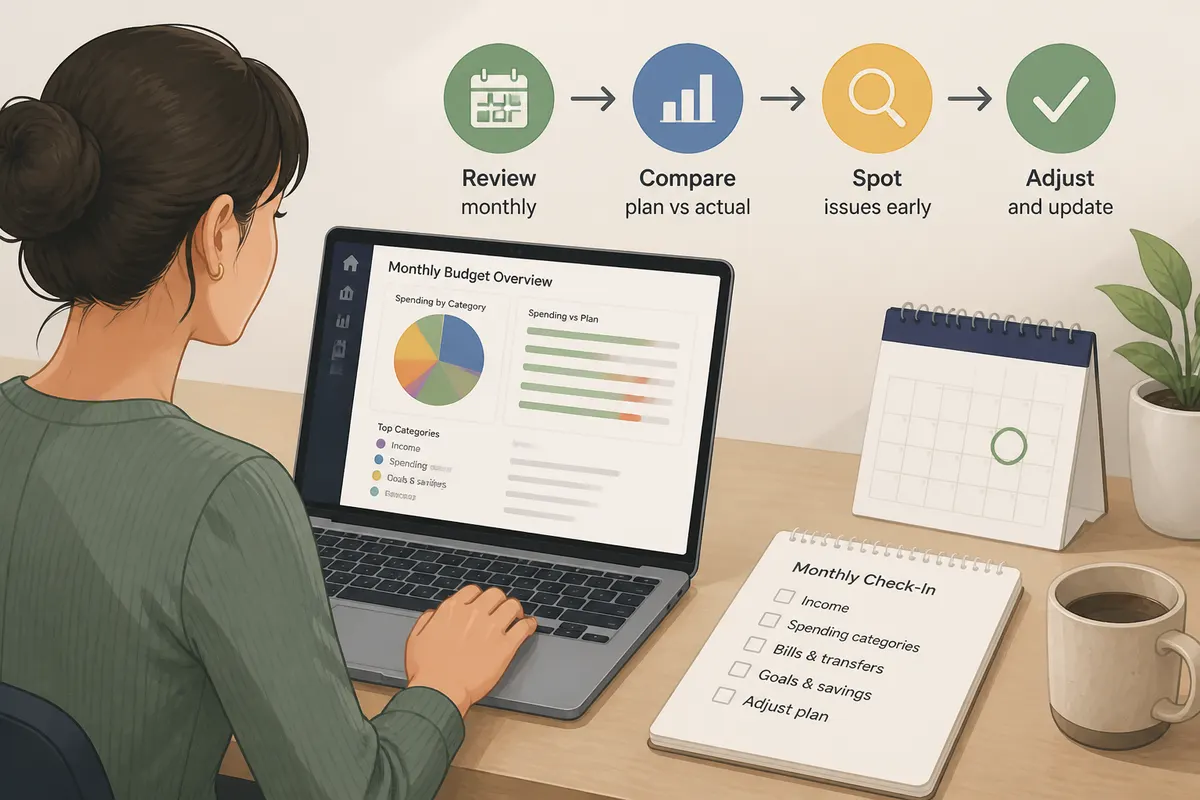
A money plan isn’t a one-time project. It’s a system you update as your life changes. Monthly check-ins help you catch problems early, like creeping spending, a missed transfer, or an unexpected bill that keeps showing up.
During your review, compare what happened to what you planned. Look at spending categories first, then check savings and investment contributions. If you fell short, don’t blame yourself. Instead, adjust the numbers so the plan fits your reality.
This review is also where you prevent “set it and forget it” mistakes. For example, an old subscription might still be charging. Or your automatic savings might be too low to reach your goals. Small fixes every month are easier than big repairs once you’re behind.
Use a simple monthly routine:
- Check your bank and credit card totals.
- Confirm bills are scheduled correctly.
- Verify savings and investing transfers happened.
- Update your budget for the next month.
- Choose one improvement to make before next review.
Smart money habits are simple, but not always easy
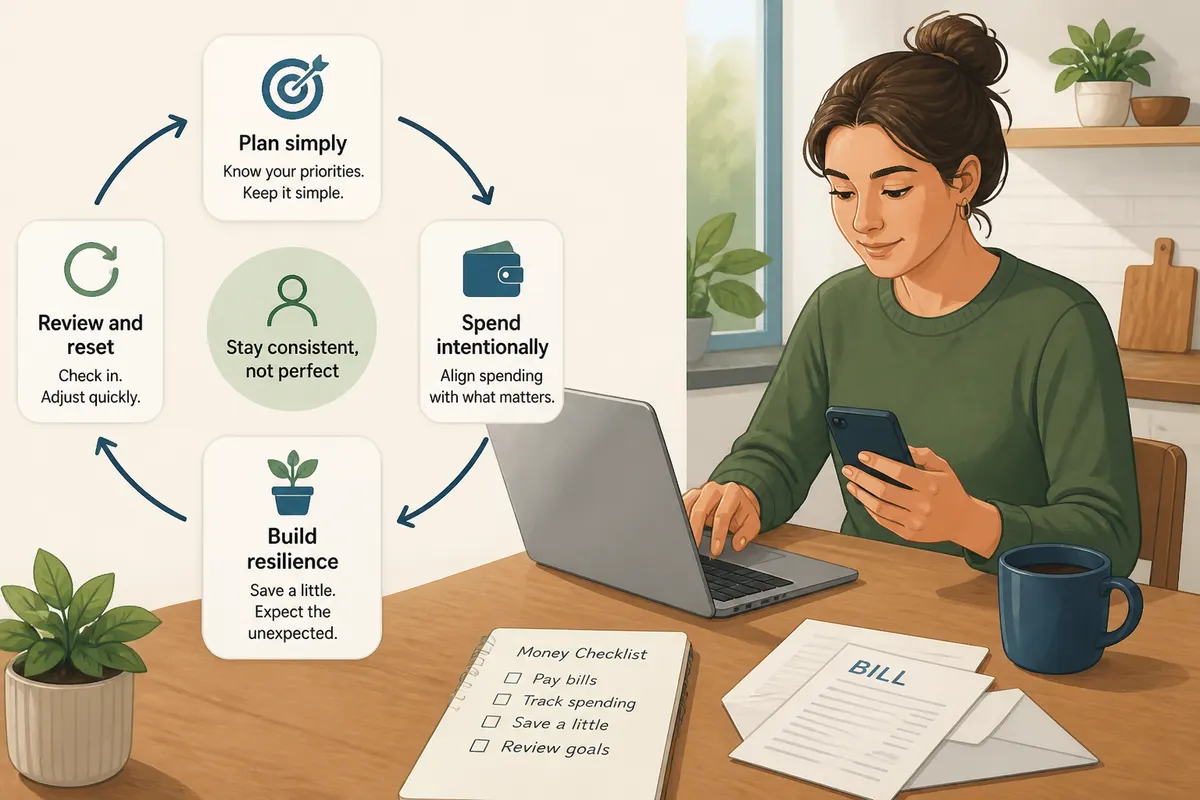
The hard part about money habits isn’t usually the math. It’s the behavior, the timing, and the fact that life gets messy. You’ll have months when spending runs higher, unexpected expenses show up, or motivation dips. That’s normal. What matters is how quickly you return to your system.
So make it resilient. Keep your habits small enough that you can do them even when you’re busy. If tracking feels like a chore, use your bank’s summaries. If saving feels impossible, start with a tiny automatic transfer and grow it slowly. Your goal is progress, not perfection.
It also helps to remember the tradeoffs. You can’t maximize everything at once. If you’re paying off high-interest debt, that’s a rational use of your money even if it means investing slower for a bit. If you’re building an emergency fund, that may limit how much you invest right now, but it protects you from forced selling and credit card debt.
When you feel stuck, pick one habit to focus on for two weeks. Track spending, automate savings, or schedule your monthly review. Small wins build momentum, and momentum makes the next choice easier.
Conclusion
Long-term financial freedom usually isn’t about one big trick. It’s about repeatable Smart Money Habits you can live with, even when you’re not feeling your best. When you track spending, pay yourself first, and build an emergency fund, you create stability.
Then you protect your progress by avoiding lifestyle inflation, handling debt carefully, and investing consistently. Finally, monthly reviews keep your plan aligned with your real life. If you start with one habit and stick to it, you’ll build a money system that gets stronger over time.