
Building wealth isn’t mainly about discovering a secret investment or making one dramatic financial move. It’s the quieter process of making better decisions when you earn, borrow, invest, buy a home, support family, and prepare for the future. This guide shows you how to connect those choices instead of treating them as separate money problems. You’ll learn eight practical strategies for building wealth across major life stages, with a focus on fundamentals, flexibility, and sound decision-making. The goal isn’t to predict every market move. It’s to create a financial system that can keep working as your income, responsibilities, and priorities change.
Key Takeaways
- Build resilience before pursuing higher returns: Maintain an accessible emergency reserve, pay down high-interest debt, automate saving, and review net worth and cash flow as your circumstances change.
- Invest according to timelines, not market predictions: Use diversified, low-cost investments and match risk to when the money is needed. Short-term goals generally require more stability, while long-term assets can better withstand market declines.
- Treat career growth as a wealth-building asset: Develop valuable skills, evaluate total compensation, negotiate thoughtfully, and direct part of each raise toward saving, debt repayment, or investing before increasing lifestyle costs.
- Evaluate housing with complete long-term costs: Compare rent with ownership costs including taxes, insurance, maintenance, repairs, closing costs, and opportunity cost. Keep adequate reserves and ensure a mortgage does not crowd out other priorities.
- Protect wealth with tax planning and risk management: Use eligible tax-advantaged accounts appropriately, understand their rules and fees, and review insurance, beneficiaries, estate documents, and coverage whenever major family or financial circumstances change.
- Align family commitments with financial capacity: Set time frames, funding sources, and limits for education, caregiving, housing, and support. Protect essential bills, savings, insurance, and retirement contributions while documenting loans and shared decisions.
1. Build a Financial Foundation Before Taking Bigger Risks
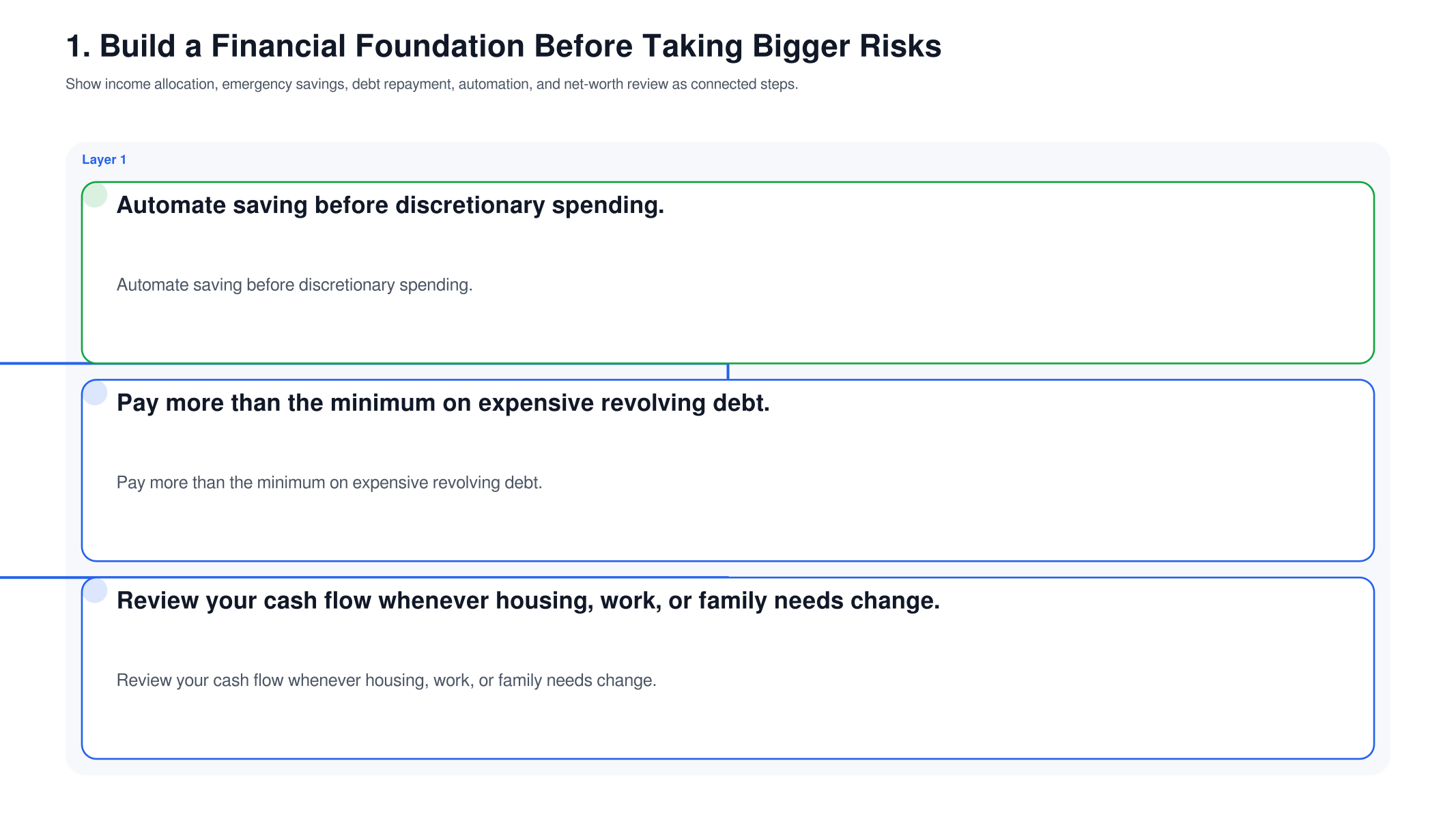
Start by making your finances less fragile. Build an emergency reserve in an accessible savings account, then direct extra cash toward high-interest debt. The right reserve depends on your income stability, household size, and essential costs, so choose a target you can maintain rather than copying someone else’s number.
Next, automate the behaviors that support long-term wealth. Schedule transfers after payday, increase them when your income rises, and review your net worth at regular intervals. Net worth is simply what you own minus what you owe, and tracking it helps you see progress beyond a single account balance.
- Automate saving before discretionary spending.
- Pay more than the minimum on expensive revolving debt.
- Review your cash flow whenever housing, work, or family needs change.
2. Invest Consistently Through Market Cycles
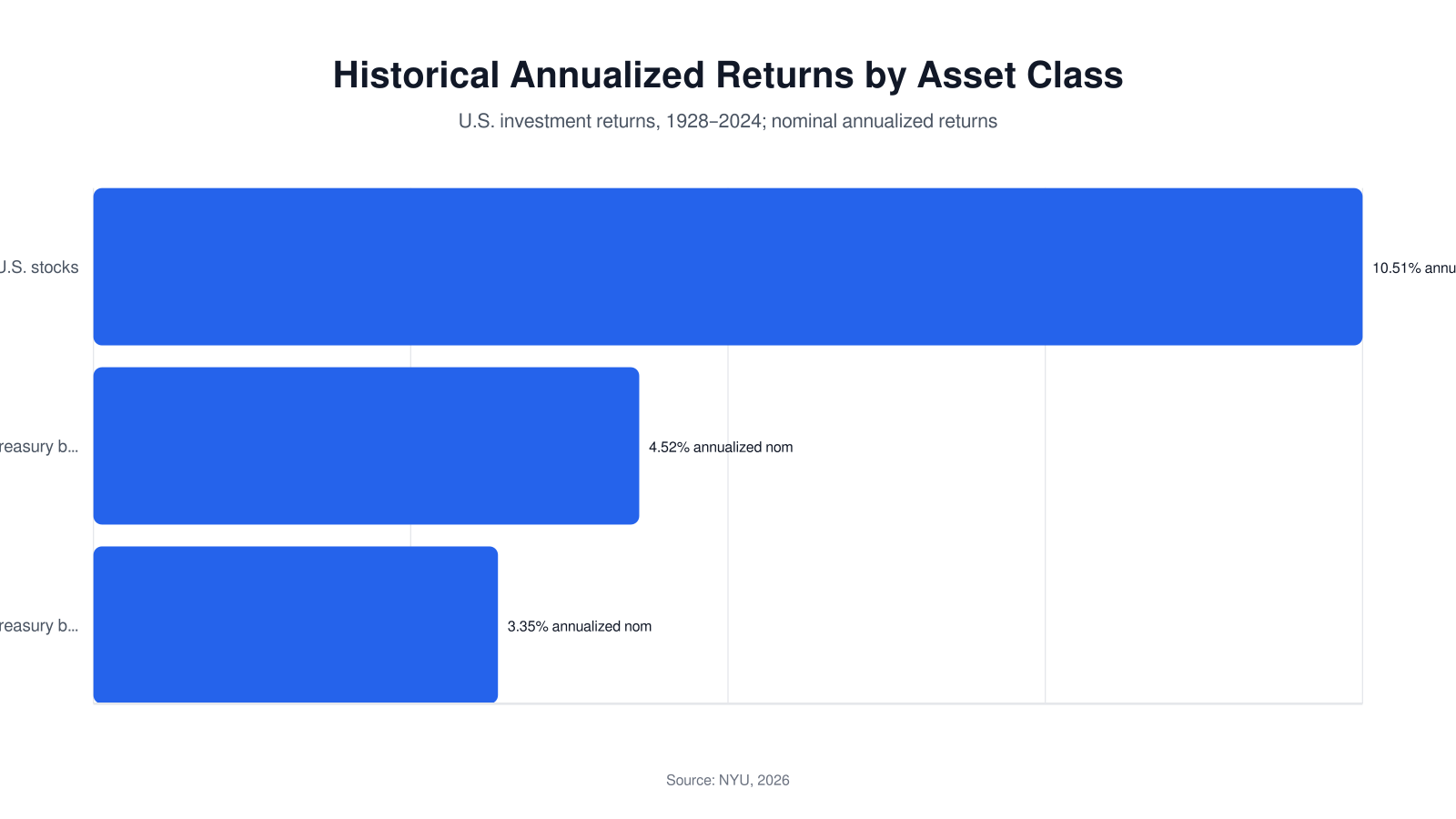
Investing works best as a repeatable process, not a series of guesses. Spread money across suitable asset classes, regions, and companies instead of relying on one holding. Broad, low-cost funds can make diversification easier, while lower fees leave more of your return invested over time.
Match your portfolio to the job your money must perform. Money needed soon generally belongs in lower-volatility choices, while long-term retirement assets may have more time to handle market declines. Investor.gov encourages regular investing, tax-advantaged accounts, and caution around get-rich-quick promises. Review its investing basics before choosing products.
| Goal timeline | Planning priority | Useful question |
|---|---|---|
| Short term | Protect access and stability | Could a market decline disrupt this goal? |
| Medium term | Balance growth and preservation | How much loss could I tolerate? |
| Long term | Seek suitable growth and diversification | Can I stay invested through downturns? |
3. Turn Career Decisions Into Wealth-Building Opportunities

Your earning power is one of your most valuable financial assets. Identify skills that employers or clients consistently pay for, then build them through focused practice, credentials, projects, or stronger communication. A higher income can improve saving capacity, debt repayment, and investment contributions, but only if spending doesn’t rise automatically with every raise.
Evaluate the full value of each job offer, not just its salary. Compare health coverage, retirement contributions, paid leave, bonuses, equity, commuting costs, flexibility, and promotion prospects. Before accepting, prepare a short case for your value and negotiate respectfully. Equity can be meaningful, but understand vesting, taxes, liquidity, and concentration risk before treating it like cash.
- Set a skill-building goal for the next six to twelve months.
- Track measurable results from your work before a compensation discussion.
- Direct part of every raise toward assets before expanding lifestyle costs.
4. Make Homeownership Decisions With Long-Term Math

A home can support stability and wealth, but buying isn’t automatically better than renting. Compare the complete cost of ownership, including principal, interest, taxes, insurance, maintenance, repairs, closing costs, and the opportunity cost of your down payment. Renting may offer valuable flexibility when your career, location, or household plans are still changing.
If buying fits your plan, protect monthly cash flow with a sustainable mortgage. Stress-test the payment against job loss, higher expenses, repairs, and changing interest rates where relevant. Don’t empty your savings for a down payment. Keep a separate reserve so one roof problem doesn’t force expensive borrowing.
Use this quick comparison before deciding:
- Compare total monthly ownership costs with rent, not mortgage principal alone.
- Estimate how long you’ll stay and the costs of selling early.
- Check whether the payment still works alongside retirement saving and insurance.
5. Use Tax-Advantaged Accounts to Keep More of Your Wealth

Tax advantages are most valuable when they support a clear goal, fit the account rules, and remain part of a diversified plan.
Start with the accounts available through your employer or government framework. If an employer offers a retirement match, understand the contribution needed to receive it fully. Then compare retirement accounts, health savings arrangements, and other tax-advantaged options based on eligibility, contribution limits, withdrawal rules, and your expected tax situation.
Don’t choose an account and assume the work is finished. The money may still need to be invested, and the available choices, fees, and risk levels matter. Read the plan documents or ask a qualified tax professional when rules are unclear. Tax treatment varies by country and can change, so avoid decisions based on outdated assumptions.
6. Protect Your Progress With Insurance and Estate Planning

Wealth planning should address what could erase your progress. Review health, disability, life, property, liability, and long-term care risks according to your household and obligations. The purpose isn’t to buy every policy. It’s to transfer losses you couldn’t comfortably absorb while handling smaller risks through savings.
Create a basic estate file with a will where appropriate, powers of attorney, health-care instructions, account details, and a list of important contacts. Keep beneficiaries current after marriage, divorce, births, deaths, or major account changes. Beneficiary instructions can control who receives certain assets, so they deserve a review alongside your estate documents.
- Check coverage after a new job, home purchase, or dependent arrives.
- Store documents securely and tell a trusted person how to access them.
- Review your plan at least when major family or financial circumstances change.
7. Align Major Family Decisions With Your Financial Plan

Family choices often shape wealth more than small daily purchases. Discuss education funding, caregiving, housing, shared travel, and support for relatives before commitments become urgent. Give each goal a time frame, a funding source, and a limit, then decide which goals come first if available cash is insufficient.
Support can be generous without being unlimited. Set boundaries that protect essential bills, emergency savings, insurance, and retirement contributions. If you share finances, agree on approval rules for large purchases and loans. A written family plan can reduce confusion and make difficult conversations more practical.
- Separate gifts from loans and document repayment expectations.
- Never borrow at high cost to support a nonessential commitment.
- Revisit shared goals when income, health, or caregiving needs change.
8. Adjust Your Strategy as You Approach Financial Independence

As financial independence gets closer, your plan should become more deliberate. Rebalance risk as the time between today and each goal shortens, while avoiding sudden moves based on headlines. Keep enough liquid assets for near-term spending, and make sure your investment mix reflects both your timeline and your ability to tolerate losses.
Build a spending plan before you need the portfolio to provide income. Separate essential expenses from flexible ones, identify reliable income sources, and test how withdrawals might change during weak markets. Review taxes, health costs, inflation, and longevity assumptions with a qualified adviser when the decisions are complex. Financial independence means having choices, not simply reaching a portfolio number.
Before You Begin

Gather your recent pay statements, account balances, debt statements, insurance details, and household spending records. You don’t need perfect numbers. A clear estimate is enough to create a useful starting point.
- List your monthly income and essential expenses.
- Record debts, interest rates, savings, investments, and major assets.
- Write down near-term goals and the age or date when each goal matters.
- Keep account information secure, and never share passwords in a financial worksheet.
Troubleshooting Common Wealth-Building Problems
Progress can stall even when your intentions are good. Use the problem and response pairs below to make a practical adjustment instead of abandoning the plan.
- Irregular income: Base essential spending on a conservative month, then save more during stronger months.
- Too much debt: Pause optional investing if needed, keep a small cash buffer, and prioritize the highest-cost balances.
- Market anxiety: Recheck your time horizon and diversification before making a fear-driven sale.
- Competing goals: Rank them by urgency, importance, and flexibility rather than funding everything halfway.
- Outdated accounts: Update beneficiaries, passwords, contact details, and documents after major life events.
Warning: Don’t take concentrated investment risks, borrow against essential assets, or follow promises of guaranteed high returns without independent review.
Conclusion
Building wealth across life’s major decisions means connecting the basics: spend with intention, manage costly debt, invest regularly, grow your earning power, and protect what you’ve built. Homeownership, family support, taxes, insurance, and retirement choices should fit the same larger plan rather than compete without direction. Start with the decision that would improve your financial stability most today, automate the next useful action, and review your progress on a steady schedule. Your strategy can change as your life changes. The fundamentals, clear goals, suitable risk, and thoughtful decisions, give you a durable path toward greater financial independence.
Frequently Asked Questions
What should you do if you have high-interest debt and want to start investing?
How much emergency savings do you need before investing more aggressively?
Should you pay off your mortgage early or invest the extra money?
What is the difference between a traditional and Roth retirement account?
How can you invest consistently when your income changes from month to month?
What financial mistakes can delay wealth building even when income is rising?
How should couples handle different risk tolerances or financial priorities?
When should you seek professional financial, tax, or estate-planning help?
Sources
- Building Wealth — Dallas Fed reference
dallasfed.orgFact: Building Wealth is a personal finance education resource that presents an overview of wealth-building strategies for consumers, community leaders, teachers and …
- Seven Steps to Start Building Personal Wealth — Investopedia reference
investopedia.comFact: Key Takeaways · Building wealth involves earning, saving, investing, and managing debt.
- How to Build Wealth — Fidelity Investments reference
fidelity.com3 effective strategies for building wealth · Do you consider yourself wealthy?
- How to Build Wealth: Nine Essential Steps — Navy Federal Credit Union reference
navyfederal.orgA Navy Federal Credit Union financial services resource outlining nine essential steps for building wealth.
- Build Wealth Over Time Through Saving and Investing | Investor.gov reference
investor.govInvesting is for everyone.
- Building Your Net Worth — State of Michigan reference
michigan.govFor employer-sponsored retirement plans, it’s generally recommended that you contribute a minimum of 15% of your gross pay or the maximum amount allowed by the …
- Building Wealth for Black Families Through Homeownership reference
rwjf.orgA nonprofit research source about building wealth for Black families through homeownership.
- How Buying a Home Became a Key Way to Build Wealth in America reference
npr.orgA journalism source about homeownership as a way to build wealth in America.
- Five Steps to Building Generational Wealth — California DFPI reference
dfpi.ca.govFact: Five Steps to Building Generational Wealth · Step 1: Pay off Debts · Step 2: Buy a House · Step 3: Start Long-term Investing · Step 4: Put an Estate Plan in …
- The Building Wealth and Health Network — PubMed reference
pubmed.ncbi.nlm.nih.govMethods: We conducted a randomized controlled trial of a 28-week intervention called Building Wealth and Health Network to improve financial security and …
- Build Wealth — Minneapolis, Minnesota reference
bwealthe.orgAchieve financial security and freedom with help from Build Wealth Minnesota.
- Learn Money Management: How to Build Wealth — TruStage reference
trustage.comA TruStage financial services resource about money management and building wealth.
- Rent Paid on Atlanta’s West Side Is Building Wealth in Buckhead reference
news.gsu.eduA university news source about rent paid on Atlanta’s West Side and wealth building in Buckhead.
- Money reference
eliteisle.comeliteisle.com source covering Money.
- Wealth reference
eliteisle.comeliteisle.com source covering Wealth.
- Financial reference
eliteisle.comeliteisle.com source covering Financial.
- You reference
eliteisle.comeliteisle.com source covering You.