
A year ago, your income covered the bills, your savings felt adequate, and global headlines seemed distant. Today, higher prices, changing interest rates, supply disruptions, or a weaker job market may affect the same household choices much faster. Learning how to prepare for economic uncertainty means turning broad economic shifts into practical decisions about spending, saving, borrowing, work, protection, and information. This guide gives you eight questions to ask, along with simple actions for building a lifestyle that can absorb change without abandoning your long-term priorities.
Key Takeaways
- Build a two-level household budget: Separate essential costs from flexible spending, then create both a minimum-month budget and a normal-lifestyle version so you can adjust gradually when prices rise or income falls.
- Keep emergency savings accessible: Base your emergency-fund target on essential monthly expenses, build it in stages through automatic contributions, and keep the reserve separate from everyday spending in a low-risk, accessible account.
- Stress-test debt before borrowing: Review balances, rates, payment requirements, and rate types. Prioritize expensive borrowing and test whether you could manage payments after a rate increase, income reduction, or major repair.
- Strengthen income and career options: Keep your résumé, portfolio, references, and skills current while maintaining professional relationships. Consider additional income paths only after checking their tax, insurance, and time demands.
- Review protection and fixed costs: Check insurance coverage, workplace benefits, housing expenses, and transportation costs together. Compare total costs, risks, and flexibility rather than judging a payment or premium in isolation.
- Monitor signals without reacting emotionally: Review personal finances monthly and broader economic information on a schedule. Track cash reserves, essential spending, debt rates, job conditions, renewals, and major price changes to guide planned adjustments.
1. How Can You Build a More Resilient Household Budget?
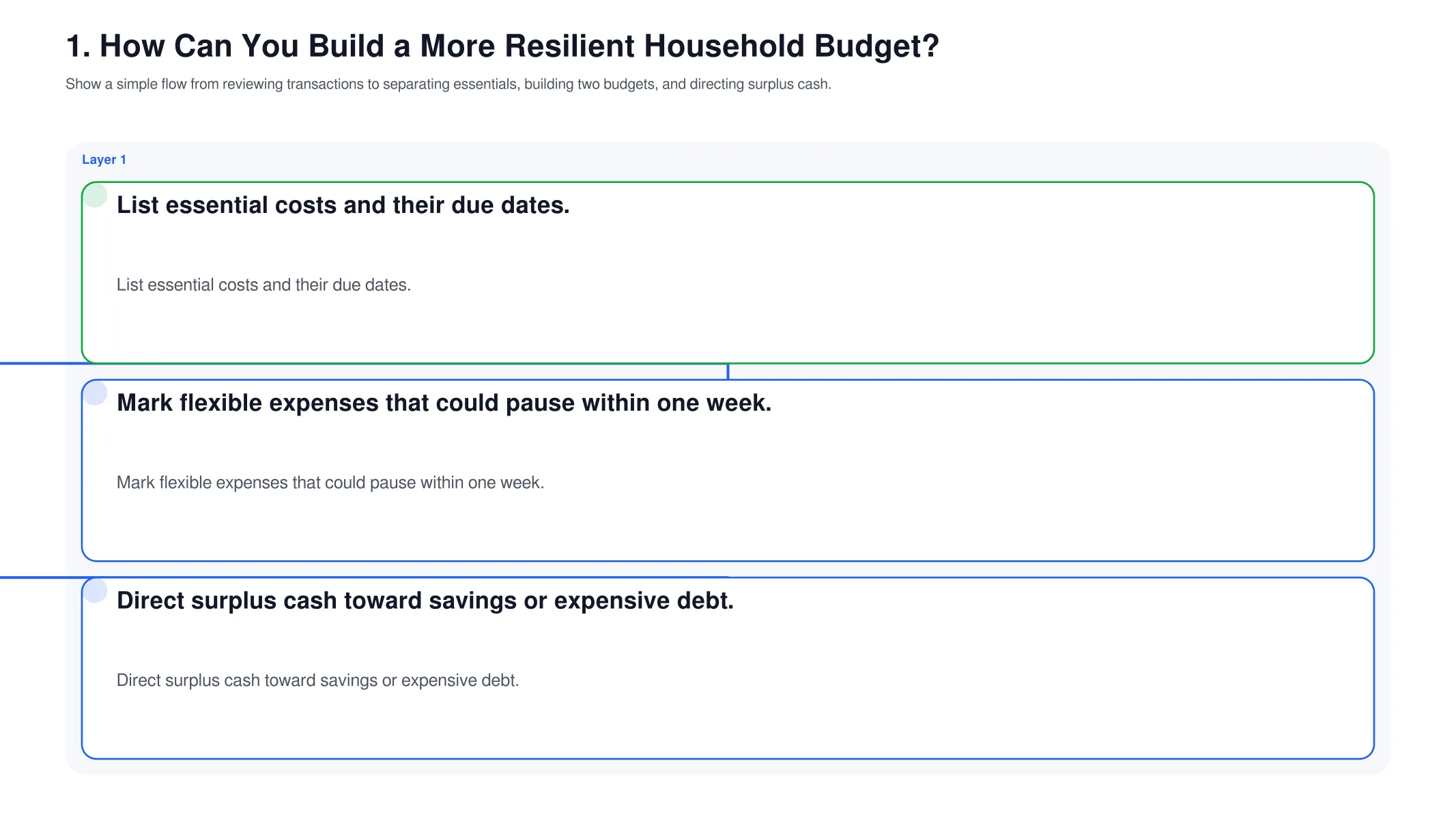
Start by separating essential costs from flexible spending. Essentials usually include housing, utilities, food, insurance, transportation, minimum debt payments, and necessary healthcare. Flexible spending may include dining out, subscriptions, travel, entertainment, clothing upgrades, and optional services. This distinction shows you where to act quickly if income falls or prices rise.
Review the last two or three months of transactions and assign every expense to one category. Then create a “minimum month” budget that covers only core needs and required payments. Keep a second version for your normal lifestyle, so you can reduce spending gradually rather than making rushed decisions. Do not cut insurance, medication, or debt payments without understanding the consequences.
-
List essential costs and their due dates. -
Mark flexible expenses that could pause within one week. -
Direct surplus cash toward savings or expensive debt.
2. What Should You Know About Inflation and Everyday Prices?
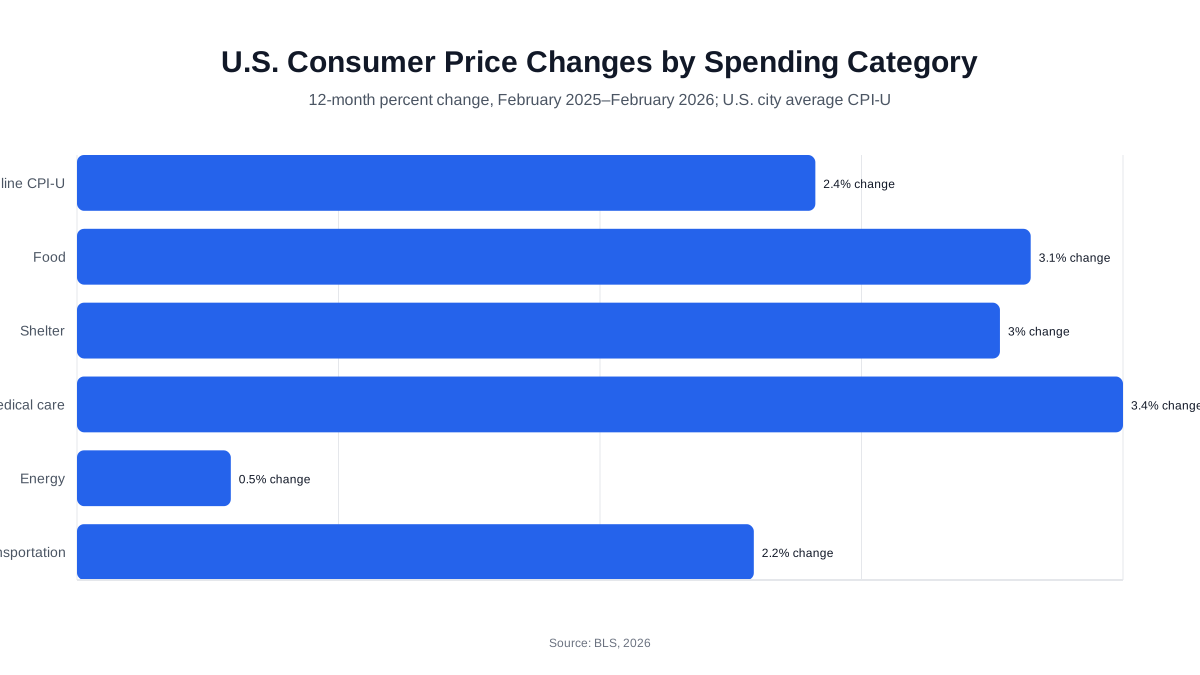
Inflation doesn’t affect every household equally. Your personal cost increase depends on what you buy, where you live, and which expenses dominate your budget. Housing, food, energy, transportation, and healthcare can each respond differently to changing economic conditions, so a general inflation headline may not match your experience.
Track the prices of ten frequently purchased items for a month. Compare brands, package sizes, store prices, and timing, but don’t sacrifice quality where it matters. You might switch a subscription, buy pantry staples during regular promotions, cook a few more meals, or delay a nonessential upgrade. These small choices help protect priorities without turning every purchase into a restriction.
3. How Can You Strengthen Your Emergency Fund?

An emergency fund gives you time to respond when a job ends, a vehicle fails, or a major bill arrives. Set a target based on your essential monthly expenses, not your entire lifestyle. If your income is variable, your household relies on one earner, or your industry changes quickly, a larger cash reserve may provide useful flexibility.
Build the fund in stages. First, choose a starter amount that could cover one urgent expense. Next, work toward several months of essential costs by transferring money automatically after payday. Keep this reserve separate from everyday spending, in an accessible account with low risk. It isn’t designed to chase high returns, and it shouldn’t be invested in assets that could fall sharply when you need the money.
-
Calculate your minimum monthly household cost. -
Set an automatic weekly or monthly contribution. -
Send windfalls, refunds, or temporary savings to the fund. -
Replace money promptly after using it.
4. Which Debts Become Riskier When Interest Rates Change?

Variable-rate balances can become more expensive when market rates rise. Credit cards, certain lines of credit, adjustable loans, and some private borrowing arrangements deserve a careful review. Fixed-rate debt may offer more predictable payments, but it still matters if the balance is large, the term is long, or refinancing could become difficult.
Write down each balance, interest rate, minimum payment, and rate type. Prioritize high-cost borrowing while keeping every account current. You can compare a lower-rate consolidation option, request a payment plan, or direct extra cash toward the most expensive balance first. Read fees and promotional conditions carefully, because a lower starting rate may not remain low.
Avoid taking on new debt simply to preserve optional spending. Before borrowing, test whether you could manage the payment after a rate increase, income reduction, or major repair. That simple stress test can reveal whether a purchase fits your real budget.
5. How Should You Review Your Income and Career Resilience?

Household resilience depends on income as much as savings. Review how concentrated your income is, how stable your employer or clients appear, and how quickly your skills could transfer to another role. Update your résumé, professional profile, portfolio, and references before you need them. A quiet preparation period gives you more choice than an urgent job search.
Career resilience grows when you keep your skills current, your professional relationships active, and your income options wider than one employer or client.
Choose one skill that could improve your current role and one that could open a different path. Consider training, certification, freelance work, teaching, consulting, or a small service based on abilities you already have. Check employment agreements, taxes, insurance, and time demands before starting additional work. Backup income should support your finances, not create an unmanageable second job.
6. What Insurance and Benefits Protect Your Lifestyle?

Insurance transfers certain large risks away from your household, but only when coverage matches your situation. Review health, disability, life, renters or homeowners, auto, and liability policies. Check deductibles, exclusions, limits, beneficiaries, and renewal terms. A low premium can look attractive until you discover that the coverage is too limited during a serious event.
Examine workplace benefits as well. Understand retirement contributions, health savings features, paid leave, disability protection, and any employee assistance resources. If you changed jobs, married, had a child, bought property, or started supporting a relative, your old coverage may no longer fit. Ask an independent professional to explain complex needs, especially when dependents or substantial assets are involved.
-
Confirm your emergency contacts and policy beneficiaries. -
Store policy documents where your household can access them. -
Compare coverage limits with current replacement costs. -
Keep required deductibles available in cash.
7. How Can You Make Housing and Transportation More Flexible?

Large fixed costs shape your financial freedom. Housing payments, property taxes, utilities, vehicle loans, fuel, repairs, and insurance can consume income before you make smaller choices. Review these costs together instead of treating each bill separately. A home that looks affordable on its mortgage payment may feel very different after maintenance, insurance, commuting, and energy costs.
List practical alternatives before a crisis appears. You might refinance only when the total cost makes sense, choose a less expensive vehicle at the next replacement, share transportation, relocate closer to work, or reduce unused space. Don’t make a major move based on one month of headlines. Compare transaction costs, lifestyle effects, employment access, and the flexibility you would gain.
Use a simple comparison: monthly cost, upfront cost, maintenance risk, and ability to reverse the decision. The best option isn’t always the cheapest today. It’s the one that protects cash flow while leaving room for future changes.
8. Which Financial Information Should You Monitor Regularly?
Monitoring helps you respond early, but constant news checking can encourage emotional decisions. Choose a small set of signals connected to your household: income, cash reserves, essential spending, debt rates, job conditions, insurance renewals, and major price changes. Review your personal numbers monthly and broader economic information on a scheduled basis.
Use the information to adjust a plan, not to predict every market move. If expenses rise, update your budget. If income becomes less certain, increase cash reserves and delay optional commitments. If rates change, review borrowing costs. For investments, focus on your time horizon, diversification, and risk capacity rather than reacting to every daily price.
-
Check cash flow and account balances monthly. -
Review debt and insurance terms at least annually. -
Record major changes in income or essential costs. -
Pause before making decisions based on alarming headlines.
Conclusion
Global economic shifts can influence your lifestyle through prices, borrowing costs, employment, housing, and access to essential services. You can’t control those forces, but you can improve your position by asking better questions and acting before pressure builds. Build a resilient budget, strengthen accessible savings, manage costly debt, protect your income, review insurance, and keep major fixed costs flexible. Most importantly, revisit your plan as your household changes. Learning how to prepare for economic uncertainty isn’t about predicting the next shock. It’s about creating enough financial room to make thoughtful decisions when conditions change.
Frequently Asked Questions
What should you do first if economic uncertainty is making you anxious?
How can you prepare for a recession if your budget has little room to save?
Should you pay off debt or build savings during economic uncertainty?
What financial documents should you organize before a downturn?
How should you adjust your investment plan when economic news becomes alarming?
What can households with irregular income do to prepare for economic uncertainty?
When should you seek professional financial or employment advice?
How can you tell whether a financial warning is useful or just fear-driven?
Sources
- How to Prepare for a Recession: 7 Steps to Take reference
usbank.comFact: A recession can negatively affect the economy and your finances.
- Economic Uncertainty and Mental Health: Global Evidence, 1991 to … reference
pmc.ncbi.nlm.nih.govThis study aims to comprehend the relationship between economic uncertainty and the prevalence of anxiety disorders, major depressive disorder, and eating …
- How to Prepare for a Recession: 7 Smart Tips reference
schwab.comFact: Learn how to prepare for a recession with tips that help protect your savings, manage debt, and strengthen your financial plan during economic uncertainty.
- Preparing for Economic Uncertainty reference
barnesdennig.comBarnes Dennig discusses preparing for economic uncertainty in the context of investment management.
- How to Prepare for a Recession reference
fidelity.comfidelity.com web source covering How to Prepare for a Recession.
- Insights for Advising Through Market Uncertainty reference
theamericancollege.eduThe American College presents insights for advising through market uncertainty.
- Build reference
eliteisle.comeliteisle.com source covering Build.
- financial freedom reference
eliteisle.comeliteisle.com source covering financial freedom.