
Modern work has rewarded availability for years, but constant access isn’t the same as strong performance. A healthier high-performance week treats energy, recovery, and focused output as one connected system. That shift can improve your work and health balance without asking you to chase an unrealistic routine. In this guide, you’ll build a practical weekly plan around eight fundamentals: clear priorities, movement, sleep, reliable meals, boundaries, recovery, and regular review. You’ll also learn how to adjust the system when deadlines, travel, family duties, or changing energy levels disrupt your plans.
Key Takeaways
- Define performance beyond task completion: A strong week combines meaningful work, adequate recovery, and time for responsibilities outside your job. Set three important outcomes and identify the rest, movement, and personal time needed to support them.
- Match demanding work to your energy: Schedule writing, analysis, and decisions during your strongest focus periods. Group routine tasks separately, protect high-energy windows from interruptions, and leave space between major commitments.
- Make health habits visible in the workday: Build short movement breaks, regular meals, hydration, and a consistent sleep opportunity into your schedule. Small, repeatable actions are more practical than relying on motivation or an ideal routine.
- Use boundaries and recovery to protect focus: Communicate availability, define urgent messages, set a work cutoff, and schedule recovery blocks between demanding tasks. These practices support reliable attention at work and genuine recovery afterward.
- Review patterns and adjust without perfectionism: At the end of each week, assess completed priorities, energy, strain, and recovery. Repeat what worked, identify friction, and test one small change as your role, responsibilities, or health needs evolve.
1. Define What a Healthy High-Performance Week Requires

Start by defining success beyond the number of tasks completed. A strong week should include meaningful work, enough recovery to remain steady, and time for responsibilities outside your job. The right balance will differ by role and season, so avoid copying someone else’s schedule without considering your own health needs.
Write down three outcomes that matter most this week, then identify the recovery those outcomes require. For example, a demanding presentation may need quiet preparation, a proper lunch, and an earlier evening finish. Use this simple weekly check:
-
What must be completed? -
What can be delayed, delegated, or reduced? -
When will you rest, move, and reconnect?
Tracking work hours across several weeks can reveal patterns that one busy day hides. The Mental Health Foundation’s work-life balance guidance also recommends looking at longer patterns rather than judging balance from a single day.
2. Plan Priorities Around Energy, Not Just Time
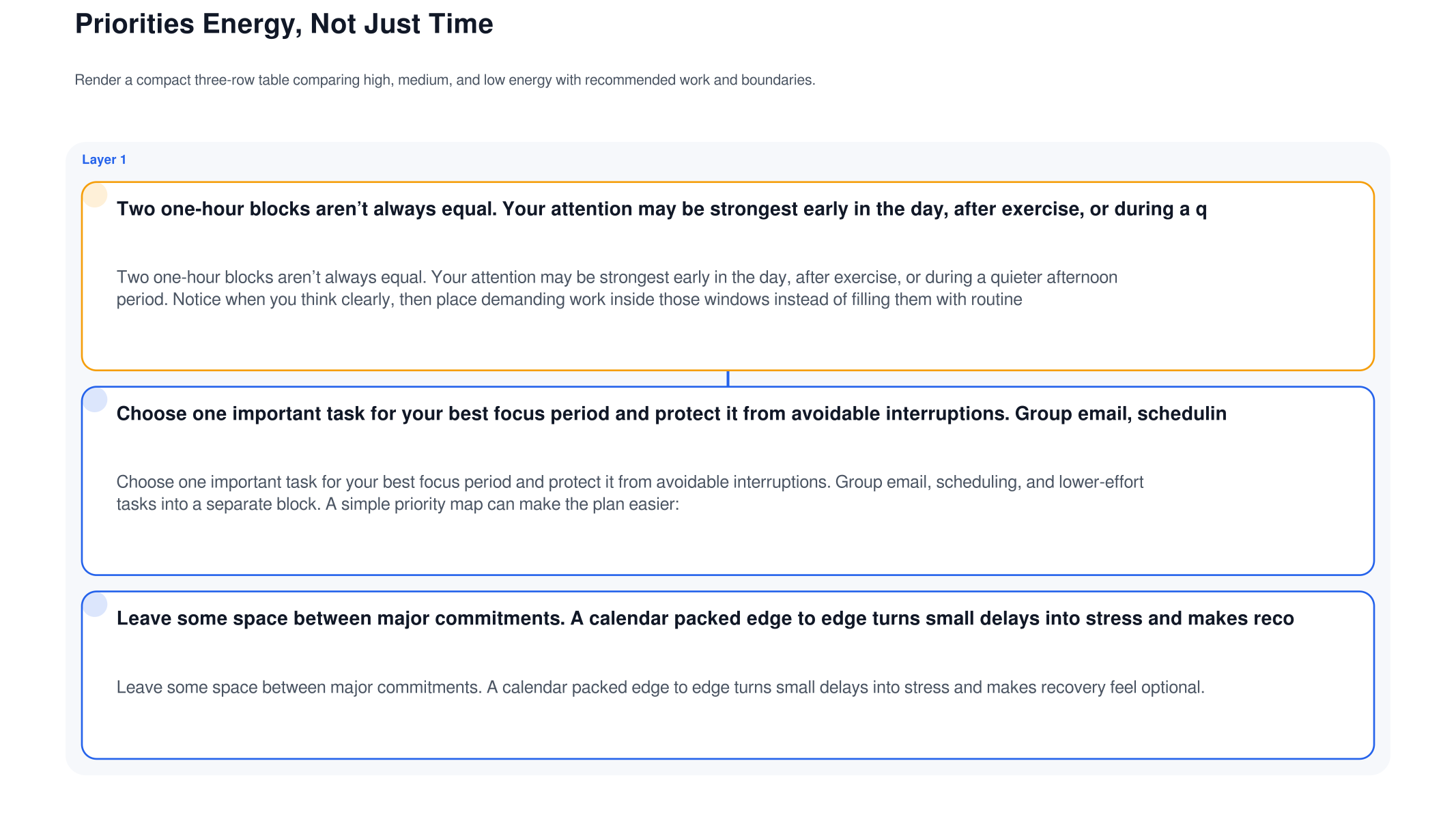
Two one-hour blocks aren’t always equal. Your attention may be strongest early in the day, after exercise, or during a quieter afternoon period. Notice when you think clearly, then place demanding work inside those windows instead of filling them with routine administration.
Choose one important task for your best focus period and protect it from avoidable interruptions. Group email, scheduling, and lower-effort tasks into a separate block. A simple priority map can make the plan easier:
Leave some space between major commitments. A calendar packed edge to edge turns small delays into stress and makes recovery feel optional.
3. Build Movement Into the Workday
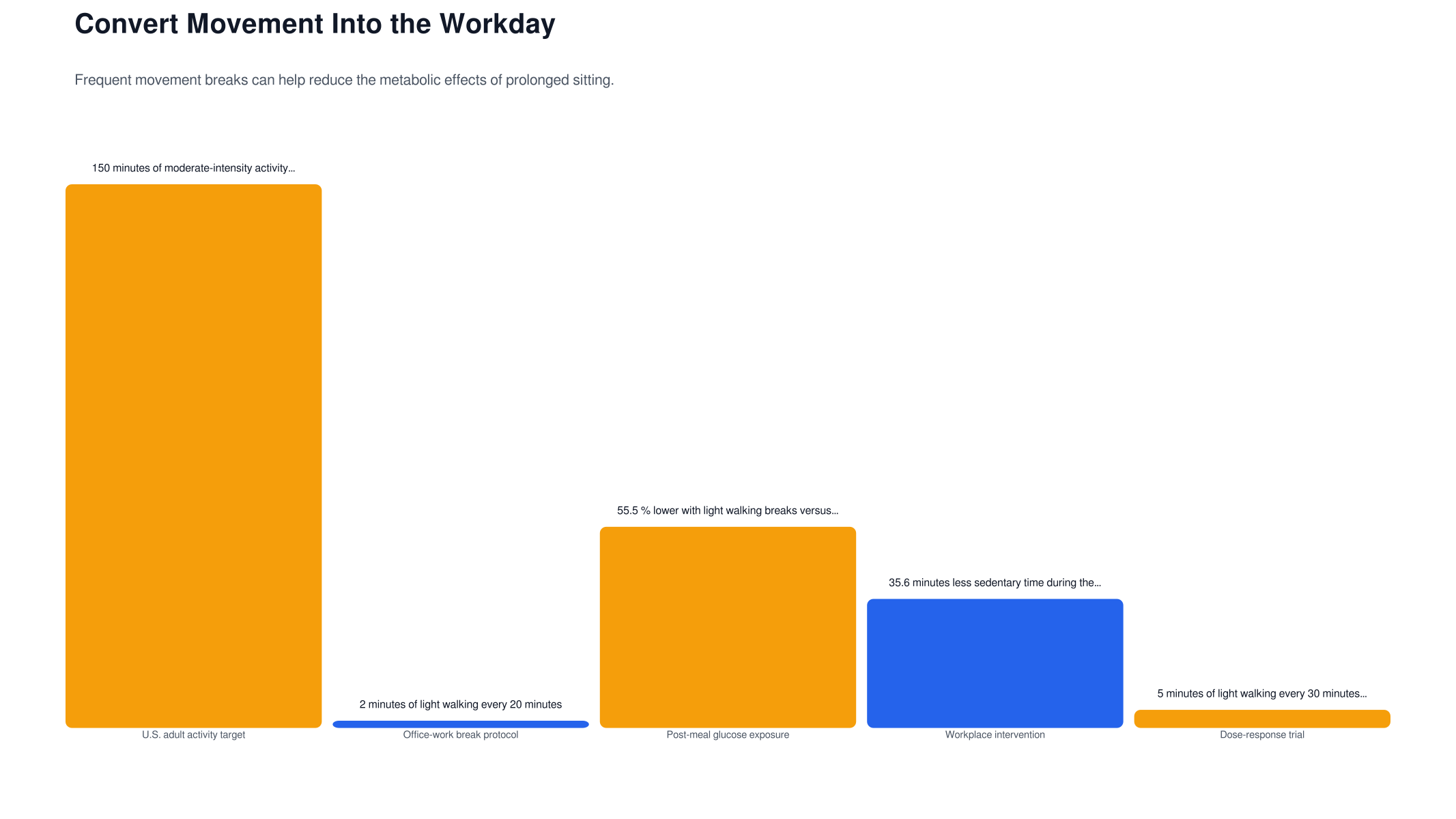
Movement doesn’t need to mean a long gym session. Short activity breaks can interrupt prolonged sitting, refresh attention, and make exercise more realistic during a busy week. The goal is to create several easy opportunities rather than depend on motivation after work.
Attach movement to events already in your calendar. Stand during a phone call, walk while reviewing simple notes, or take the stairs for one meeting. You can also set a gentle reminder to change position and move for a few minutes between focused blocks.
-
Walk for five minutes before lunch. -
Stretch your shoulders and hips after long meetings. -
Keep water farther from your desk so you need to stand. -
Use a short walk as a transition between work and home.
Choose activity that fits your body and current fitness level. If pain, dizziness, or another health concern appears, stop and seek appropriate medical advice rather than pushing through it.
4. Protect Sleep as a Performance Strategy

Sleep supports attention, mood, learning, and decision-making, so it belongs in your performance plan. Treating late-night work as the default may create extra hours, but it can reduce the quality of the next day. Start by protecting a consistent sleep opportunity, especially before demanding work.
Create a short wind-down routine that signals the workday is finished. Close open tasks, write tomorrow’s first priority, dim bright screens, and move into a calmer activity. Keep the routine practical enough to repeat during travel or busy periods.
-
Set a work cutoff that matches your next morning. -
Keep the bedroom quiet, dark, and comfortable where possible. -
Limit stimulating work immediately before bed. -
Ask a health professional about persistent sleep problems.
Don’t turn sleep into another perfection test. If one night goes poorly, return to your routine instead of compensating with an exhausting schedule.
5. Fuel Focus With Consistent Meals and Hydration

Build meals and hydration into the workday before urgency takes over, because steady fuel makes focused work easier to sustain.
Plan food around your actual schedule, not an ideal version of it. Keep a simple breakfast or lunch available, add convenient options such as fruit, yogurt, nuts, or a prepared meal, and avoid allowing meetings to erase every eating break. Consistency matters more than an elaborate menu.
Keep water accessible and notice whether caffeine timing affects your sleep or tension. If you have diabetes, food allergies, a digestive condition, or another medical need, follow guidance from your clinician. The broader principle is straightforward: support concentration with regular nourishment instead of relying on stress, skipped meals, or repeated energy spikes.
6. Set Boundaries That Support Work and Health Balance

Healthy boundaries explain when you’re available, what deserves an immediate response, and when recovery begins. They’re especially important in remote and hybrid work, where the office can follow you into every room. A boundary works best when it is specific and communicated before a conflict appears.
Choose a realistic end-of-day signal, such as closing your laptop, changing clothes, or taking a short walk. Tell colleagues when you’ll respond, and use status tools or calendar blocks to protect focused work and personal commitments. Try these practical rules:
-
Define which messages count as urgent. -
Schedule meetings inside agreed working hours. -
Keep one device-free period each evening. -
Discuss workload early when deadlines exceed capacity.
Boundaries aren’t a refusal to contribute. They help you offer reliable attention during work time and genuine presence during recovery time.
7. Use Recovery Blocks to Sustain Concentration

Recovery works better when you schedule it before exhaustion becomes the only possible signal. Place brief resets between demanding tasks, then add a longer break after a major meeting or decision. These pauses can include walking, breathing slowly, eating, stretching, or simply looking away from a screen.
Match the recovery method to the type of fatigue you feel. If your mind is overloaded, choose quiet and fewer inputs. If your body feels stiff, move gently. If social interaction has drained you, take a private break before starting another collaborative task.
-
Reserve five to fifteen minutes between intense blocks. -
Take lunch away from your main work surface when possible. -
Use a short evening transition before household responsibilities. -
Protect at least one lower-demand period each week.
Recovery isn’t wasted time. It helps preserve the concentration required for careful decisions and quality work.
8. Review the Week and Adjust Your System
End the week with a brief review, not a judgment. Look at what you completed, when your energy was strongest, which commitments created unnecessary strain, and whether recovery actually happened. Reviewing several weeks can show useful patterns more clearly than reacting to one difficult day.
Use three questions to guide the next plan:
-
What should I repeat because it worked? -
What caused avoidable friction? -
What is one small change worth testing?
Measure sustainable progress through completed priorities, stable energy, adequate recovery, and reasonable personal time. You may need to renegotiate deadlines, reduce meetings, or ask for support when the same overload repeats. A healthy system evolves with your role, responsibilities, and health rather than demanding constant intensity.
Conclusion
Designing a healthier high-performance week starts with a better definition of performance. You’re not trying to fill every hour; you’re building enough structure to focus well, recover consistently, and protect the life that work is meant to support. Define a few meaningful outcomes, match them to your strongest energy windows, and make movement, sleep, meals, boundaries, and recovery visible on your calendar. Then review the pattern and adjust it without chasing perfection. With that approach, work and health balance becomes a practical operating system, not a vague ideal.
Frequently Asked Questions
How can you maintain a work and health balance during a busy week?
What should you do when an unexpected deadline disrupts your weekly routine?
How many priorities should you set for a high-performance workweek?
How can remote workers separate work from personal time?
What is the difference between productive rest and procrastination?
How should you handle exercise when you are already mentally exhausted?
Can a high-performance routine work if your schedule changes every day?
What signs suggest that your work and health balance needs to be redesigned?
Sources
Work-Life Balance | Mental Health Foundation