
Introduction
Which everyday money decisions can help you save, invest, and grow your money over time? The useful answer isn’t a secret formula; it’s a set of repeatable choices that give your income direction. When you build wealth habits around clear goals, spending limits, steady saving, and informed investing, you can make progress without needing a perfect financial start.
This guide shows you how to put those habits into practice, one step at a time. You’ll set a money goal, shape a budget, automate savings, prepare for unexpected costs, manage debt, and make investment choices that fit your time horizon. You’ll also look at ways to build earning power and protect what you’ve saved. The aim is a practical system you can adjust as your life changes.
Before you begin: Gather a recent bank statement, a list of debts and minimum payments, and your regular income and bills. You don’t need exact figures for every small purchase; a reasonable starting estimate is enough. Keep your account details private, and use secure financial services when reviewing your information. If your finances involve complex tax, legal, or investment questions, consider getting help from a qualified professional.
Key Takeaways
- Turn goals into milestones: Choose one or two financial priorities, set a target and time frame for each, and review your progress regularly so you can adjust as your circumstances change.
- Use a budget you can maintain: Track income, bills, spending, debt payments, and savings with a method that suits you. Look for flexible costs to reduce while keeping room for ordinary surprises.
- Save automatically and build a reserve: Schedule affordable transfers after payday, then build an accessible emergency fund based on your essential costs and personal circumstances before taking bigger risks.
- Choose a debt payoff strategy you can follow: Keep up with minimum payments and direct extra money to one balance. The avalanche method targets the highest interest rate; the snowball method targets the smallest balance.
- Invest regularly with risk in mind: Make contributions part of a routine, diversify across holdings, and match your investments to when you will need the money and how much fluctuation you can accept.
1. Build Consistent Wealth Habits With Clear Financial Goals

Turn Long-Term Goals Into Specific Milestones
Choose one or two priorities before deciding where every dollar should go. Your goals might include a home deposit, education costs, retirement, or greater flexibility at work. Give each goal a target amount and a rough time frame, then break it into manageable milestones. For example, a $6,000 goal over two years calls for about $250 a month, before any interest or investment changes. Treat that figure as a planning guide, not a promise about future returns.
- Choose one or two priorities before deciding where every dollar should go.
- Your goals might include a home deposit, education costs, retirement, or greater flexibility at work.
- Give each goal a target amount and a rough time frame, then break it into manageable milestones.
Review Your Progress on a Regular Schedule
Write down your current savings, debt balances, and monthly amount set aside. Review them once a month, then take a closer look every three months to see whether your plan still fits. Adjust a milestone if your income, household, or priorities change; changing the plan isn’t the same as giving up. A clear review routine is easier to maintain than checking balances whenever worry or excitement strikes. For further goal-setting ideas, see TruStage’s overview of financial habits.
2. Spend Less Than You Earn With a Practical Budget

Choose a Budgeting Method You Can Maintain
Track your take-home income against essential bills, flexible spending, debt payments, and savings. Choose a method that suits how you think: a simple monthly spreadsheet, a budgeting app, or separate spending categories in your account. If a detailed ledger feels tiring, check your main categories once a week instead. Your budget should help you make choices, not punish you for having a meal out or an unexpected expense.
Find Flexible Ways to Reduce Recurring Costs
Review subscriptions, phone plans, delivery habits, and utility use for costs you can change without disrupting essentials. Cancel services you rarely use and compare renewal terms before accepting a higher bill. If you free up $40 each month, directing that amount to debt or savings could add $480 over a year, before interest. The Consumer Financial Protection Bureau’s budgeting tools can help you organize income and expenses. Keep a small flexible category in your plan so ordinary surprises don’t derail it.
3. Save Automatically Before You Spend
Set Up Automatic Transfers on Payday
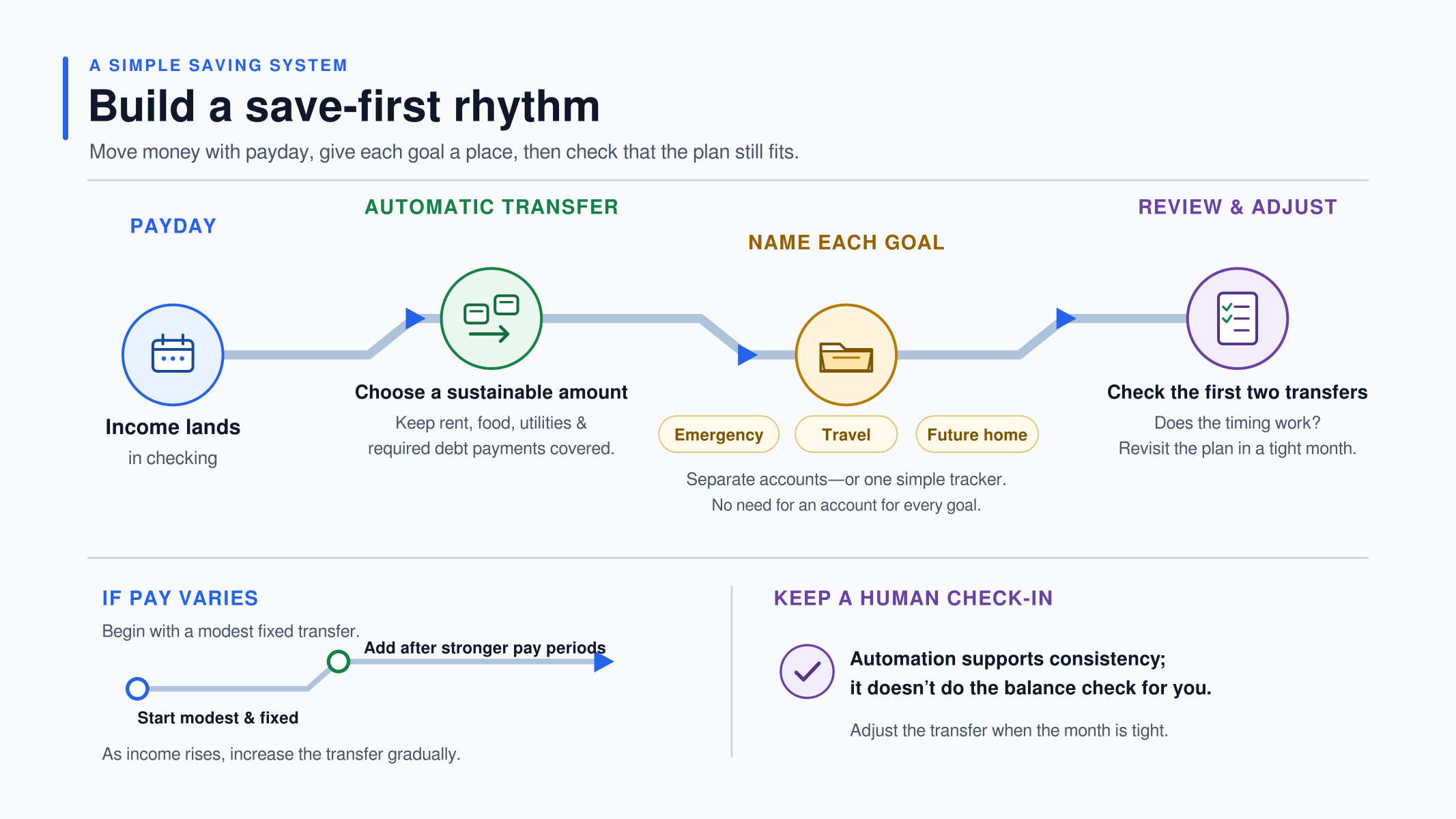
Choose an amount you can save without missing rent, food, utilities, or required debt payments. Schedule a transfer from your checking account soon after payday, then review the first two transfers to make sure the timing works. If your pay varies, start with a modest fixed amount and add more after stronger pay periods. Automatic saving can make your plan more consistent, but it doesn’t replace checking your balance or adjusting for a tight month.
Separate Savings for Different Priorities
Use clearly named savings accounts or categories for goals such as emergencies, travel, and a future home. Separating goals helps you see what money is available for each purpose and makes it less tempting to spend a long-term reserve on a short-term want. You don’t need a new account for every goal; a simple tracker can work just as well. As your income rises, consider increasing your automatic transfer gradually. This approach is also discussed by Mission Fed’s guide to everyday money habits.
4. Build an Emergency Fund Before Taking Bigger Risks

Estimate a Cushion That Fits Your Situation
Start by listing essential monthly costs, including housing, basic food, transport, utilities, and minimum debt payments. Then choose a first milestone that feels achievable, such as covering one month of essentials, and build from there. Your preferred reserve depends on job stability, household needs, insurance, and how quickly you could replace income. A self-employed household may want a larger buffer than someone with steady income and strong workplace benefits. Use your actual expenses to set the goal rather than copying another person’s target.
Your emergency reserve has a specific job: help you handle necessary, unplanned costs without immediately relying on expensive debt or selling long-term investments at a difficult time.
Keep Emergency Savings Accessible and Separate
Choose an account where you can reach the money when a real emergency arises, while keeping it apart from everyday spending. Check fees, withdrawal rules, and whether the account suits your need for access. A reserve isn’t meant to chase high returns, and investing money you may need soon can expose it to market losses. Once you use some of it, make replenishing the balance part of your next budget review. For information about deposit protection, visit the FDIC’s deposit insurance resource.
5. Pay Down High-Interest Debt With a Clear Strategy

Compare Debt Avalanche and Debt Snowball Methods
List every debt with its balance, interest rate, minimum payment, and due date. Keep paying at least the required minimum on each account, then direct extra money toward one balance. The avalanche method targets the highest interest rate first, which can reduce interest costs; the snowball method targets the smallest balance first, which may give you a visible early win. Neither method removes the need to check fees or repayment terms. Choose the approach you can follow reliably.
| Method | First extra payment goes to | May suit you if |
|---|---|---|
| Avalanche | Your debt with the highest interest rate | Reducing interest is your main priority. |
| Snowball | Your debt with the smallest balance | Quick progress helps you stay engaged. |
Avoid Adding New Balances While Repaying Debt
Look at what caused the balance to grow, then adjust the budget or payment method that contributed to it. Set aside a small amount for likely irregular costs, such as car maintenance, so those bills don’t automatically return to a credit card. If payments are becoming hard to manage, contact your lender to ask about available options before missing a due date. Be cautious with services that promise quick debt relief without explaining costs and risks. You can also review Navy Federal’s financial habit guidance.
6. Invest Consistently for Long-Term Growth

Use Regular Contributions to Build Investing Momentum
Before you invest, cover immediate bills and consider whether high-interest debt or a very small emergency reserve needs attention first. Then identify an account and contribution amount suited to your goal and circumstances. Regular contributions can help you make investing a routine rather than a decision based on headlines. For example, investing $100 each month means contributing $1,200 over a year, but the value of your investments can rise or fall. No contribution schedule guarantees a profit.
Understand Diversification, Time Horizon, and Risk
Spread your investments across different holdings rather than relying on one company or narrow area. Diversification can reduce the impact of a poor result in a single holding, though it can’t prevent losses across a market decline. Match your investment mix to when you’ll need the money and how much fluctuation you can accept without abandoning the plan. Money needed soon generally calls for less exposure to volatile investments than money intended for a distant goal. The U.S. Securities and Exchange Commission’s investor resource explains asset allocation and diversification.
7. Grow Your Earning Power and Protect What You Build
Invest in Skills and Career Opportunities
Your earning power can shape how much you’re able to save and invest. Identify a skill that connects to a realistic next step, such as qualifying for a new role, negotiating pay, or taking on work with more responsibility. Before paying for a course or credential, compare its cost, time commitment, and likely relevance to your plans. You can also build professional relationships and keep a record of results that show the value of your work. When your income grows, decide in advance how much will go toward goals and how much will improve daily life.
Review Insurance, Accounts, and Financial Safeguards
Check that your insurance coverage, account beneficiaries, and contact details still match your circumstances. Review account statements for unfamiliar transactions, use strong unique passwords, and turn on account alerts where available. Keep important documents in a secure place, and make sure you know how to contact your financial institutions. Insurance needs vary, so compare your risks and policy terms rather than choosing coverage by price alone. For broader money-management ideas, see GTAX Wealth’s long-term habits guide and Wealth Habits’ planning overview.
Conclusion
You can build a stronger financial foundation by turning broad intentions into a sequence of practical actions. Set a specific goal, give your spending a clear structure, and move savings automatically when your income arrives. Build an accessible reserve before taking bigger investment risks, then make a debt repayment plan you can keep. Once you invest, focus on consistency, diversification, and a time horizon that fits your goal rather than trying to predict every market move.
Start with one change this week: write down your essential monthly costs, choose a savings amount, or list your debts by interest rate. Then set a date to review your progress and adjust as your life changes. These wealth habits aren’t a shortcut or a guarantee of results; they’re a way to make everyday decisions more deliberate. As your income, responsibilities, and priorities shift, keep the parts that work and revise the rest. Your next useful step is the one you can repeat.
Frequently Asked Questions
Frequently Asked Questions
Should I build an emergency fund before investing?
Should I pay off debt or invest first?
How can beginners invest without trying to pick winning stocks?
How should I choose investments for my time horizon?
What should I do with a tax refund, bonus, or other windfall?
How can I avoid lifestyle inflation as my income grows?
What should I check before opening an investment account?
How can I keep building wealth when my income is irregular?
Sources
- Trustage: Learn Money Management HOW TO Build Wealth
https://www.trustage.com/learn/money-management/how-to-build-wealthTrustage’s guide introduces how to build wealth through money management.
- Simple Financial Habits to Help Build Wealth | Navy Federal Credit …
https://www.navyfederal.org/makingcents/investing/financial-habits-to-build-wealth.htmlNavy Federal Credit Union’s article covers financial habits that can help build wealth.
- 6 Smart Money Habits for Building Long-Term Wealth
https://www.gtaxwealth.com/resource-center/lifestyle/smart-money-habits-for-building-long-term-wealthGTax Wealth outlines six money habits for building long-term wealth.
- Consumer Financial Protection Bureau’s budgeting tools
https://www.consumerfinance.gov/consumer-tools/budgetingThe Consumer Financial Protection Bureau provides budgeting tools for consumers.
- Mission Fed’s guide to everyday money habits
https://www.missionfed.com/learn/10-daily-habits-that-help-you-build-wealth-over-timeMission Fed’s guide covers daily habits for building wealth over time.
- FDIC’s deposit insurance resource
https://www.fdic.gov/resources/deposit-insuranceThe FDIC provides information about deposit insurance.
- U.S. Securities and Exchange Commission’s investor resource
https://www.investor.gov/introduction-investing/investing-basics/investment-products/asset-allocation-and-diversificationInvestor.gov explains asset allocation and diversification as investing topics.
- Wealth Habits’ planning overview
https://wealthhabits.comWealth Habits’ overview connects retirement planning, savings income, investment decisions, and financial goals.
- New Study: MassMutual Health & Wealth Habits Report
https://www.massmutual.com/about-us/news-and-press-releases/press-releases/2025/11/massmutual-health-and-wealth-habits-reportMassMutual’s announcement introduces its Health & Wealth Habits Report.
- 2025 MassMutual Health & Wealth Habits Report
https://www.massmutual.com/global/media/shared/doc/2025_massmutual_health_and_wealth_habits_report.pdfMassMutual’s 2025 report focuses on health and wealth habits.