Introduction
If you leave your money and skills without a clear plan, you may keep trading every available hour for income. Passive income can help you build additional cash flow, but it rarely arrives without effort, money, or upkeep. You’ll need to choose an approach that fits your finances, available time, and appetite for risk. The goal isn’t to find a guaranteed shortcut; it’s to create an income stream that can keep working after the initial setup. A thoughtful plan can help you make passive income while keeping expectations realistic.
This guide walks you through seven beginner-friendly ideas, from interest and dividends to rentals and creative work. For each one, you’ll see what to do first, where the work tends to appear, and what to check before committing. Start with one idea, make a small, sensible plan, and track the costs as well as the income. That way, you can make passive income decisions based on fundamentals rather than promises.
Key Takeaways
- Passive income still takes work: These income streams may keep earning after setup, but they can require upfront money or effort, ongoing upkeep, promotion, or risk. Choose an approach that fits your finances, time, and risk tolerance.
- Match financial options to your needs: Dividend investments can provide recurring payments, but dividends are not guaranteed and share prices can fall. Savings accounts offer easier access, while CDs tie up money for a term and may charge for early withdrawals.
- Estimate rental costs and responsibilities: Compare expected rent with expenses such as cleaning, repairs, utilities, fees, and vacancies. Check local rules, insurance, and building or lease restrictions, and plan for tenant or guest needs.
- Test digital products and courses before scaling: Focus on a specific problem or skill, check whether people want the solution, and start with a small product or course pilot. Automated delivery can reduce routine work, but updates, support, and promotion may still be needed.
- Creative work can earn through licensing or content: Photos, designs, and useful blog, video, or podcast content may generate licensing, advertising, affiliate, or royalty income. Use accurate descriptions, understand usage rights and platform rules, and expect to refresh or promote work over time.
1. Build a Dividend Portfolio to Make Passive Income

How Dividend-Paying Investments Generate Income
When a company distributes part of its earnings to shareholders, you may receive cash dividends based on the shares you own. You can take those payments as income or reinvest them to buy more shares. Dividend payments aren’t guaranteed, and a company can reduce or stop them. Before you invest, learn how the investment works through Investor.gov’s overview of stocks.
Beginner Considerations: Diversification, Fees, and Risk
To begin, set an amount you can invest without using money needed for bills or emergencies. Research a diversified fund or a range of companies instead of basing your plan on one high-yield stock. Check fund fees, account charges, and tax treatment, and remember that share prices can fall even when dividends are paid. Keep a simple record of your investment choices and review it periodically, not in response to every market swing.
2. Earn Interest Through a High-Yield Savings Account or CDs

Compare Savings Accounts and Certificates of Deposit
A high-yield savings account can pay interest while leaving your funds relatively accessible. A certificate of deposit, or CD, usually holds your money for a stated term; withdrawing early may bring a penalty. Compare the rate, fees, minimum balance, withdrawal rules, and whether the institution offers deposit insurance. Check FDIC deposit insurance information and your institution’s own account terms before opening anything.
Balance Access to Your Money With Potential Returns
First, decide when you might need the money. Keep funds for near-term expenses in an account with convenient access, and consider a CD only for money you can set aside for its term. Rates can change, so compare current offers rather than assuming a high rate will last. A CD ladder splitting savings across different maturity dates may help you avoid locking everything away at once. Confirm early-withdrawal rules and transfer limits before you commit.
| Option | Access | What to Check |
|---|---|---|
| High-yield savings | Usually easier to withdraw | Variable rate, fees, account terms |
| CD | Limited until maturity | Term, early-withdrawal penalty |
| Dividend investments | Shares can be sold, but prices fluctuate | Investment risk, fees, tax treatment |
3. Rent Out a Spare Room or Property

Choose Between Short-Term and Long-Term Rentals
A spare room, parking space, or property may earn rental income if local demand supports it. Short-term stays can bring more frequent bookings and guest communication; long-term rentals may offer steadier occupancy but still require tenant screening and maintenance. Decide what you’re comfortable managing, then compare likely rent with the time and costs involved. Make a simple estimate before listing: expected income minus cleaning, repairs, utilities, platform fees, and vacancies.
Account for Costs, Local Rules, and Ongoing Management
Before advertising, check zoning rules, lease terms, building policies, insurance coverage, and local short-term rental requirements. Ask your insurer whether your current policy covers paying guests, and keep records of rental income and eligible expenses. The IRS rental income guidance can help you identify tax considerations, but your situation may need professional advice. Prepare clear house rules and a plan for repairs, guest questions, and emergencies.
4. Create and Sell a Digital Product

Find a Useful Idea for an Ebook, Template, or Online Resource
Choose a problem you can help someone solve, then shape the solution into an ebook, worksheet, budget template, design file, or other downloadable resource. Keep the first version focused. For example, if you know how to organize freelance projects, a practical client-tracking template may be more useful than a broad guide to productivity. Ask potential buyers what they struggle with and review competing products to spot gaps. The Small Business Administration’s market research guide offers a useful starting point.
A useful digital product saves your buyer time, clears up a confusing task, or helps them reach a specific result. Build around that practical benefit, not around the number of pages or features.
Set Up a Simple Storefront and Automated Delivery
Prepare a polished file, write a clear product description, and show what buyers will receive before they pay. Pick a storefront that handles payment and automatic downloads, then test the purchase process yourself. Include basic support instructions and a way to report broken links or file issues. Set a price that reflects the product’s value and the fees you’ll pay, and review customer feedback for improvements. Remember, automated delivery reduces routine work, but it doesn’t remove the need for updates and promotion.
5. Publish an Online Course or Educational Resource

Turn a Skill You Know Into a Clear Course Outline
Start with a skill you can teach through clear, repeatable steps. Define the learner’s starting point and the practical result they should reach, then divide the path into short lessons. A course on home cooking, for instance, might move from planning simple meals to storing ingredients safely. Add demonstrations, examples, and small exercises so learners can apply each idea. Avoid recording a long course before you know whether people want it; test interest with a short lesson or a small pilot group.
Choose a Platform and Plan for Updates and Promotion
Compare platforms by payment options, hosting, audience access, fees, and how easily you can update lessons. A marketplace may help people discover your course, while an independent site can give you more control but requires you to attract visitors. Make a modest launch plan: share a useful sample, explain who the course suits, and invite early learners to give honest feedback. Schedule occasional reviews so instructions, links, and examples stay accurate. A course can earn while you’re away, but learner questions and promotion still take time.
6. License Photos, Designs, or Other Creative Work
Upload Original Work to Licensing Marketplaces
If you already take photos, make illustrations, or create design assets, licensing can let customers pay for permission to use selected work. Choose a marketplace that fits your subject and style, read its contributor agreement, and upload files that meet its quality rules. Begin with a small, organized collection rather than sending every file you own. Keep original copies and note where each item is listed. If your work includes recognizable people or private property, check whether releases are required before you submit it.
Improve Discoverability and Understand Usage Rights
Help buyers find your work with accurate titles, useful keywords, and honest descriptions. A photo of a home office, for example, may suit searches about remote work, study spaces, or small businesses if those terms truly match the image. Read the licensing options carefully: buyers may receive different permissions, and the marketplace may set limits on exclusivity or reuse. The U.S. Copyright Office’s copyright overview explains basic rights; check the rules where you live, too. Review downloads and earnings over time, then create more work in subjects people actually seek.
7. Earn Royalties From a Blog, YouTube Channel, or Podcast
Build a Library of Useful Evergreen Content
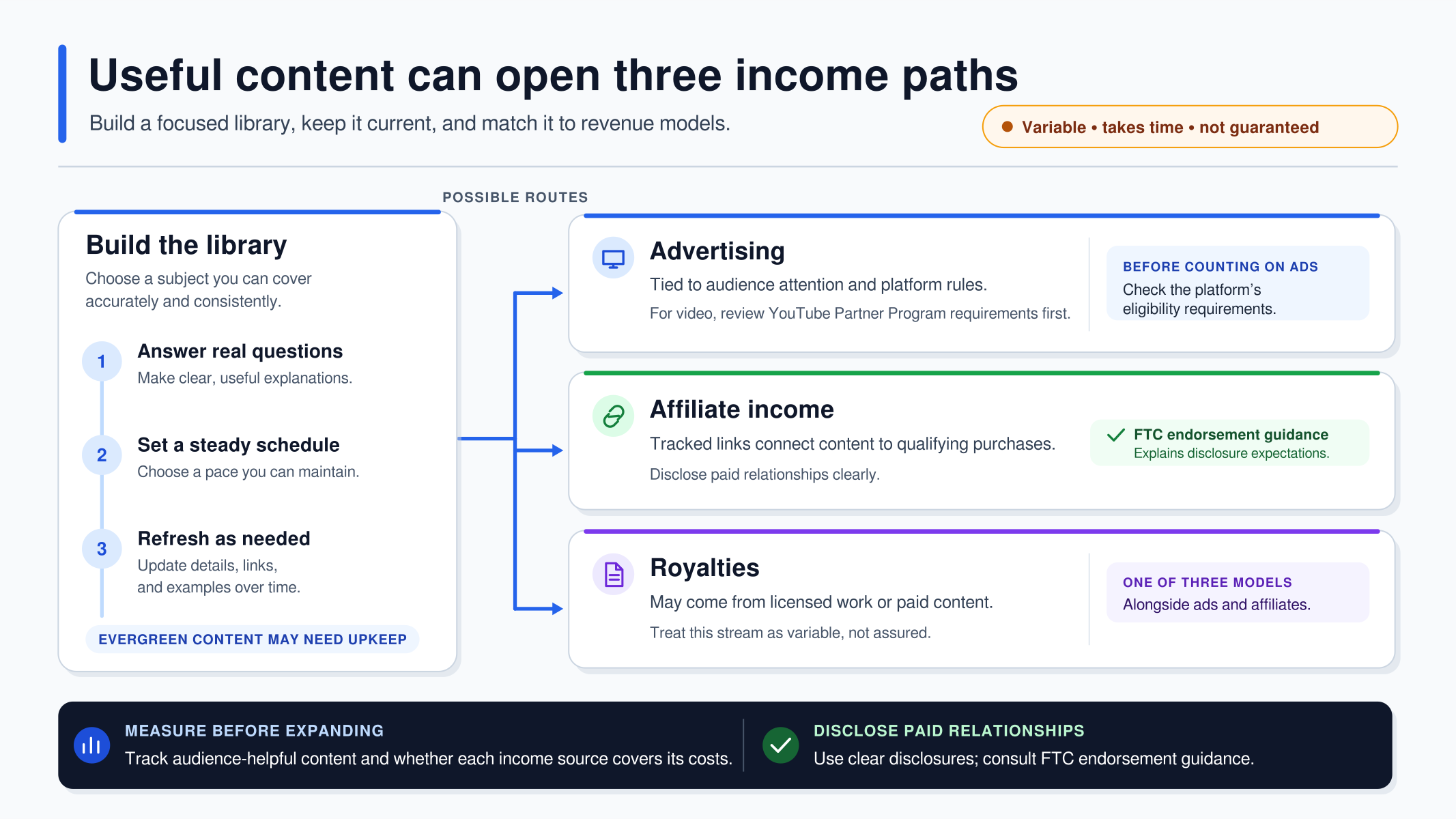
Choose a focused subject you can cover accurately and consistently. Then create useful pieces that answer real questions, such as a beginner’s guide to maintaining a bicycle or planning a weekly menu. Evergreen content can continue attracting viewers or readers, but it may need refreshed details, links, and examples. Make a simple publishing schedule you can maintain, and prioritize clear explanations over volume. For video, review the platform’s YouTube Partner Program requirements before you count on advertising income.
Understand Advertising, Affiliate, and Royalty Income
Advertising income depends on audience attention and platform rules. Affiliate income comes from qualifying purchases through tracked links, while royalties may come from licensed work or paid content. These streams can vary and usually take time to build, so don’t treat them as guaranteed earnings. Disclose paid relationships clearly; the FTC’s endorsement guidance explains disclosure expectations for endorsements. Track which content helps your audience and which income sources cover their costs before you expand.
Conclusion
You can build passive income through investments, savings, rentals, or work you create once and sell or license repeatedly. Each option asks for a different mix of upfront money, time, knowledge, and ongoing attention. Interest accounts may suit money you want to keep accessible, while creative products can suit skills you’re ready to package. Rentals and dividend investing bring their own costs and risks, so check the details before you start.
Choose one idea that fits your current situation and take these steps:
- Set a clear goal and decide how much time or money you can commit.
- Research costs, rules, fees, risks, and the work required after launch.
- Start with a manageable version, then track income and expenses.
- Review what you learn and adjust before adding another stream.
That process keeps your decisions grounded. If an idea sounds effortless or promises reliable returns, slow down and verify the details. When you make passive income part of a broader financial plan, you can judge progress by net results and sustainability not just a promising sales pitch. Keep learning, protect your essential savings, and give your chosen approach enough time for a fair review.
Frequently Asked Questions
Frequently Asked Questions
Can you make passive income with little or no money to invest?
How long does it take for a passive income idea to start earning?
Is passive income really passive?
How can you tell whether a passive income idea is worth the effort?
Do you have to pay taxes on passive income?
Should you start one passive income stream or several?
What should you do before spending money on a passive income opportunity?
Can passive income replace a regular paycheck?
Sources
- 15 Passive Income Ideas to Help You Generate Cash Flow
https://www.navyfederal.org/makingcents/investing/15-passive-income-idea-to-generate-cash-flow.htmlNavy Federal outlines 15 passive income ideas for generating cash flow.
- How to make passive income – Fidelity Investments
https://www.fidelity.com/learning-center/smart-money/passive-income-ideasFidelity presents passive income ideas and explains how to make passive income.
- 8 Side Hustles to Build Passive Income in 2026
https://www.meriwest.com/our-story/blog/8-side-hustles-build-passive-income-2026Meriwest lists eight side hustles for building passive income in 2026.
- Passive Income Ideas That Actually Work and Are Worth Your Time
https://www.gillianperkins.com/blog/passive-income-ideas-that-are-actually-worth-your-timeGillian Perkins discusses passive income ideas she describes as worthwhile and effective.
- Passive income ideas 2026 | U.S. Bank
https://www.usbank.com/financial-education/save/passive-income.htmlU.S. Bank presents passive income ideas for 2026 and defines passive income as money earned without daily labor, though some upfront effort or oversight may be involved.
- Investor.gov’s overview of stocks
https://www.investor.gov/introduction-investing/investing-basics/investment-products/stocksInvestor.gov’s overview introduces stocks as an investment topic.
- FDIC deposit insurance information
https://www.fdic.gov/resources/deposit-insuranceThe FDIC’s page provides information about deposit insurance.
- IRS rental income guidance
https://www.irs.gov/taxtopics/tc414The IRS page covers tax guidance on rental income.
- Small Business Administration’s market research guide
https://www.sba.gov/business-guide/plan-your-business/market-research-competitive-analysisThe Small Business Administration’s guide covers market research and competitive analysis.
- U.S. Copyright Office’s copyright overview
https://copyright.gov/what-is-copyrightThe U.S. Copyright Office’s overview explains the subject of copyright.
- YouTube Partner Program requirements
https://support.google.com/youtube/answer/72851YouTube’s support page outlines YouTube Partner Program requirements.
- FTC’s endorsement guidance
https://www.ftc.gov/business-guidance/resources/ftcs-endorsement-guides-what-people-are-askingThe FTC’s guidance answers questions about its endorsement guides.
- I tracked every “passive income” idea I tried over 2 years … – Reddit
https://www.reddit.com/r/passive_income/comments/1s92wwq/i_tracked_every_passive_income_idea_i_tried_overA Reddit post title describes tracking passive-income ideas tried over two years.
- Simple Ways To Make Simple Passive Income? – Reddit
https://www.reddit.com/r/financialindependence/comments/2mnzku/simple_ways_to_make_simple_passive_incomeA Reddit post asks about simple ways to generate passive income.
- Passive Income – Reddit
https://www.reddit.com/r/passive_incomeA Reddit passive-income page features a post snippet about earning $5,000 over two years from one 10-minute video.