
If you make money decisions without a clear plan, rising income can disappear into higher spending, expensive debt, or investments you don’t understand. That can leave you working hard without building the financial choices you want. A millionaire mindset isn’t about looking wealthy or chasing shortcuts. It’s a practical way to learn how money works, make decisions from solid fundamentals, and build wealth over time.
This guide shows you how to set measurable goals, direct your spending, handle debt, invest for the long term, and protect your progress. You don’t need a large salary to begin. You do need a clear picture of your finances and habits you can repeat. For example, if you set aside $200 each month, you’ll direct $2,400 a year toward a goal before considering any investment growth. Your own starting amount can be smaller or larger.
Before you begin, gather:
-
Your recent bank and credit card statements. -
A list of debts, interest costs, savings, and investments. -
A notebook or spreadsheet to track goals and monthly changes.
Use these steps as a financial check-in, not a promise of quick wealth. Your income, family needs, location, and comfort with risk all affect which choices make sense. Start with what you can control, then review and adjust as your circumstances change.
Key Takeaways
- Build habits, not appearances: A millionaire mindset is about repeatable decisions tracking what you earn, spend, save, and owe not displaying expensive purchases or copying someone else’s lifestyle.
- Make goals measurable: Give each goal an amount, purpose, and timeline, then review your progress regularly. If the target does not fit your finances, adjust the amount or timeline.
- Use a realistic budget: Base your spending plan on actual income, bills, debt payments, and everyday costs. Assign money to savings and priorities, and automate transfers only at an amount your cash flow can handle.
- Direct spending toward your priorities: Pause before nonessential purchases and decide in advance how to use any increase in income, so routine upgrades do not crowd out savings, debt repayment, or other goals.
- Choose a debt plan you can sustain: List each balance, interest rate, minimum payment, and due date. Keep up with required payments, compare total borrowing costs, and consider directing extra payments toward high-interest debt.
What a Millionaire Mindset Looks Like in Practice

Step 1: Focus on decisions you can repeat. A millionaire mindset is a set of money habits, not a display of expensive purchases. It helps you pay attention to what you earn, spend, save, and owe. You don’t need to copy another person’s lifestyle or assume every wealthy person follows the same path. Instead, use your own priorities to guide everyday choices. That way, your financial plan reflects the life you want, not appearances.
Focus on Habits and Decisions, Not Appearances
Look past visible signals like a new car or designer clothes. They don’t tell you whether someone has savings, debt, or investments. Build habits that strengthen your own position: check your spending, pay bills on time, and put money toward important goals. When you’re tempted by a purchase, ask whether it supports a priority or simply looks impressive. A short pause can help you choose with intention instead of comparison.
Treat Wealth as a Long-Term Process
Think of wealth-building as a series of decisions rather than one dramatic breakthrough. Saving regularly, managing borrowing, and learning about investing can support progress across years. You’ll face setbacks and changes along the way, so leave room to adapt. A missed contribution doesn’t erase your plan; return to your next practical action. Consistency matters more than trying to predict every change in the economy or your life.
Set Financial Goals You Can Measure

Step 2: Give each goal a clear destination. “Build wealth” is an inspiring idea, but it doesn’t tell you what to do this month. Turn it into targets you can track, such as paying off a card, saving for a home deposit, or increasing retirement contributions. Write down the amount, purpose, and time frame. Then compare your goals with your current income and obligations. If a target feels too large, split it into smaller milestones you can reach and review.
Turn Broad Ambitions Into Specific Targets
Choose a goal that matters to you and make it concrete. For example, if you want to save $3,000 for a move in 12 months, you’d need to set aside about $250 per month, before interest or fees. Check that amount against your essential bills and debt payments. If it doesn’t fit, extend the timeline or revise the target instead of relying on wishful thinking. A realistic goal gives your next decision a useful reference point.
Review Progress With Regular Checkpoints
Pick a regular review date, such as the end of each month. Compare what you planned with what actually happened, and note the reason for any difference. You might have spent more on travel, received extra income, or faced an unexpected bill. Use that information to adjust the next month’s plan. A simple progress record can include your savings balance, debt balances, and contributions. Keep it brief enough that you’ll continue using it.
Build a Budget That Supports Wealth-Building
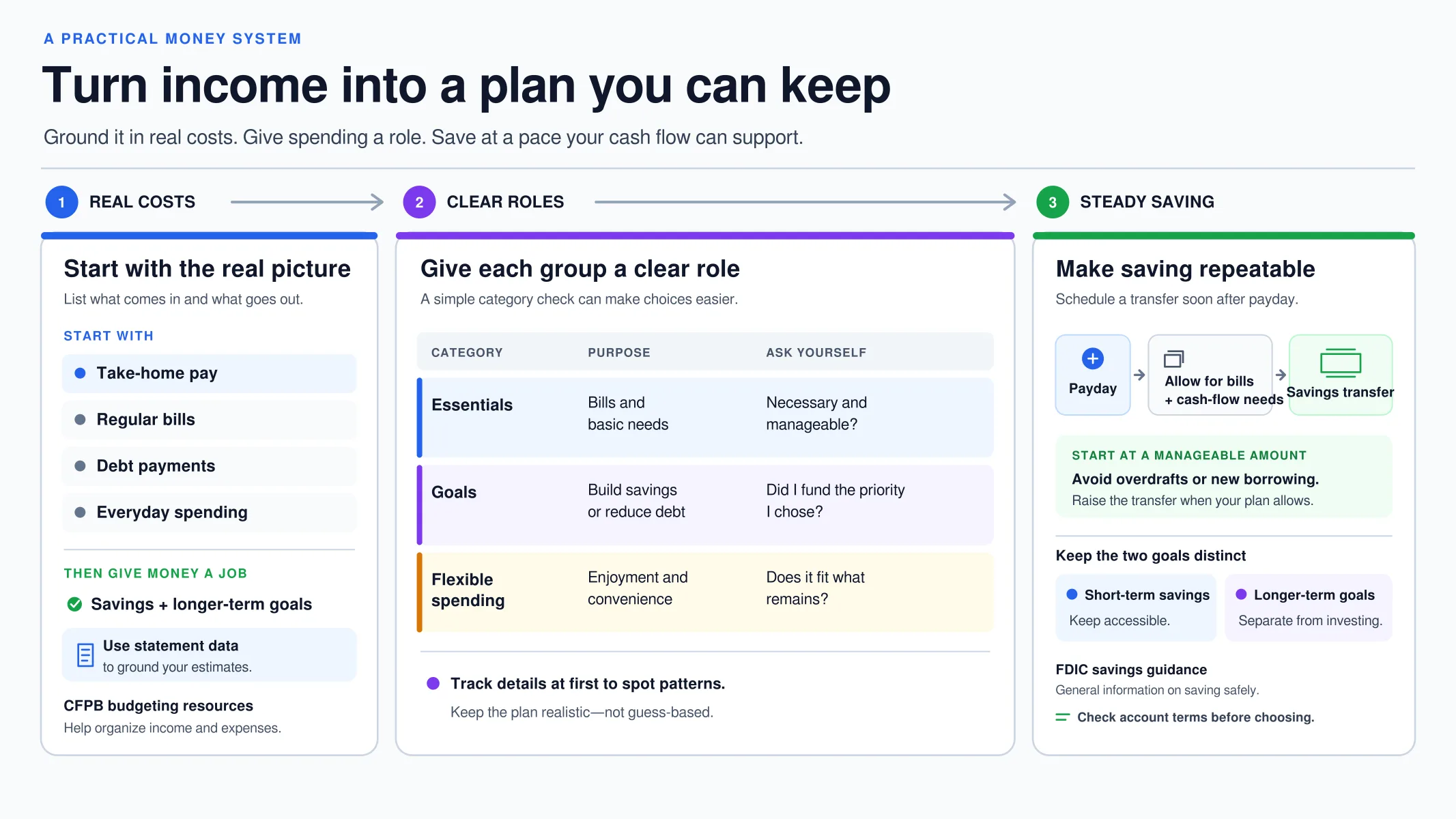
Step 3: Make a spending plan you can maintain. A budget shows where your income goes and helps you decide what should happen next. Start with take-home pay, regular bills, debt payments, and everyday spending. Then assign money to savings and longer-term goals. A written or digital plan is useful only if it reflects real costs, so check your statements rather than guessing. The Consumer <a href=”https://eliteisle.com/7-smart-money-habits-that-build-long-term-financial-freedom”>Financial</a> Protection Bureau’s budgeting resources can help you organize income and expenses.
Give Every Dollar a Clear Purpose
Group spending into useful categories, such as housing, food, transport, debt, savings, and personal priorities. You don’t have to account for every coffee forever, but tracking details at first can reveal patterns. A simple comparison makes choices easier:
Make Saving Automatic and Consistent
Schedule a transfer to savings soon after payday, once you’ve allowed for bills and cash-flow needs. Begin with an amount that won’t push you into overdrafts or new borrowing. Increase it when your budget can handle more. Keep short-term savings accessible, and separate it from money you plan to invest for longer-term goals. The FDIC’s savings guidanceoffers general information about saving safely. Check account terms before choosing where to keep your money.
Spend Intentionally and Avoid Lifestyle Inflation

Step 4: Decide what deserves your money. Spending intentionally doesn’t mean removing every pleasure from your life. It means choosing purchases with awareness, so routine upgrades don’t quietly crowd out bigger goals. Before buying, consider the price, how often you’ll use the item, and what you’d give up to pay for it. Keep a short list of your priorities, such as travel, family time, or learning. That list helps you spend freely where it matters and pause where it doesn’t.
Separate Needs, Priorities, and Impulse Purchases
Sort planned expenses into essentials, meaningful extras, and impulse buys. Essentials include costs such as housing and food; meaningful extras might include a class or a trip you’ve saved for. Impulse purchases often arrive with urgency, a sale countdown, or social pressure. Give nonessential purchases a cooling-off period before you commit. You can also set a monthly allowance for flexible spending. If an item fits that limit and your priorities, you can buy it without derailing your plan.
Keep Rising Income From Becoming Rising Expenses
When your income increases, decide in advance how you’ll use the difference. You might split it among debt repayment, savings, and a planned quality-of-life improvement. For instance, if a raise adds $300 to your monthly take-home pay, you could direct $200 toward a goal and keep $100 for a chosen upgrade. That’s an example, not a rule; your budget may call for another split. Avoid taking on new fixed bills until you know the change fits your longer-term plans.
Manage Debt Before It Limits Your Choices

Step 5: List what you owe and choose a payoff plan. Record each balance, minimum payment, interest rate, and due date. Keep making every required payment while you choose where extra money should go. High-interest balances can grow costly, so they often deserve priority. Compare the total cost and terms rather than focusing only on the monthly payment. A lower payment stretched across more time may still cost you more overall.
Prioritize High-Interest Balances
After covering minimums, consider directing extra payments to the debt with the highest interest rate. This approach can reduce interest costs, though you may prefer paying a small balance first for motivation. Choose a method you can sustain and review it when your budget changes. If you’re struggling to make payments, contact your lender early to ask about available options. Don’t ignore notices or assume that a new loan will fix the problem without comparing its full cost.
Debt is easier to manage when you know the balance, cost, and next payment date for every account. Put those details in one place, then choose a payoff plan you can follow without missing essential bills.
Debt is easier to manage when you know the balance, cost, and next payment date for every account. Put those details in one place, then choose a payoff plan you can follow without missing essential bills.
Use Credit Carefully and Understand Its Costs
Credit can help with planned purchases, but it isn’t extra income. Before borrowing, read the interest, fees, payment schedule, and consequences of missing a payment. Avoid charging an amount you can’t repay under the account terms. The Federal Trade Commission’s credit guidancecan help you understand common credit and debt issues. If you’re comparing cards or loans, review the complete terms and consider how the payment fits your budget, not just the introductory offer.
Invest Consistently for Long-Term Growth

Step 6: Match investing choices to your timeline. Investing can help your money grow, but returns aren’t guaranteed, and values can fall. Before investing, cover near-term needs and understand what you’re buying. Money needed soon may not suit investments that can fluctuate sharply. For longer goals, regular contributions can help you avoid making every decision based on short-term market movement. You can learn basic investing terms through the SEC’s investor education resources.
Understand Compounding and Your Time Horizon
Compounding happens when investment earnings remain invested and may earn returns of their own. It can support long-term growth, but actual results vary, and losses are possible. Consider a purely illustrative example: investing $100 each month for 10 years means contributing $12,000 before fees, taxes, or investment gains and losses. That arithmetic isn’t a forecast. Your timeline matters because money needed in a few years may call for a different approach from retirement money you expect to leave invested much longer.
Choose a Diversified Approach You Can Maintain
Diversification means spreading investments across different holdings rather than relying on one company or asset. It can reduce the effect of a poor result in a single holding, though it can’t prevent all losses. Consider your time horizon, comfort with risk, fees, and account rules before choosing. The Grow Your Income Through Skills and Opportunities
Step 7: Look for practical ways to increase earning power. Saving matters, but your income affects how much room you have to meet needs, reduce debt, and build assets. Identify skills that employers or clients value in your field. Then compare the cost and time of training with the likely opportunities it could open. A course isn’t automatically worthwhile because it promises a higher salary. Look for clear learning outcomes, credible instructors, and evidence that the skill fits real roles you’d pursue. Review job descriptions for positions you’d like to pursue and note the skills that appear repeatedly. Ask a manager, mentor, or experienced colleague which gaps matter most. You may be able to build a skill through a project, supervised practice, or a lower-cost course before committing to a larger expense. Track what you learn and how you use it. This makes it easier to discuss your experience when you apply for a role or request greater responsibility. A side project can bring in extra money, but it also takes time and may involve costs, taxes, or uneven demand. Estimate your likely expenses and hours before you start. For a job change, compare total compensation, benefits, commute, stability, and growth opportunities not only the advertised salary. Keep essential savings in view while income changes. If a new opportunity depends on spending heavily upfront or making promises you can’t verify, slow down and check the terms carefully. Step 8: Add a pause between an urge and a money decision. Fear and excitement can push you toward rushed choices, especially during market swings or persuasive sales pitches. Give yourself time to read the terms, check your budget, and confirm what you could lose. For an important decision, write down the reason you’re considering it and what would make you change your mind. That small record can help you spot pressure, assumptions, or missing details before you commit. Set a personal rule for decisions that affect savings, borrowing, or investments. You might wait overnight before making a nonessential purchase or schedule a second review before signing a major agreement. The right pause depends on the choice; deadlines for essential services may need a quicker response. Even then, read the key terms and verify the provider. Be cautious when someone urges you to act immediately or promises a sure result, especially if you can’t independently confirm the claim. Compare each option by asking what you gain, what you pay, what could go wrong, and how easily you can reverse the decision. Include fees, time, and effects on other goals. For example, using $1,000 from savings to pay debt could reduce interest costs, but it may leave you less prepared for a sudden bill. Neither choice is automatically best; your available cushion and debt terms matter. Write down the most likely outcome and a less favorable one before choosing. Step 9: Prepare for costs that could disrupt your plan. Wealth-building includes keeping progress intact when life changes. An emergency fund can help you handle expenses such as repairs, medical bills, or a period without income, although the right amount depends on your situation. Start with a reachable first target, then build toward a reserve that reflects your essential costs and income stability. Keep emergency money accessible, and check the account terms. The CFPB’s emergency savings informationcan help you plan. Estimate your essential monthly expenses, including housing, food, utilities, transport, and minimum debt payments. If those costs total $2,000 a month, a reserve covering one month would be $2,000; a larger target would take more time. Treat this as an example, not a universal requirement. If saving feels difficult, begin with a smaller amount and add to it regularly. Use the fund for genuine surprises, then rebuild it after you draw from it. Check whether your insurance matches your current needs, responsibilities, and belongings. Review coverage limits, deductibles, exclusions, and renewal details rather than assuming last year’s choices still fit. Your risks may change when you move, buy a home, start a business, or take on family responsibilities. Ask an insurer or qualified adviser to explain unclear terms before you make a decision. Also protect account access with strong passwords and secure recovery details; a practical financial plan includes guarding the information behind your money. A millionaire mindset starts with decisions you can repeat: set a clear goal, make a budget, spend on purpose, and address costly debt. From there, you can build savings, learn about long-term investing, grow your earning potential, and protect yourself against setbacks. You don’t have to change every part of your financial life at once. Choose the next action that fits your real circumstances, then give yourself a regular time to review what’s working. Use your numbers to guide choices, not to judge yourself. If a plan stops fitting, adjust it and keep moving. You might begin by checking your account balances, setting an automatic transfer, or listing every debt and its cost. These simple steps can make your finances easier to understand and help you make smarter money decisions with more confidence. Progress comes from steady attention to fundamentals, not from appearances or promises of quick returns.
Invest in Skills That Increase Your Earning Potential
Evaluate Side Income and Career Moves Realistically
Make Smarter Decisions Under Financial Uncertainty

Pause Before Acting on Fear or Excitement
Compare Risks, Trade-Offs, and Likely Outcomes
Protect Your Progress With Financial Safeguards
Build an Emergency Fund for Unexpected Costs
Review Insurance and Financial Risks Regularly
Conclusion
Frequently Asked Questions
Can you develop a millionaire mindset on a modest income?
Does having a millionaire mindset guarantee you will become a millionaire?
How is a millionaire mindset different from a get-rich-quick approach?
Should you pay off debt or invest first?
How can you assess an investment before putting money into it?
Does a millionaire mindset mean taking bigger financial risks?
How should you respond to a financial setback?
How can you build a millionaire mindset with a partner or family?
Sources