EliteIsle.com - The Pinnacle of Prestigious Living
No Result
View All Result
Thursday, September 17, 2026
  • Login
  • Register
  • Home
  • Health
  • Wealth
  • Business
  • LifeStyle
  • Tech
  • World & Travel
Subscribe
EliteIsle.com - The Pinnacle of Prestigious Living
  • Home
  • Health
  • Wealth
  • Business
  • LifeStyle
  • Tech
  • World & Travel
No Result
View All Result
EliteIsle.com - The Pinnacle of Prestigious Living
No Result
View All Result
Home Business

The Decision Desk: How to Evaluate a Major Purchase in 8 Steps

by Elite Isle
September 16, 2026
in Business, Smart Homes, Wealth
Reading Time: 13 mins read
224 7
0
The Decision Desk: How to Evaluate a Major Purchase in 8 Steps
185
SHARES
2.3k
VIEWS
Share on FacebookShare on TwitterShare on PinterestShare on Reddit

A major purchase deserves more than a quick comparison and a persuasive sales pitch. Whether you’re considering a vehicle, property, technology, or another high-cost commitment, a clear decision process can help you protect your cash, time, and future flexibility. This guide shows you how to complete a practical Major Purchase Evaluation in eight steps. You’ll define the need, build a realistic budget, compare alternatives, check quality, measure long-term value, test the choice against daily life, manage risk, and reassess the result after buying.

Key Takeaways

  • Define the problem before comparing products: State the result you want, identify must-have features and deal breakers, and separate genuine needs from attractive extras so marketing does not define the decision.
  • Calculate the complete cost of ownership: Include the purchase price, taxes, fees, delivery, financing, insurance, maintenance, repairs, subscriptions, storage, energy, and other ongoing expenses before deciding what you can afford.
  • Compare a focused shortlist consistently: Evaluate three to five realistic options using the same criteria, mark deal breakers separately, verify claims, and explain why the leading option is better than the runner-up.
  • Test quality, fit, and long-term value: Cross-check independent reviews and official specifications, assess warranty and service support, and compare practical benefits over the expected ownership period rather than focusing only on the lowest initial price.
  • Stress-test the purchase against real life: Consider ordinary use, available space, maintenance demands, shared users, and likely life changes. If the purchase works only under ideal conditions, its risk may be greater than it appears.
  • Protect yourself before and after committing: Review contracts, return terms, financing, warranties, and cancellation conditions; assess the worst realistic loss; then compare actual costs and usefulness with your assumptions after a practical trial period.

1. Define the Purchase and Its Purpose

Photographic scene of a person reviewing a purchase decision at a desk, with product options, notes, and a problem statement visible in a notebook

Start by describing the problem you want the purchase to solve. A larger vehicle might address family space, while new business equipment might reduce delays or increase capacity. Write the desired result in one sentence, then separate essential features from attractive extras. This keeps marketing language from defining your decision.

List your must-haves, acceptable compromises, and deal breakers. For example, you might require a certain size, location, compatibility, safety feature, or service level. Ask how often you’ll use the purchase and who else depends on it. If you can’t explain the purpose clearly, pause before comparing products.

  • •
    Problem: What isn’t working now?
  • •
    Goal: What useful result should the purchase create?
  • •
    Must-haves: Which features are genuinely necessary?
  • •
    Nice-to-haves: Which benefits can you live without?

2. Set a Complete and Realistic Budget
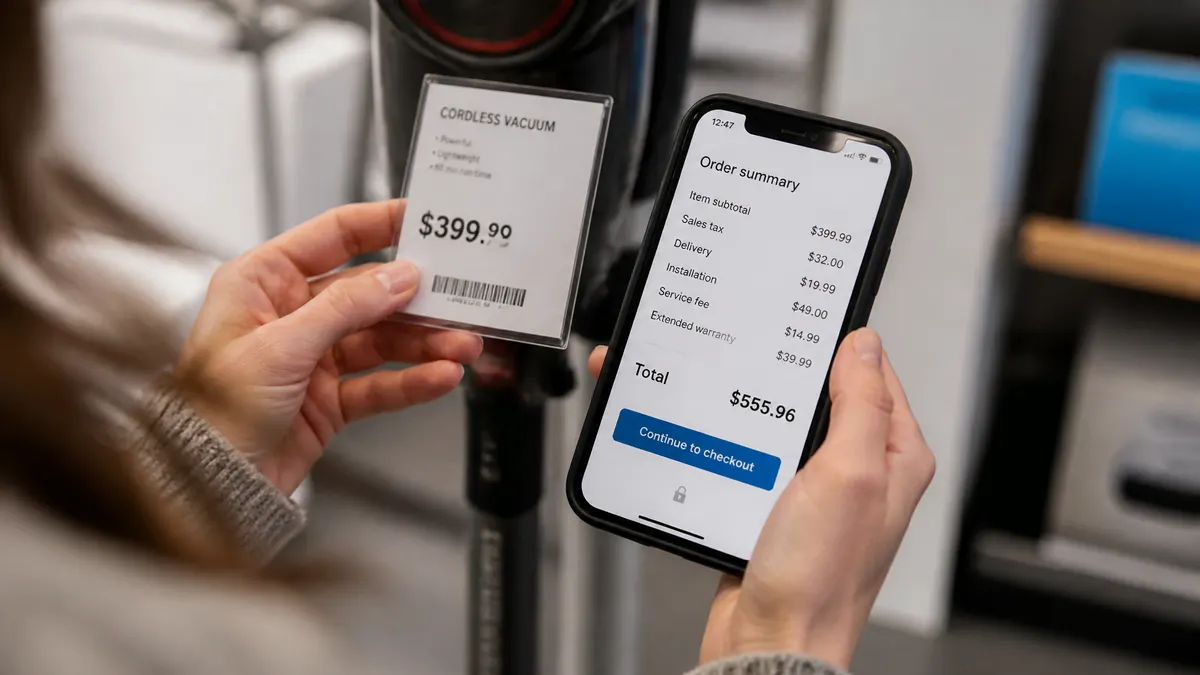
Photorealistic close-up of a shopper comparing the advertised price of a product with the full checkout total, including taxes, delivery fees, service charges

Look beyond the advertised price. Your real budget should include the purchase amount, taxes or fees, delivery, installation, financing costs, insurance, maintenance, and likely repairs. Some purchases also carry membership, storage, software, energy, or training expenses. Write every expected cost before you decide what you can afford.

Then compare the payment with your wider financial plan. A comfortable purchase shouldn’t require you to delay essential bills, abandon emergency savings, or take on expensive debt. If you’re financing, compare the total repayment rather than focusing only on the monthly figure. Also consider replacement timing, because a low initial price may not mean a low cost over the full ownership period.

Cost Area Questions To Ask
Upfront What taxes, fees, delivery, or setup costs apply?
Financing What is the total repayment, not just the monthly payment?
Ownership What will insurance, energy, storage, or subscriptions cost?
Maintenance What servicing, repairs, and replacement parts are likely?

3. Compare Alternatives Using Consistent Criteria

Photographic scene of a person comparing a carefully selected shortlist of products or services on a desk, with comparison notes, checkmarks

Create a shortlist instead of comparing everything available. Three to five realistic options are usually enough to expose meaningful differences without creating decision fatigue. Use the same criteria for every option, such as total cost, performance, reliability, convenience, resale potential, support, and fit with your stated purpose.

Give each criterion a simple importance rating. You can score options from one to five, but don’t let a mathematical total replace judgment. A lower-priced choice may score well overall yet fail one essential requirement. Mark any deal breaker separately so it can’t be hidden by strong scores elsewhere.

  • •
    Remove options that fail a must-have feature.
  • •
    Record prices and terms on the same date.
  • •
    Separate verified facts from sales claims.
  • •
    Explain why the leading option beats the runner-up.

A comparison sheet also gives you a calmer basis for negotiation. You’ll know which benefits matter and which extras you don’t need.

4. Research Quality, Reliability, and Fit

Photographic scene of a researcher comparing information across several independent sources, with printed studies, open books, and a laptop displaying charts arranged on a desk

Check information from more than one source. Read independent reviews, examine technical specifications, and look for recurring complaints rather than isolated negative comments. Pay attention to performance in conditions similar to yours. A product that works well in general may still be a poor fit for your climate, workload, space, or skill level.

Review the warranty carefully. Confirm what it covers, how long coverage lasts, who pays shipping or labor, and which actions could void it. Then investigate service access, replacement parts, software support, and repair timelines. A

Warning: Treat unusually glowing testimonials and limited-time claims cautiously. Verify important specifications in official documentation, and ask for written terms before paying.

5. Calculate the Long-Term Value

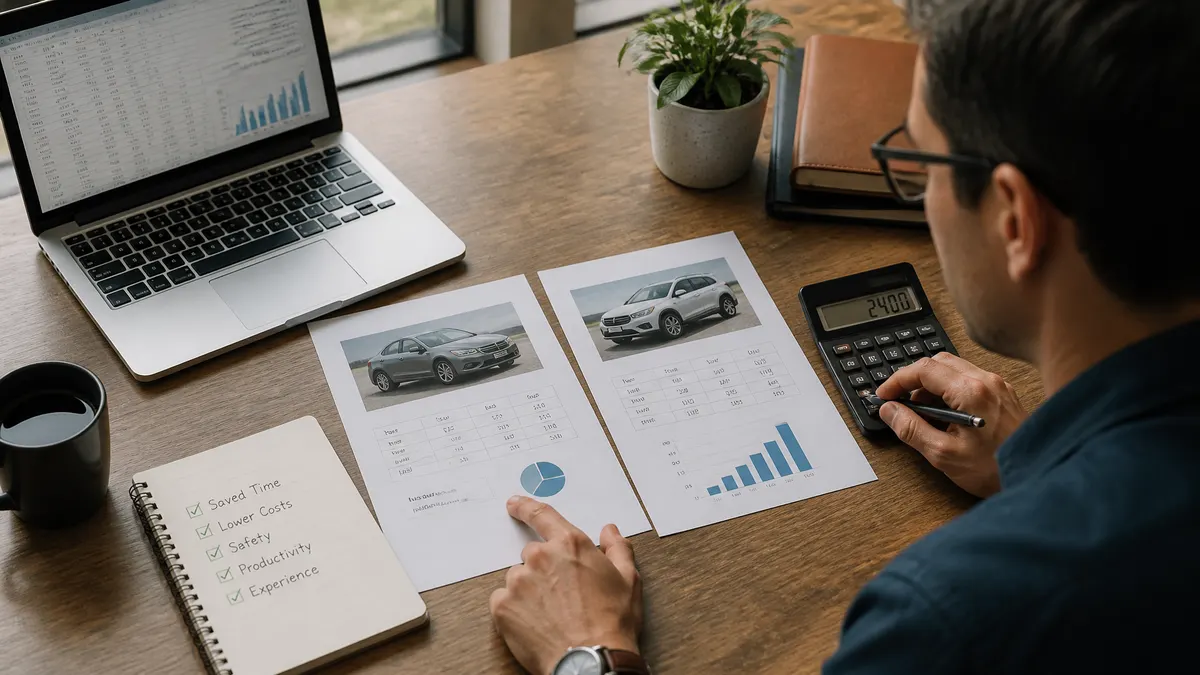
Photographic image of a person comparing two long-term investment or purchase options with a calculator, financial charts, and a benefits checklist on a desk
Choose the option that delivers the most useful benefit for its full cost, not simply the option with the lowest price today.

Estimate how much practical value the purchase will create over its useful life. That value might come from saved time, lower operating costs, improved safety, greater productivity, or a better experience. Keep the estimate grounded in your actual habits. A feature has little value if you rarely use it.

Next, divide the expected total cost by the number of months or years you expect to use the purchase. This won’t produce a perfect forecast, but it helps you compare expensive and inexpensive alternatives fairly. Include likely resale value only if you can make a reasonable, cautious estimate. If the value depends on uncertain income or usage, test a conservative scenario as well.

6. Test the Decision Against Your Real Life

Photographic scene of a person thoughtfully evaluating a major purchase by comparing a product, budget notes, and a weekly planner on a kitchen

Before committing, imagine the purchase in an ordinary week, not an ideal one. Consider how often you’ll use it, where it will go, who will operate it, and what routine it will add. A premium choice may look attractive until it requires difficult storage, frequent charging, specialized maintenance, or a long commute for service.

Check your current constraints and likely changes. A growing family, relocation, career shift, health change, or new business plan could affect the purchase’s usefulness. You don’t need to predict the future perfectly. You do need to ask whether the decision remains manageable if your circumstances change.

  • •
    Can you use it comfortably within your available space?
  • •
    Will your schedule support the required care or maintenance?
  • •
    Does it work for the people who will share it?
  • •
    Would a six-month delay materially improve your options?

If the purchase only works under perfect conditions, it probably carries more risk than its presentation suggests.

7. Manage Risk Before You Commit

Photographic close-up of a customer carefully reading a return policy and cancellation terms on a laptop or smartphone before completing an online purchase

Read the return policy, cancellation terms, contract, financing agreement, and warranty before signing. Check deadlines, restocking charges, exclusions, automatic renewals, and early payment conditions. If a salesperson makes a promise, ask for it in writing. Verbal assurances can be difficult to prove later.

Run a downside test. Ask what happens if the product underperforms, your income falls, repair costs rise, or you need to sell sooner than planned. Identify the worst realistic loss and decide whether you could absorb it without damaging essential goals. For major commitments, an independent inspection or professional review may be worth the cost.

Important: Don’t confuse approval with affordability. A lender or seller may accept the transaction, but you still need to protect your broader financial position.

8. Make the Purchase and Reassess the Outcome

Set a decision deadline after completing your research. A deadline prevents endless comparison, while a written decision rule keeps urgency from pushing you into a poor choice. For example, proceed only if the option meets every must-have, fits the complete budget, and remains acceptable under your conservative scenario.

Before payment, confirm the final price, included items, delivery date, warranty, and cancellation terms. Save receipts, contracts, specifications, and service records in one place. After buying, review the purchase after a practical trial period. Compare actual costs and usefulness with your original assumptions.

  • •
    What worked better than expected?
  • •
    Which costs or limitations did you miss?
  • •
    Are you using the purchase as often as planned?
  • •
    What would you change in your next major decision?

This review turns one purchase into better judgment for the next one.

Conclusion

A disciplined Major Purchase Evaluation doesn’t require perfect information. It requires a clear purpose, a complete budget, consistent comparisons, careful research, and an honest view of risk. Define what you need, measure the full cost, test the choice against real life, and give yourself permission to walk away when the numbers or terms don’t work. Then reassess the result after buying. That simple habit helps you spend with greater confidence while keeping your long-term wealth and flexibility in view.

Frequently Asked Questions

What is the difference between a need-based purchase and a want-based purchase?

A need-based purchase addresses an essential requirement, such as transportation, housing, or a work tool, while a want-based purchase mainly improves convenience, comfort, or enjoyment. Identifying the category can help you set stricter limits, delay the decision, or consider a lower-cost alternative.

How much emergency savings should remain after a major purchase?

Do not use money needed for essential expenses or unexpected costs. Before committing, estimate your regular obligations, likely ownership costs, and upcoming financial changes, then confirm that you will still have an adequate cash reserve after the purchase and any required deposit or fees.

Should you pay cash or finance a major purchase?

Compare the total cost of paying cash with the full financing cost, including interest, fees, required insurance, and repayment risk. Financing may preserve cash flow but can increase the purchase price over time. Review the loan type, rate, term, and payment under less favorable conditions before choosing.

How can changing interest rates affect a major purchase decision?

Higher rates can increase borrowing costs and reduce what you can comfortably afford, while lower rates may reduce interest expense without necessarily making the underlying purchase a good value. Test the budget at more than one rate and focus on the total payment and long-term cost rather than the advertised rate alone.

What fees are commonly overlooked in a major purchase?

Look beyond the listed price for taxes, registration or closing costs, delivery, installation, maintenance, insurance, financing fees, service contracts, and disposal or resale costs. Ask for a written breakdown of all mandatory and likely expenses before comparing alternatives.

When should you postpone a major purchase?

Postpone it when the purchase would reduce your emergency reserve too far, create an unaffordable recurring payment, depend on uncertain income, or prevent you from meeting higher-priority obligations. Waiting can also be sensible when you lack reliable information about the item’s condition, total cost, or suitability.

How can you avoid being pressured into a major purchase?

Set your budget and decision criteria before speaking with a seller, obtain written terms, compare at least one credible alternative, and avoid making a same-day commitment unless there is a clear, verifiable reason. Treat limited-time offers and emotional sales tactics as prompts to check the numbers, not as proof of value.

What should you do if the purchase no longer seems worthwhile after buying it?

Review the original purpose, actual costs, performance, and flexibility gained or lost. Check cancellation, return, warranty, refinancing, or resale options promptly, document any defects or misleading representations, and adjust future evaluation criteria based on what the decision process missed.

Sources

  1. Decide How Much You Want to Spend on a Home reference
    consumerfinance.gov
    Guidance on deciding how much to spend on a home.
  2. Financial Tips for Making a Major Purchase reference
    williamblair.com
    Fact: We have five tips to help you make that next big purchase.
  3. Understand the Different Kinds of Loans Available reference
    consumerfinance.gov
    Information about the different kinds of loans available.
  4. Data Spotlight: The Impact of Changing Mortgage Interest Rates reference
    consumerfinance.gov
    A data spotlight on the impact of changing mortgage interest rates.
  5. Your Home Loan Toolkit reference
    files.consumerfinance.gov
    A home loan toolkit from the Consumer Financial Protection Bureau.
  6. Figure Out How Much You Want to Spend reference
    consumerfinance.gov
    Guidance on determining how much to spend.
  7. Rising Car Prices Mean More Auto Loan Debt reference
    consumerfinance.gov
    Information about rising car prices and auto loan debt.
  8. Mortgages reference
    consumerfinance.gov
    Mortgage information and resources from the Consumer Financial Protection Bureau.
  9. Loan Estimate Explainer reference
    consumerfinance.gov
    An explanation of loan estimates from the Consumer Financial Protection Bureau.
  10. strong product with weak support can reference
    files.consumerfinance.gov
    files.consumerfinance.gov source covering strong product with weak support can.
Tags: building wealth in your 30sBusiness AnalysisBusiness InnovationBusiness Tipsbusinesses never fail
Share74Tweet46Pin17Share

Join the Club Now.
Subscribe to Elite Isle for a free exclusive affluent lifestyle insights and savvy investment strategies.

Unsubscribe

Related Posts

What Global Economic Shifts Mean for Your Lifestyle: 8 Practical Questions to Ask
Asset Diversification

What Global Economic Shifts Mean for Your Lifestyle: 8 Practical Questions to Ask

September 15, 2026
2.3k
8 Strategies for Building Wealth Across Life’s Major Decisions
Wealth

8 Strategies for Building Wealth Across Life’s Major Decisions

September 15, 2026
2.3k
Your Financial Freedom Planner: Build a Clear Path in 30 Days
Business

Your Financial Freedom Planner: Build a Clear Path in 30 Days

July 26, 2026
2.3k
Business

Untold Truth About Money: Building Wealth From Nothing

July 25, 2026
2.3k
Business

Build Wealth Without Anyone Knowing: 14 Smart Moves

July 25, 2026
2.3k
7 Smart Money Habits That Build Long-Term Financial Freedom
Wealth Management

7 Smart Money Habits That Build Long-Term Financial Freedom

July 9, 2026
2.3k
  • Trending
  • Comments
  • Latest
Exercise Recovery

Elevate Your Workout Regime: The Essential Guide to Exercise Recovery

December 28, 2023
Embracing Conscious Tourism: A New Wave of Luxury Travel

Embracing Conscious Tourism: A New Wave of Luxury Travel

December 28, 2023
The Great Divide: How Do the Wealthy Really Live?

The Great Divide: How Do the Wealthy Really Live?

December 28, 2023
Advancing Wellness at Home: Embracing the Tech Wave

Advancing Wellness at Home: Embracing the Tech Wave

December 28, 2023
Embracing Conscious Tourism: A New Wave of Luxury Travel

Embracing Conscious Tourism: A New Wave of Luxury Travel

19
Conscious Luxury Travel: A New Age of Enlightenment

Conscious Luxury Travel: A New Age of Enlightenment

16
Electrifying the Road Ahead: The Surge of Electric Vehicles (EVs) in 2023

Electrifying the Road Ahead: The Surge of Electric Vehicles (EVs) in 2023

14
Soaring to New Heights: The Dawn of Hydrogen-Powered Flights

Soaring to New Heights: The Dawn of Hydrogen-Powered Flights

13
The Decision Desk: How to Evaluate a Major Purchase in 8 Steps

The Decision Desk: How to Evaluate a Major Purchase in 8 Steps

September 16, 2026
What Global Economic Shifts Mean for Your Lifestyle: 8 Practical Questions to Ask

What Global Economic Shifts Mean for Your Lifestyle: 8 Practical Questions to Ask

September 15, 2026
8 Strategies for Building Wealth Across Life’s Major Decisions

8 Strategies for Building Wealth Across Life’s Major Decisions

September 15, 2026

8 Strategies for Designing a Healthier High-Performance Week

September 14, 2026

Follow us on Instagram

    The Instagram Access Token is expired, Go to the Customizer > JNews : Social, Like & View > Instagram Feed Setting, to refresh it.
You're not logged into Tiktok, please login here
Facebook Twitter Instagram TikTok Pinterest

Latest Articles

The Decision Desk: How to Evaluate a Major Purchase in 8 Steps

The Decision Desk: How to Evaluate a Major Purchase in 8 Steps

September 16, 2026
What Global Economic Shifts Mean for Your Lifestyle: 8 Practical Questions to Ask

What Global Economic Shifts Mean for Your Lifestyle: 8 Practical Questions to Ask

September 15, 2026

Main Menu

  • Home
  • Health
  • Wealth
  • Business
  • LifeStyle
  • Tech
  • World & Travel

Quick Links

  • About Us
  • Privacy Policy
  • Advertisement
  • Blog Articles
  • Contact Us

Developed by Smartec Web Services © 2023 All Rights Reserved to EliteIsle.com.

Welcome Back!

OR

Login to your account below

Forgotten Password? Sign Up

Create New Account!

OR

Fill the forms bellow to register

*By registering into our website, you agree to the Terms & Conditions and Privacy Policy.
All fields are required. Log In

Retrieve your password

Please enter your username or email address to reset your password.

Log In

Add New Playlist

No Result
View All Result
  • Home
  • Health
  • Wealth
  • Business
  • LifeStyle
  • Tech
  • World & Travel

Developed by Smartec Web Services © 2023 All Rights Reserved to EliteIsle.com.

This website uses cookies. By continuing to use this website you are giving consent to cookies being used. Visit our Privacy and Cookie Policy.
Impact-Site-Verification: beba37e0-4c43-4536-9726-4a00cf91832d