Introduction
Your entryway is where “luxury” stops being a look and starts being a daily feeling. If it’s cluttered, noisy, or constantly messy, your home can feel harder to live in, even if the rest of the house is stunning. That is where Luxury home systems becomes useful because it turns the opening concern into a repeatable plan.
That’s why this guide focuses on a practical approach to luxury home systems, built around one simple promise: your space stays calm because you have a repeatable workflow. The “Pristine Entryway” system is a way to design your threshold with drop zones, easy storage, and clear cues, so shoes, mail, bags, and daily carry items land in the right place automatically.
Key Takeaways
- Design an entryway with repeatable drop zones (shoes, mail, daily carry) so incoming items land in their home immediately.
- Use friction points and practical storage (shoe zone capacity, dedicated mail tray, landing area near the door) to stop clutter from spreading.
- Adopt short morning/evening resets (3-8 min / 3-10 min) focused on quick inventory and return-to-home rules to keep the space calm.
- Choose entryway materials that handle real life (easy-to-wipe, scuff-resistant, weather-friendly) and add subtle labels/cues for an upscale look.
- Maintain entryway luxury predictably with a surface-by-surface weekly clean to match the mixed materials and avoid mess “drama.”
Luxury home systems that keep clutter from arriving
Most entryways fail because everything lands wherever the closest surface is. You toss keys on a console, set mail on a table, and drop bags near the door. Then, your “temporary” piles become the default, and cleanup turns into a weekly rescue mission.
Luxury home systems fix this at the source. Instead of desk-style dumping, you design for drop zones, so incoming items have a specific home the moment they enter. Then you add friction points, the small design choices that stop mess from spreading, like a tray lip that contains loose items or a shoe setup that makes putting footwear away easier than leaving it out. Finally, you build a workflow that matches your real routines, so the system feels natural, not like extra chores.
| Problem you see | What usually causes it | What to change in the system |
|---|---|---|
| Mail piles on counters | No obvious “mail decision” spot | Add a dedicated mail zone with one tray |
| Shoes spread to multiple rooms | Storage is hard or too small | Create a shoe zone with capacity you actually use |
| Bags clutter the floor | No landing area near the door | Use a bench shelf, hook rail, or basket tray |
The Pristine Entryway setup: surfaces, storage, and signage

Start with materials that can handle real life. Entryway surfaces need to be easy to wipe, resistant to scuffs, and forgiving when the weather is messy. In many homes, that means stain-resistant textures for mats or rugs, sealed finishes on wood accents, and flooring that won’t permanently show wet footprints.
Next, create three zones you can remember without thinking. Shoes go in one dedicated place, mail goes in one visible spot, and daily carry items, like keys, sunglasses, and small bags, live near the door. Then use discreet labels and “home” cues that look upscale, not like a storage unit sign. For example, you can label drawers and trays with simple icons, use matching finishes for bins, and place a small mirror or artwork at eye level so it feels intentional.
Here’s a simple setup rule: if you’d miss it, it should be easy to put back. That one idea keeps the system looking sharp, even when the rest of the day gets busy.
Morning reset (3-8 minutes): a calm start every day
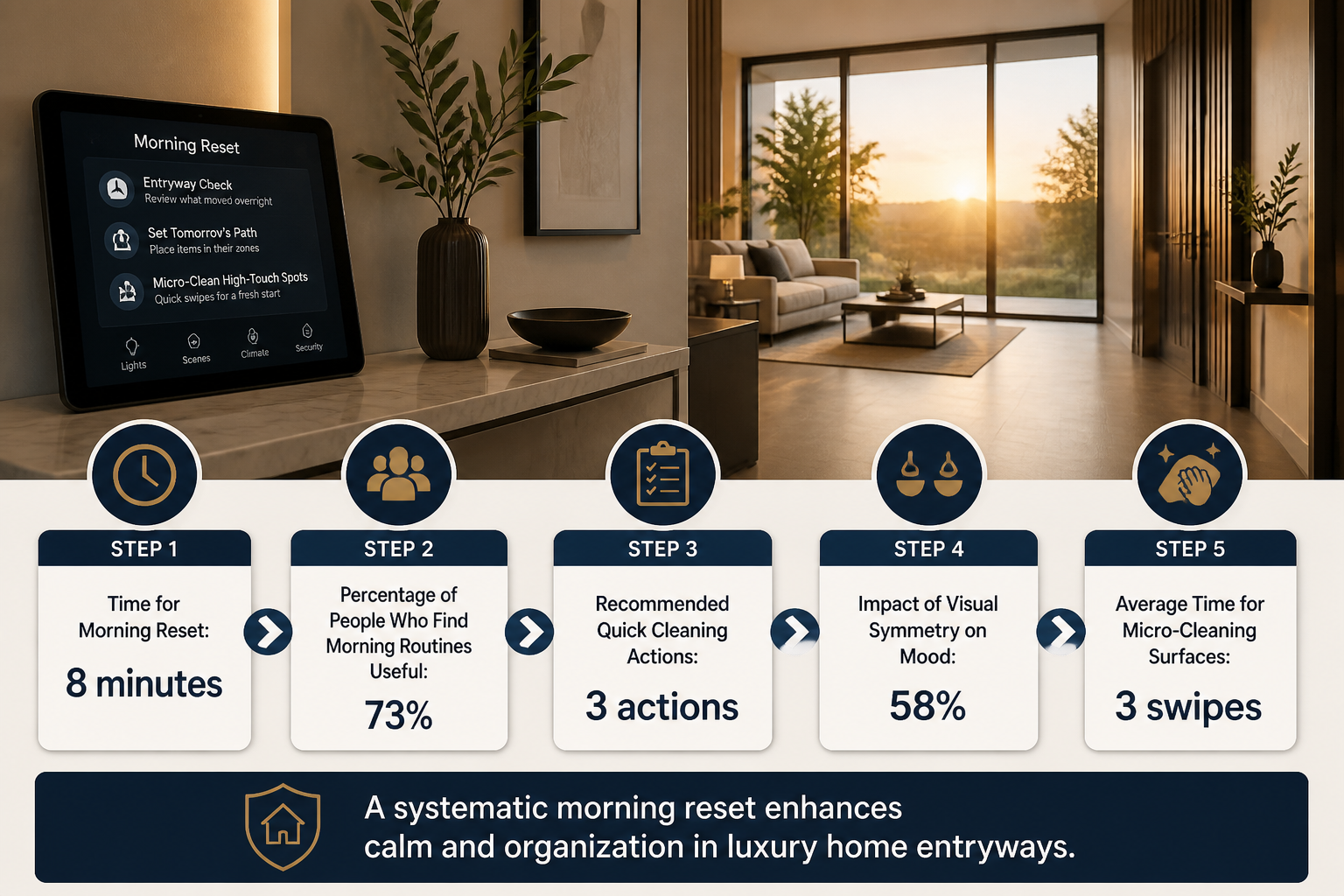
A morning reset works because it’s small and specific. You’re not “cleaning the entryway,” you’re just checking what moved overnight and setting tomorrow’s path. Think of it like a quick inventory, what stayed where it belongs, what moved, and what goes back to its zone.
Then do micro-cleaning on high-touch spots without disrupting flow. Wipe the handle or rail you touch first, tap dust off mats if needed, and check that the shoe zone is ready for the day. Finish with details that make it feel luxury, clean lighting, a tidy mat edge, and a consistent visual rhythm, like items facing the same direction in trays. If you want a quick scent cue, choose something subtle that doesn’t linger too strongly in the first minutes.
- Quick inventory: 30 seconds, scan shoes, mail, and daily carry.
- Micro-clean: 2 to 4 swipes on the door area and tray surface.
- Visual symmetry: align items so nothing looks “left out.”
Evening reset (3-10 minutes): prevent tomorrow’s mess
Your evening reset prevents the mess you’ll regret later. The goal is a fast “incoming items” sweep for bags, coats, and keys, because these are the items that multiply when you leave them loose. If you can catch them at the door, tomorrow morning becomes calmer instead of chaotic.
Set simple return-to-home rules that you can repeat. Shoes go back to the shoe zone right away, wet-weather gear gets placed to dry in its spot, and the floor stays clear. For mail, use a single mail handling step that stays off counters and floors, one tray only. If it needs action, it goes into the “decide” space, if it needs later, it gets stored in the “later” area, and if it’s done, it leaves the entry system.
Luxury feels effortless when your entryway has one landing plan, not five different “temporary” places.
- Incoming sweep: bags, coats, keys, and anything from pockets.
- Return rules: shoes back, wet items to a drying spot.
- Mail rule: one tray, no countertop staging.
Weekly luxury maintenance: deep clean without the drama
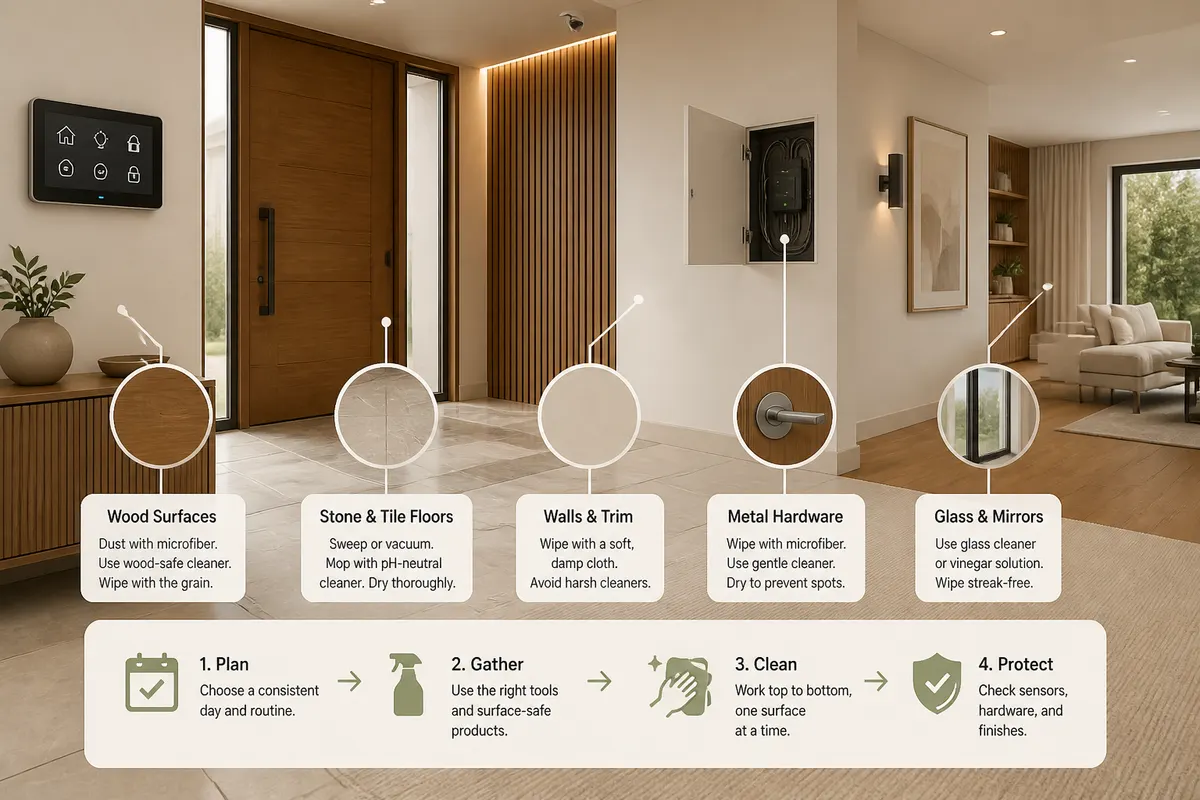
Weekly maintenance should be predictable, not dramatic. Plan a surface-by-surface clean, because entryways mix materials, wood accents, stone or tile floors, and metal hardware. When you use the right approach for each surface, you clean faster and you avoid damage that shows up later, like dulling finishes or pulling stains into textured materials.
Then handle grit the smart way. Vacuuming and mat care matter because small particles act like sandpaper, spreading dirt across the floor each time you walk through. Shake mats outside if you can, vacuum the mat backing, and clean under the bench area where dust hides. Finally, refresh textiles and organize seasonal overflow, rotate heavier items when the weather changes, and store extras in closed bins so they don’t visually crowd the entry.
| Surface type | What to do weekly | What to avoid |
|---|---|---|
| Wood accents | Damp cloth, then dry, quick polish if needed | Soaking or harsh cleaners that dull the finish |
| Stone or tile | pH-neutral cleaner, spot wipe and dry | Acidic cleaners on sensitive surfaces |
| Metal hardware | Light wipe, dry buff for shine | Abrasive pads that scratch |
| Mats and textiles | Shake and vacuum, spot clean stains fast | Letting spills sit, skipping stain treatment |
Troubleshooting common entryway breakdowns
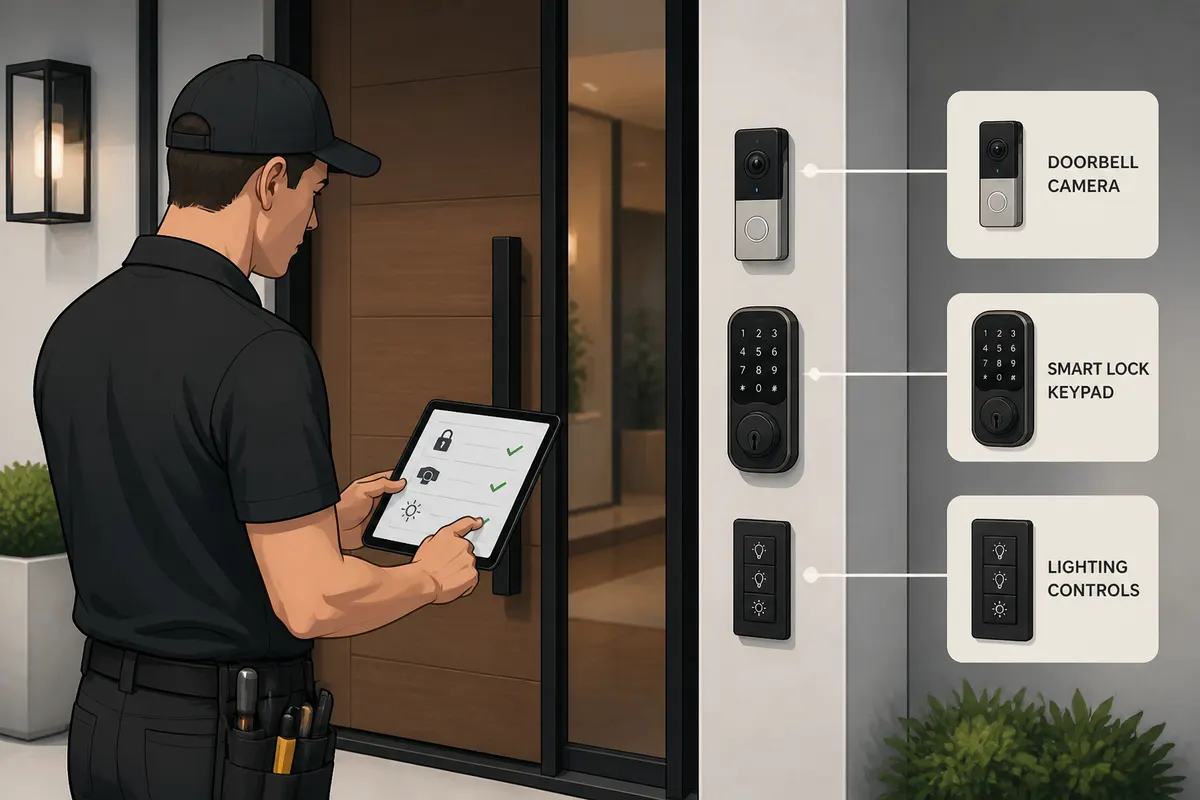
Even great systems break, usually for one of three reasons, not because you failed. Shoes multiply when capacity is wrong or when you don’t rotate seasonal pairs. If your shoe zone is too small, you’ll start parking footwear anywhere that feels “close enough,” and the whole workflow loses trust. Fix it by controlling capacity, using an off-season rotation, and keeping only what you wear now in the most convenient zone.
Mail and papers piling up is the next common issue. It happens when you treat mail like storage instead of decisions. A good solution is to convert clutter to decisions by using one mail tray with a simple rule, either deal with it, file it, or schedule it, and then remove what you don’t need from the entryway.
Finally, if the routine slips, don’t start over from scratch. Reset the rules you already have, run the morning and evening checks again for a few days, and tighten the one part that’s failing, like the shoe zone or the mail tray. Consistency beats perfection.
- Shoe overflow: adjust capacity, rotate seasonal pairs.
- Mail pile: one tray, deal, file, or schedule, then clear.
- Routine slip: restart checks for a few days, tighten one rule.
Conclusion
If you want everyday calm, don’t overbuy tech or redesign your whole home. Your next step is simple, implement one zone and one reset first, usually the shoe zone plus the evening sweep. Once those parts work smoothly, your entryway will look more luxurious without extra effort, because your workflow prevents clutter at the point it enters.
Over time, this is how consistent entryway calm signals a truly luxury lifestyle. It makes your mornings start easier, your surfaces stay clean longer, and your home feels cared for because it’s organized around real daily habits. Keep it practical, keep it repeatable, and let your luxury home systems work quietly in the background.
When you’re ready, revisit your current setup and ask where items land when you’re rushing. That one answer will guide your next upgrade to luxury home systems that actually help you live well.