
Introduction
Financially free doesn’t mean you never work. It means your money usually covers your lifestyle, even if your job hours change. If you’re searching for how to become financially free in 2026, the biggest surprise is this, it’s less about finding a secret hack and more about building habits that compound over time.
This playbook is built around behavior, systems, and time, because those are the levers you can control. You’ll learn how to set up simple rules for spending, debt, saving, investing, and progress tracking. When you make the plan easy to follow, you don’t rely on motivation. And when you stay consistent, time does what it always does, it helps your money grow.
Key Takeaways
- Financially free comes from habits and systems that compound, not from a one-time hack or constant motivation.
- Build “freedom math” from real expenses/income, choose a realistic timeline, and track net worth/cash flow weekly (without obsession).
- Stop cash leaks first: audit spending/subscriptions and set debt payoff rules (auto-pay, thresholds, impulse delays) to free investing money.
- Grow income using one main lever first – promotion, switching roles, or cash-flow-first side work – with a 12-week plan and weekly time limits.
- Invest by matching risk to your time horizon, automate contributions, keep fees low, and rebalance with simple drift rules you can follow.
How to Become Financially Free: Your Starting Math and Timeline
Start with “freedom math,” based on your real expenses and your real income. A common way to estimate a freedom target is to ask, how much per year do you want your money to cover, then relate that to what you can reasonably earn from investments and cash flow. You don’t need a perfect formula, but you do need numbers you can check monthly.
Next, pick a timeline that matches your situation. Aggressive usually means big income moves and stronger spending cuts, balanced means steady work plus consistent saving, conservative means you move slower but reduce risk and stress. Then track net worth and cash flow weekly so you can spot trends early, but don’t turn it into an obsession. If a single week makes you panic, zoom out and look at what changed over the last month.
Build Wealth Faster by Fixing Your Spending and Debt Stack

Before you chase higher income, get control of the leaks that drain your cash flow. Do a quick audit of subscriptions, recurring bills, and “set and forget” spending, then separate what’s truly useful from what’s just familiar. Look for durable savings, things that reduce spending without making life miserable, like renegotiating plans, changing insurance coverage, or pausing low-value subscriptions.
Then build your debt payoff stack with cash flow protection in mind. Order debts by interest rate and urgency, but also consider which balances create monthly pressure or psychological stress. Use frictionless rules so repayment happens even on busy weeks, set up auto-pay for at least the minimums, create spending thresholds in your budget, and add a small waiting period before “impulse upgrades.” As a guiding mindset, pay down the debts that charge you the most while keeping your essentials covered.
Small, consistent actions beat dramatic bursts, especially when you’re trying to free up monthly cash for investing.
Increase Income: Skills, Career Leverage, and Side-Work Strategy

Income growth usually comes from one of three levers, promotion, switching roles, or contracting. Pick one lever to focus on first, because juggling all three often leads to “busy but nowhere.” If you want the fastest path, look at what skills your current job already rewards, then build proof you can show, like faster turnaround times, better results, or measurable improvements.
For side work, choose a cash-flow first model, meaning you earn relatively quickly and can scale with demand. Simple options include freelance projects with clear deliverables, tutoring, consulting for a niche you already understand, or productized services like design, editing, or setup work. Create a quarterly plan to improve income without burnout, set one main target for the next 12 weeks, define your weekly time limit, and track outcomes like leads, proposals, and completed jobs.
- Promotion: ask what skills unlock the next level, then work on those for 6 to 10 weeks.
- Switching: refresh your resume, track job interviews, and aim for one strong application cycle.
- Contracting: sell a small, clear offer, deliver fast, then raise the price if demand stays strong.
Invest for Compounding: A Practical Portfolio Framework
Investing for compounding works best when your portfolio fits your time horizon and your ability to handle risk. If you’ll need money soon, keep it in safer places. If you can leave money alone for years, you can often take more investment risk, because market dips have time to recover. The key is matching expectations to reality, not copying someone else’s portfolio and hoping it fits your life.
Make investing automatic and low-friction so you don’t rely on willpower. Set up recurring contributions, use accounts that match your tax situation, and keep fees low, because fees quietly reduce returns. Then rebalance with rules you can follow, like reviewing a few times per year, adjusting when allocations drift by a set percentage, and setting a drift limit so you’re not constantly tinkering. Rebalancing should feel boring, that’s a good sign.
| Decision | Practical Rule | Why It Helps |
|---|---|---|
| Time horizon match | Money needed in under 3 to 5 years stays more conservative | Reduces the risk of selling after a market drop |
| Automation | Recurring contributions on payday | Protects investing from lifestyle changes |
| Fee control | Prefer low-cost funds and avoid frequent trading | Keeps more of your growth working for you |
| Rebalancing | Review every 6 to 12 months, rebalance only if drift exceeds a set threshold | Prevents emotional over-adjusting |
Protect Your Future: Emergency Funds, Insurance, and Risk Control
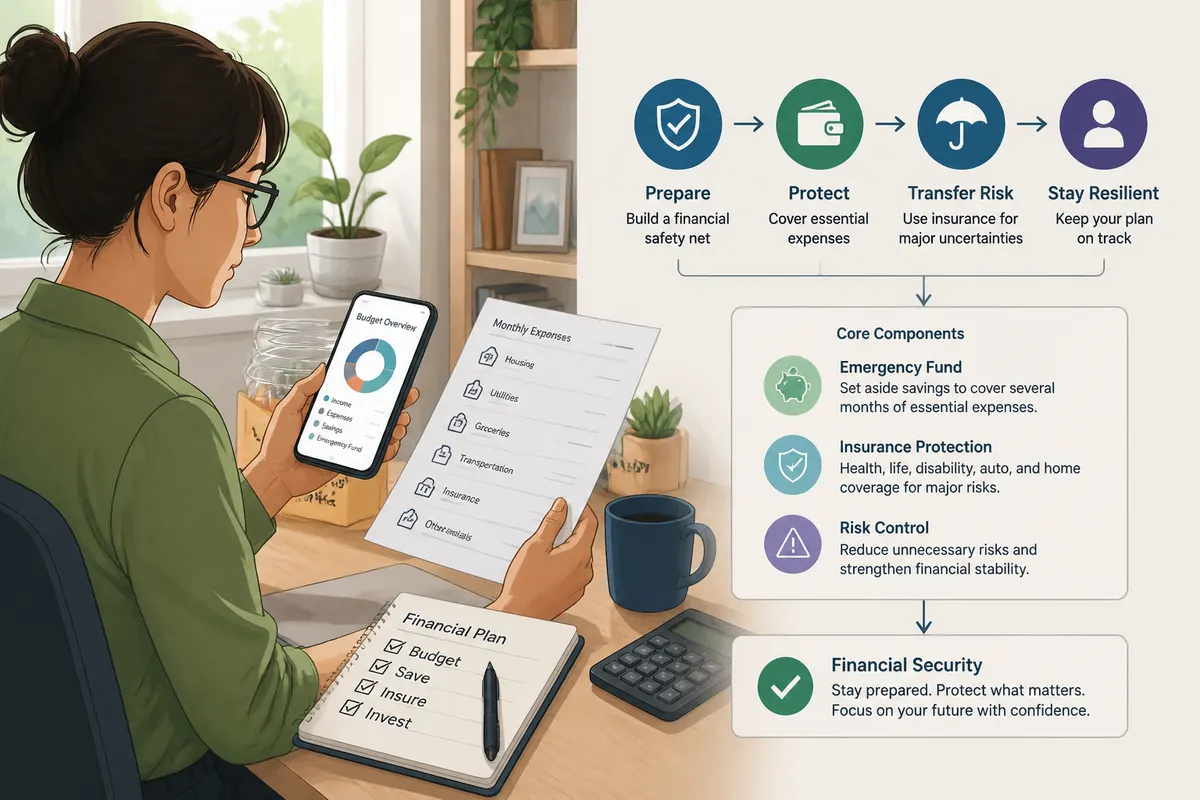
Even the best investing plan can break if your finances wobble during emergencies. Build an emergency fund sized for your job and family stability, typically covering several months of essential expenses. If your income is steady, you may need less, but if it’s variable or tied to commissions, you’ll likely want a bigger cushion.
Also handle insurance in a way that prevents financial derailment. Focus on coverage that protects you from major, hard-to-recover losses, like health events, disability risk, or situations that could wipe out your savings. Then build resilience with cash buffers and a “do not sell” rule, meaning you avoid selling long-term investments during a temporary downturn. When you maintain stability, you can keep investing through volatility instead of reacting to headlines.
Risk control is part of wealth building, it keeps you from being forced to sell at the wrong time.
Stay on Track in 2026: Budgeting Systems, Automation, and Milestones
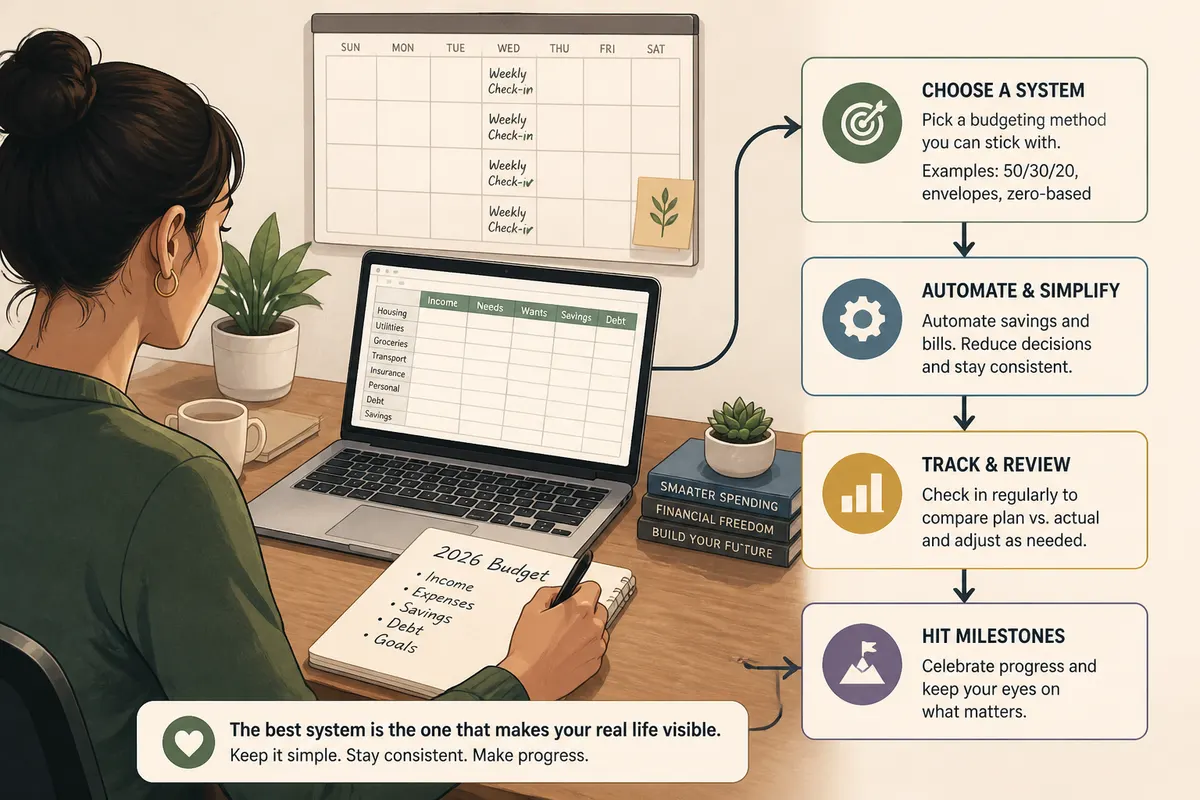
To stay consistent, choose a budgeting method you’ll actually follow. Many people do well with 50/30/20, but if you need more structure, envelopes or a zero-based approach can help you control spending line by line. The best method is the one that makes your “real life” visible, not the one that looks perfect on paper.
Use automation for saving and investing, then protect it from lifestyle creep. Lifestyle creep happens when your spending rises as your income rises, which can quietly cancel out your progress. So set a rule, for example, any raise goes first to savings or debt payoff up to your targets. Finally, review milestones monthly and adjust the plan quarterly, so you can correct early without constant changes.
- Pick one budgeting method for 90 days, then refine only if it fails.
- Automate transfers right after payday, so the money leaves before you “decide.”
- Track progress with 2 numbers, cash flow and net worth, plus one “habit metric” like debt paid.
Conclusion
Your next steps in 2026 are simple, measure what you have, cut what’s draining you, cut risk, invest consistently, and repeat. Start with your freedom target using actual expenses, then build monthly systems for spending, debt payoff, and investing. When you protect your cash flow and keep investing through market ups and downs, compounding has a real chance to work in your favor.
How do you stay motivated when progress feels slow? Treat it like a process, not a performance, because small weekly improvements in saving rate and debt reduction eventually show up as bigger choices later. Stay patient with the math, but be active with the inputs. If you’re practicing how to become financially free by building systems you can follow, you’re already doing the hard part.