Introduction
Luxury exhibitions are designed to feel like more than a viewing. Even if you love art, design, or craft, the setting often changes how you move, speak, and connect with people. That is why first-time visitors sometimes feel a little unsure, even when they’re clearly welcome. The good news is, you don’t need insider status to enjoy luxury events and network well.
Let’s make this simple. You’ll learn what typically happens from arrival to last stroll, and you’ll get a practical way to network with confidence while staying true to the room. Think of it as reading the space, then choosing the right moment to say the right thing.
Key Takeaways
- Luxury exhibitions are designed to guide visitors’ movement, volume, and interactions, so feeling unsure is common – confidence comes from reading the space.
- Prepare before arrival: research the venue/floor plan, scan the exhibitor list, check the schedule, and bring a one-sentence intro plus two targeted questions.
- Network with etiquette: keep your voice low, avoid blocking others, pause when a crowd forms, and listen first – greet politely and wait before adding details.
- Choose networking moments strategically: start at exhibitor booths (when they’re free), tailor conversation to curator talks, and use receptions for more relaxed follow-up.
- Use subtle follow-up cues and respect rules: keep phones silent, ask permission for photos, and use permissions/timing to offer next steps (links, availability, schedules).
What to Expect at High-End Luxury Exhibitions: The Experience Design
High-end exhibitions usually start with an arrival ritual that sets the tone. You might be greeted, guided to a coat or holding area, and offered a clear entry path. From there, the flow tends to feel curated, with gallery pacing that nudges you to slow down, notice details, and move along without crowding. You’ll often see signs for wayfinding, staff positioned for quick help, and quiet reminders to keep conversations respectful.
Signals of quality show up in the basics. Service standards are typically consistent, like staff knowing who to direct you to and knowing when to step back. Sound levels are managed so talks can be heard without shouting, and visitor guidance is often visible, like short instructions near key rooms or exhibits. If you notice the event feels calm and controlled, that’s usually by design, not luck.
Before You Arrive: Smart Preparation That Opens Doors

Before you go, do quick research, but keep it realistic. Look up the venue and floor layout if it’s provided, then scan the exhibitor list to spot creators you’ll actually want to meet. Also check the event schedule for curator talks, private viewings, or any ticketed moments where networking is naturally expected. This helps you show up informed, not rushed.
Next, prepare a concise introduction and two thoughtful questions. A good intro is short, like who you are and what you care about, tailored to the exhibition theme. Then pick two questions that invite genuine conversation, for example, what inspired a specific piece, or how a material is sourced and made. If you’re not sure what to ask, aim for questions that show you looked closely.
- Your intro: one sentence about you, one sentence about your interest.
- Question one: about process, sourcing, or design decisions.
- Question two: about context, inspiration, or audience experience.
Etiquette and Atmosphere: Networking Without Disrupting the Room
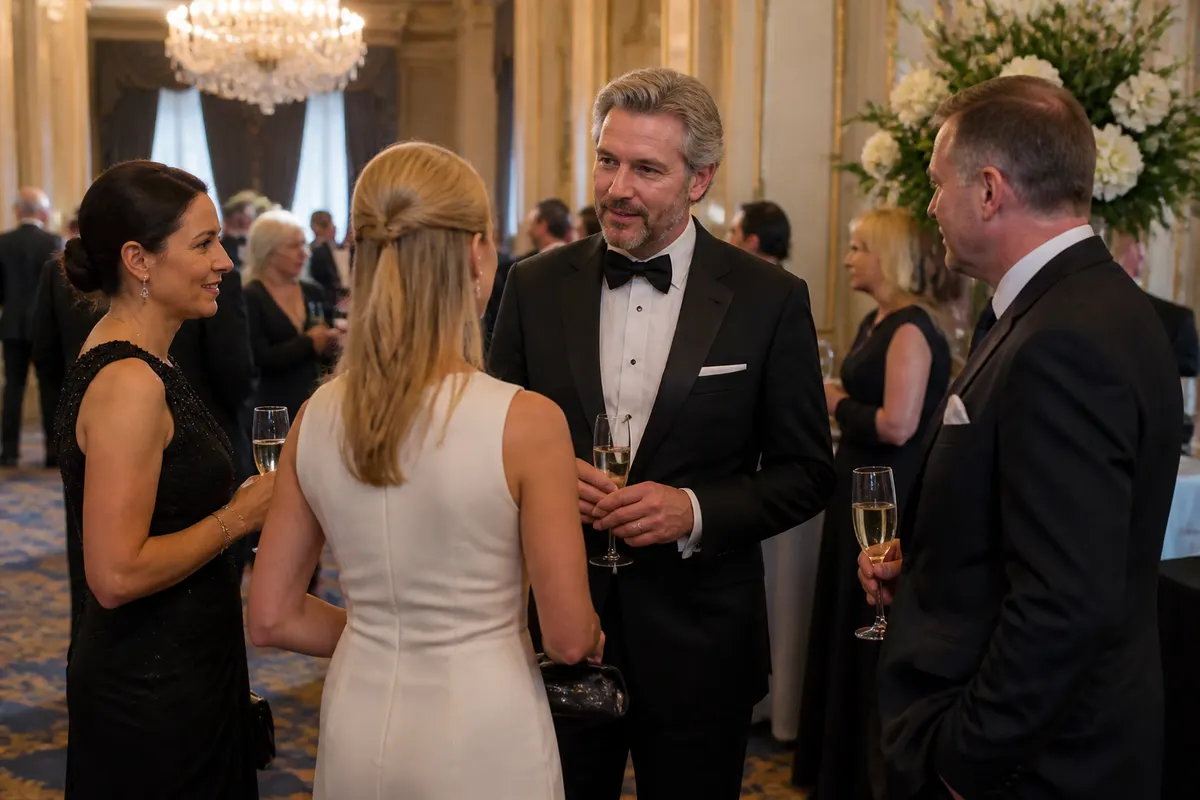
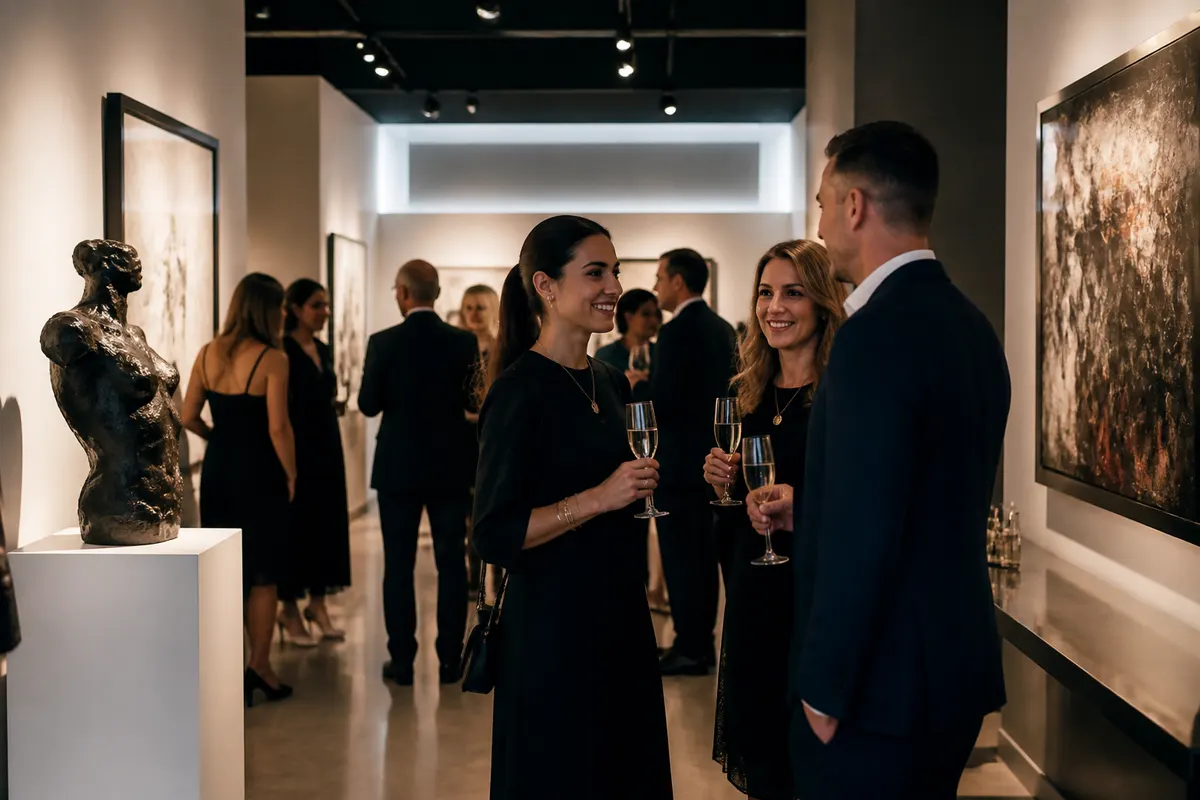
In luxury settings, conversation volume matters. You’ll usually want to keep your voice steady and low, especially near featured works, seating areas, or where staff are guiding visitors. Pacing is also part of the etiquette. If a small cluster forms, step aside briefly, let others pass, then re-join so you’re not blocking people who want to view the piece.
Approaching people with confidence doesn’t mean being bold. It means being clear, polite, and aware of time and space. Start with a simple greeting, then wait for a response before adding extra details. If someone seems busy or focused on a guide, you can offer a quick comment and say you’ll catch up later. One helpful mindset is to treat staff, patrons, and exhibitors as part of the experience, not obstacles.
Good networking in luxury events often looks like listening first, speaking softly, and moving with the room.
- Keep your phone on silent, and avoid long calls inside gallery spaces.
- Ask permission before taking photos, if the event has rules.
- Don’t corner people, use natural openings like shared interest points.
Where to Network: Exhibitor Booths, Curator Talks, and Social Moments
Exhibitor booths are usually the easiest place to start. Use a standing position that doesn’t block the display or the viewing line, and give yourself a short window to talk without pulling someone away from other visitors. Timing helps too, like speaking when the exhibitor is free, after they finish explaining a piece, or when a wave of visitors moves on. For follow-up cues, watch for moments like “If you want, I can send details,” or “This will be available soon,” which signal an easy next step.
Curator talks and private previews are different, they’re built for focused attention. In those moments, choose talking points that match the format. You can reference what you just heard, connect it to a specific work you saw, and keep questions aligned with the talk’s theme. Social moments, like receptions or lounges, are where you can naturally loosen up, but still keep it respectful. Here’s a quick way to pick the right networking channel and style.
| Where You Are | Best Networking Moment | Conversation Style | What to Follow Up With |
|---|---|---|---|
| Exhibitor Booth | After a short explanation or when the line clears | Specific, practical, and brief at first | A portfolio link, availability info, or a scheduled follow-up |
| Curator Talk | Before it starts or right after the main Q&A | Thoughtful, topic-based, low-volume | A question tied to the talk, then contact details |
| Private Preview | During quieter walkthrough time, not peak crowd moments | Observational and curious | A request for next viewing time or a deeper discussion slot |
| Reception Lounge | When people are mingling and not focused on a display | Warm and lighter, still not loud | An invite to a relevant event or a short email recap |
Smarter Networking Tactics: From Small Talk to Meaningful Connections
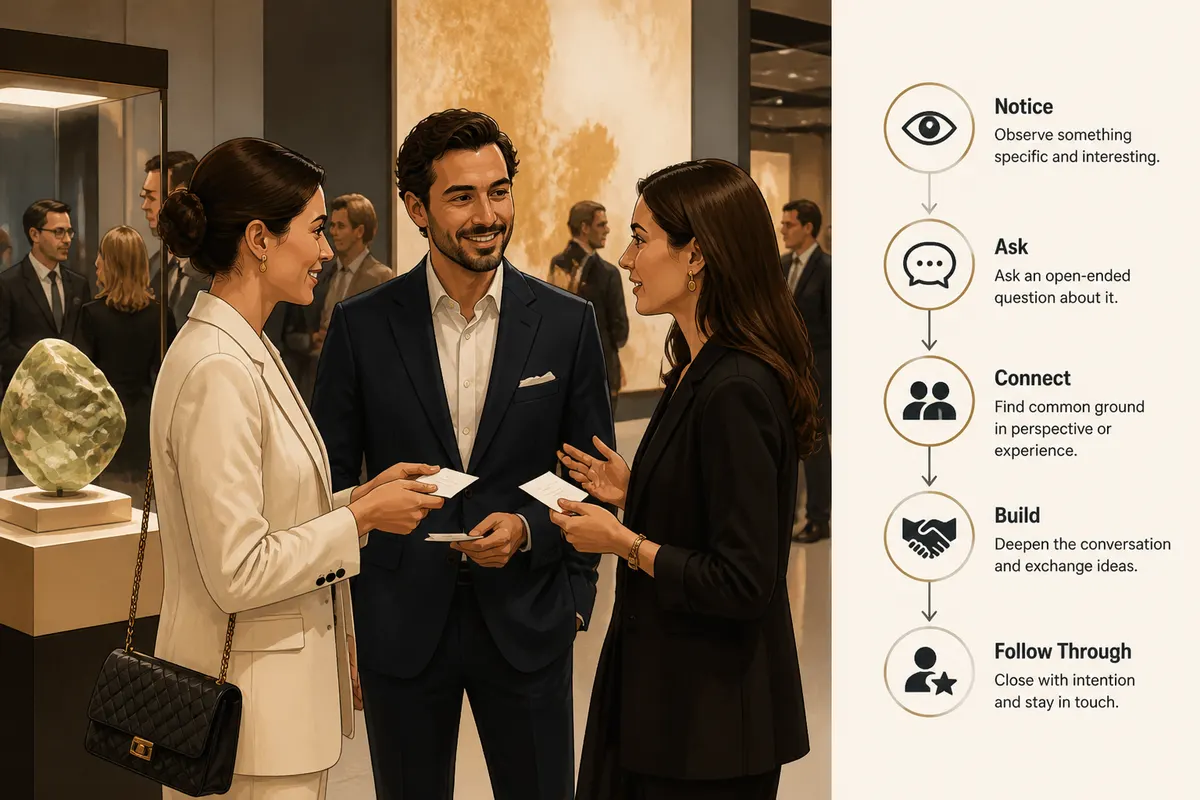
Small talk works best when it becomes shared context. Luxury exhibitions often revolve around art, craft, sourcing, and design decisions, so you can anchor conversation in what you both noticed. For example, you can ask about the material choice, the making process, or why a creator approached the concept in a certain way. This keeps things grounded and prevents networking from feeling forced or overly salesy.
To trade contact information smoothly, make it feel natural and respectful. If the conversation is going well, summarize the shared point in one sentence, then ask what’s the easiest way to stay in touch. Use a low-pressure approach, like “Would you prefer email or LinkedIn?” and only ask for details when there’s clear mutual interest. If you’re collecting someone’s card, confirm the name and role once, so you don’t guess later.
- Bridge: “I liked how you explained the process behind that piece.”
- Ask: “Is there a link or catalog I can reference later?”
- Exchange: “What’s the best way to follow up, email or LinkedIn?”
- Close: “Thanks, I’ll reach out with that detail we discussed.”
After the Exhibition: Follow-Up That Matches the Luxury Standard
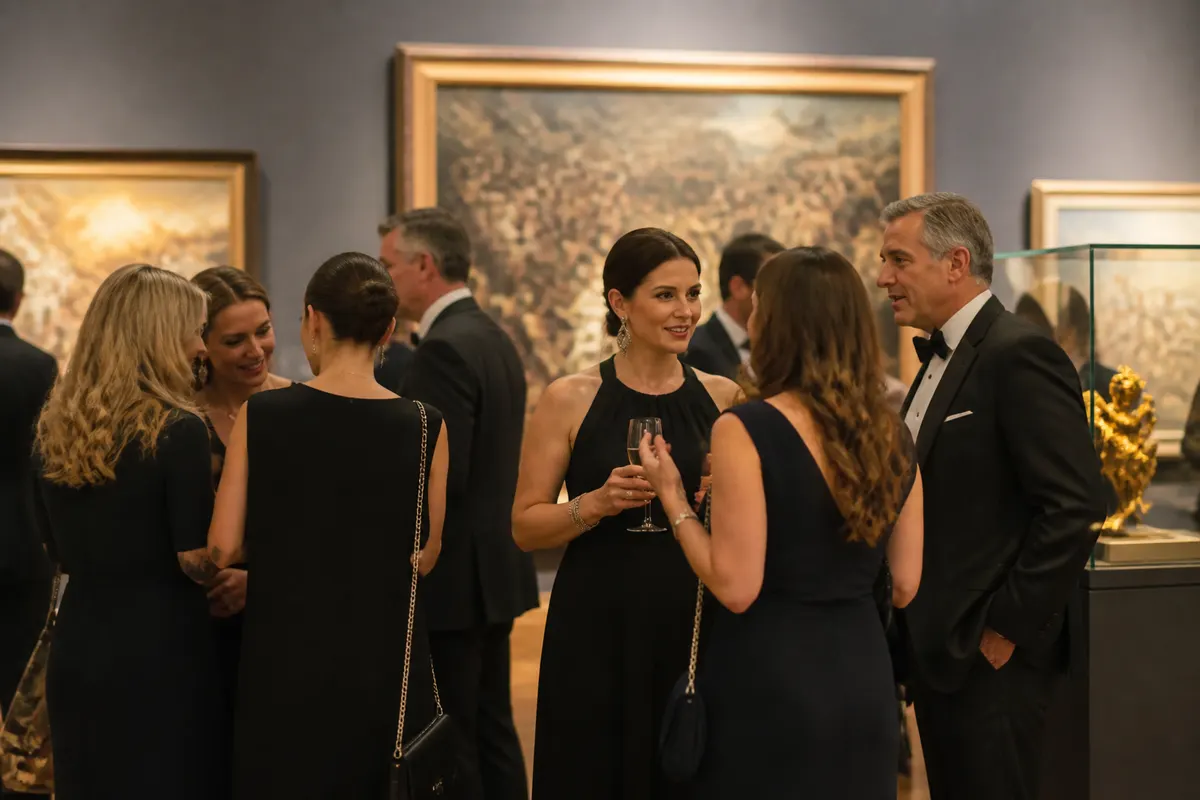
Follow-up is where many great conversations either turn into real relationships or fade quietly. Aim to message soon, while your shared context is still fresh in both your minds. Keep it tailored, reference the exact piece or idea you discussed, and add one helpful detail that moves the conversation forward. If you promised a link, send it. If you asked a question, mention the answer you found interesting, and what it led you to think about.
Maintain relationships with calm consistency. Invitations can work, but only when they feel relevant, not pushy. You can also show continued curiosity by asking a smart next question, like how the work evolves or what they’re focusing on next. If there’s no immediate next step, propose one small option, like a short call, a viewing at a specific time, or an introduction to someone connected to the same topic.
- Timing: message quickly, not instantly, and avoid days of delay.
- Content: one reminder of the conversation, one useful next step.
- Tone: polished, short, and respectful of their time.
Conclusion
One great conversation in a luxury exhibition can turn into a lasting professional connection when you treat the space with care and your approach with intention. If you focus on the basics, like understanding the curated flow, keeping your voice gentle, and asking thoughtful questions, you’ll come across as confident without trying too hard. Then, when the moment is right, exchange contact details in a way that feels natural to the event’s pace.
Use a checklist mindset to stay calmer, smarter, and more present. Before you arrive, research what matters, prepare your intro, and pick two questions. During the event, network where it fits, listen closely, and keep conversations respectful. Afterward, send a timely, tailored note that reflects the same care you brought to the room, because that’s what luxury events really reward.