
Introduction
Picture this: it’s Monday morning, your inbox is already buzzing, and a key supplier says they can only meet your timeline “if things change.” You could react fast, but you also know that rushing usually creates rework, more meetings, and more pressure later. That’s where the idea behind the executives lifestyle comes in, building a “no-drama” week that helps you decide once, move smoothly, and keep priorities steady.
A no-drama week isn’t about avoiding problems. It’s about designing your week so issues have a calmer path to resolution. In practice, that means luxury leadership style thinking, where high standards meet simple systems, and lifestyle design becomes a daily operating rhythm, not a rare event.
Key Takeaways
- Create a “no-drama week” by designing your calendar for calm resolution – reducing friction, not avoiding problems.
- Set the week’s tone in one pass: protect deep work, schedule high-stakes calls early, and delay non-urgent approvals to stay focused.
- Use fixed priorities plus buffers: keep core work and must-happen meetings fixed, add buffer time, and assign single decision owners.
- Make “wealth education” a weekly practice tied to systems – review spending, check cash/bills, and revisit long-term plans to prevent last-minute reactions.
- Run a 3-day weekly rhythm: Day 1 time-block and group meetings, Day 2 pre-brief with meeting outcomes/decisions, Day 3 close loops and set next steps.
Luxury leadership calendar mindset: plan for ease, not urgency
Start with a mindset shift: you’re not planning to fight fires, you’re planning to reduce friction. The “low-friction” principle is simple, fewer pivots, clearer priorities, and fewer surprise decisions that yank you out of focus. When your calendar is designed for ease, your day feels more predictable, even when the business is not. You’ll still handle change, but you won’t let change handle you.
Here’s an executive clarity cue that works well in real life: decide the week’s tone in one pass. Think of it like setting the temperature of a room. If you know you want calm execution, you protect deep-work blocks, you schedule high-stakes calls early, and you delay non-urgent approvals until you’ve got bandwidth. Then your calendar supports your leadership style instead of contradicting it.
- Fixed time for priorities, so you don’t constantly renegotiate.
- Buffer time around critical meetings, so delays don’t snowball.
- Single owner for decisions, so tasks don’t bounce between people.
Wealth education as a weekly practice: align choices with systems
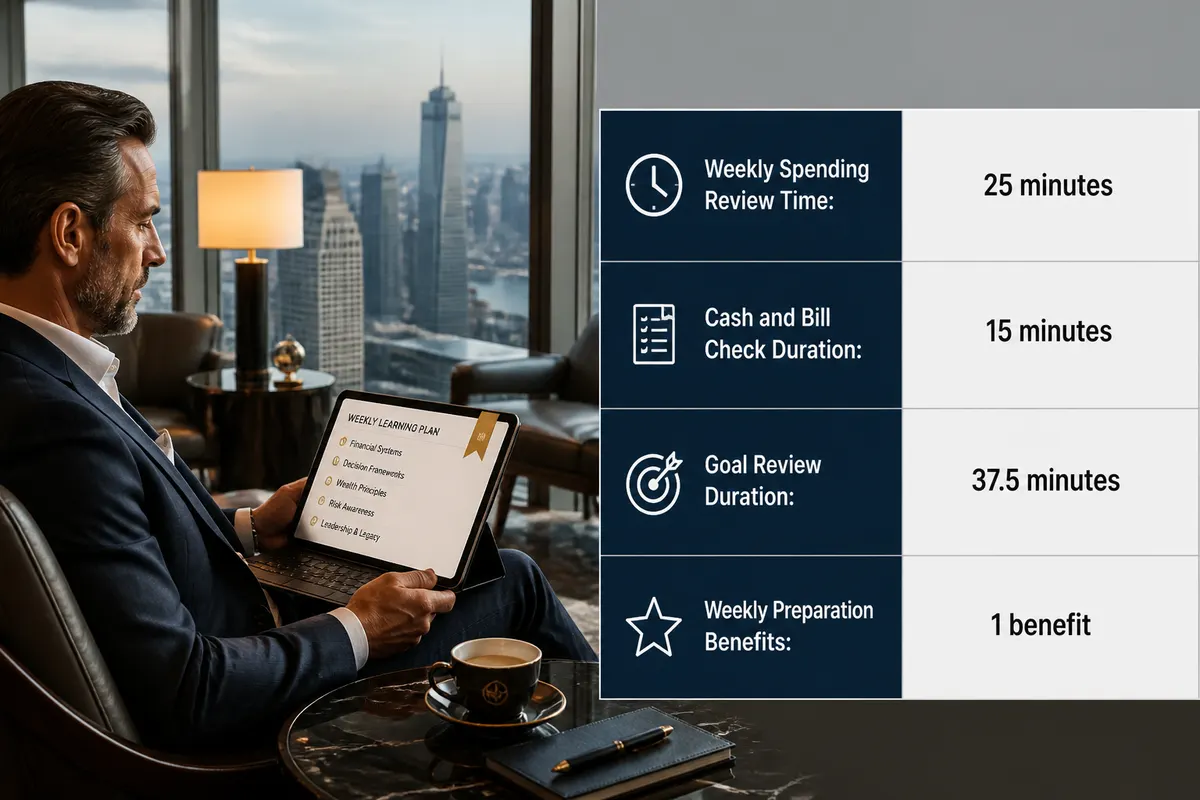
Wealth education is often treated like a course, a podcast binge, or a one-time financial cleanup. Instead, treat it like a weekly practice you connect to your systems. Translate “wealth thinking” into daily calendar decisions, like when you review spending categories, when you update cash forecasts, and when you revisit long-term plans. This keeps your money decisions from turning into last-minute reactions.
Preparation is a big part of avoiding drama. When you get tempted to change plans under stress, it usually happens because the next step is unclear. So prepare in advance, reduce temptation for last-minute changes by creating a simple “default path” you can trust. For example, you might decide ahead of time which bills are automatic, what spending needs approval, and how you’ll handle unusual purchases while travel is ongoing.
| Wealth Practice | Weekly Time Block | No-Drama Benefit |
|---|---|---|
| Spending review by category | 20 to 30 minutes | Stops surprises before they become arguments |
| Cash and bill check | 15 minutes | Keeps you from funding decisions with emotions |
| Goal and asset review | 30 to 45 minutes | Reduces churn, because you stay aligned |
| One “next step” action | 10 minutes | Turns learning into movement |
The no-drama week build: your three-day reset routine
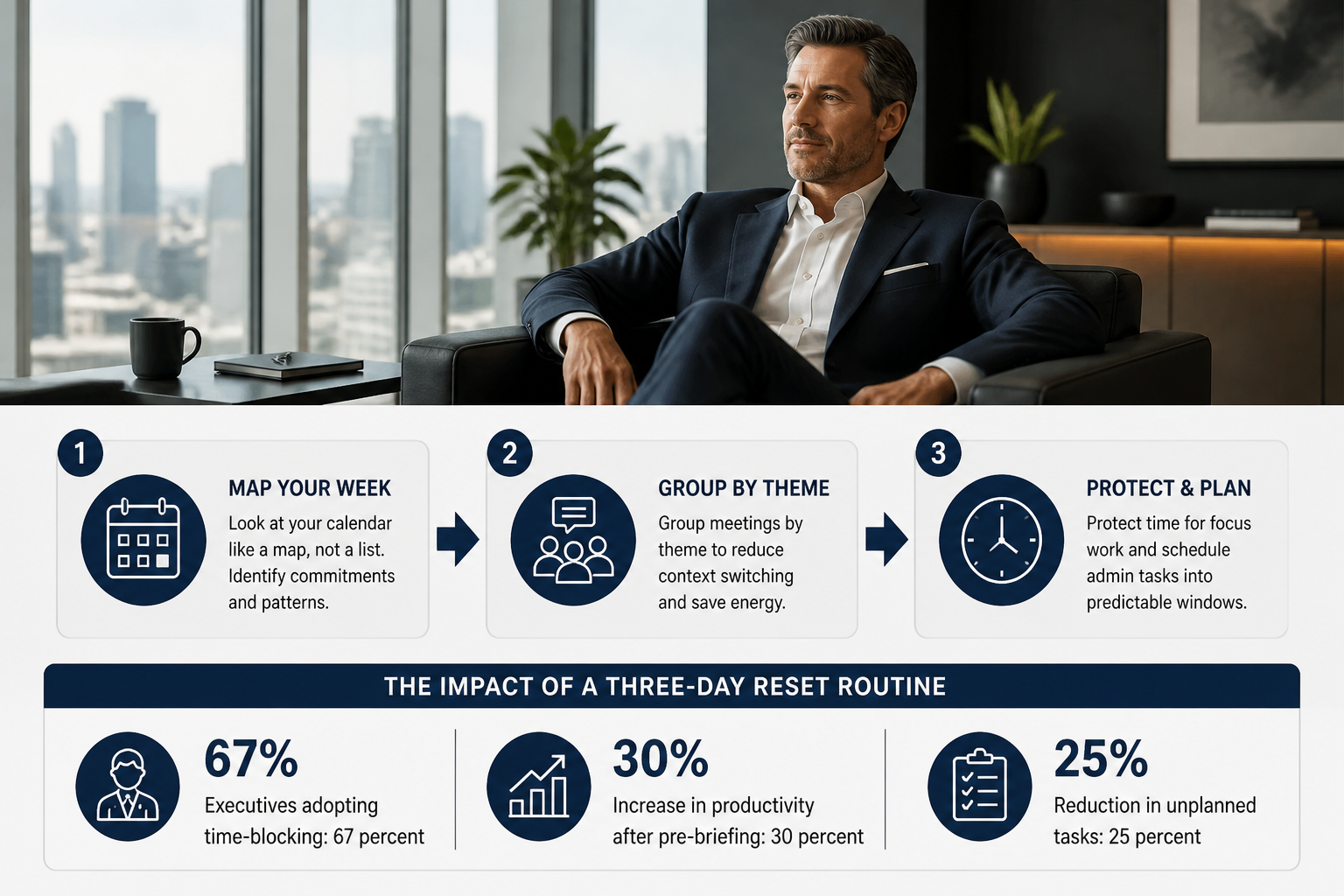
Your no-drama week build can start with a small reset that takes less time than you think. Today’s planning step is mapping commitments into calm time blocks. Look at your calendar like a map, not a list. Group meetings by theme, protect time for focus work, and put admin tasks into predictable windows so they don’t leak into everything else.
Tomorrow’s execution step is pre-brief yourself before the day starts. Spend five minutes reviewing the top outcomes for each meeting, plus the single decision you want to make. That way, when questions come up, you’re not improvising. Then your day-after review step closes loops to keep friction low, you quickly check what finished, what stalled, and what needs a clear next action. If you do this rhythm weekly, “surprise chaos” loses its power.
- Day 1, plan: time-block commitments, group similar work.
- Day 2, pre-brief: set meeting intent and decision focus.
- Day 3, review: close loops, define next steps, update priorities.
Low-friction decisions: how executives reduce rework in real life
When you want less drama, you need fewer re-dos. Start with rules of thumb for the week: decide what stays fixed. Fixed means your core priorities, your “must-happen” meetings, and your non-negotiable deep-work blocks. Everything else becomes flexible, so you don’t rewrite your entire week every time a new message arrives. This is a big part of how executives reduce rework in real life, by separating true priorities from noise.
Next, use decision batching for lifestyle. Combine similar asks and errands, so you aren’t constantly switching contexts. If you’re traveling, batch appointments and admin tasks near your travel windows. If you’re at home, cluster calls and approvals so you’re not jumping from emails to driving to follow-ups all day.
Here’s a simple way to choose what to batch, group items that share the same “mode,” like phone calls, document review, purchases, or coordination messages. Then you can move through a mode with less interruption and better quality.
“A no-drama week is built less by speed and more by fewer switches. Fewer switches mean fewer mistakes.”
Luxury-level preparation: the calendar companion list

Luxury preparation is really about reducing friction before you leave, whether that’s a hotel check-in or an early airport run. Your calendar companion list should include the small things that prevent stress, like confirmed addresses, planned transport timing, and a backup contact if schedules shift. Also think about your environment, if you’ll be working on the go, make sure your “portable setup” is ready before you need it. When you handle this once, you stop solving the same problems daily.
Communication readiness is just as important. Set expectations to prevent surprise pivots, especially when other people are used to fast changes. Use one clear message that states what you need, by when, and what “ready” means. Then, if changes come in, you triage against that clarity instead of reacting blindly.
- Before travel: confirmations, timing, transit plan, backup contact.
- Before meetings: one-line agenda and the decision you’re aiming for.
- Before approvals: define what’s acceptable, so rework doesn’t start later.
Avoiding drama under pressure: protect focus when plans shift

Even with great planning, plans shift. The key is how you respond in the moment. The rescue sequence is pause, triage, and restart without spiraling. Pause means you slow down enough to stop the first emotional reaction. Then triage: identify what changed, what stays fixed, and what decision is actually required right now. Finally restart by returning to a pre-briefed next step, not a brand-new plan created from stress.
And remember reset boundaries, keep your week’s tone even when others want speed. If someone demands an immediate move, you can still be helpful without abandoning your focus structure. For example, you can ask for a quick summary, confirm the impact, and then schedule the decision within your protected time blocks. That doesn’t mean you delay important work, it means you prevent the shift from breaking your whole week.
When you protect focus, you lower drama for everyone. People learn your patterns quickly, and they stop treating chaos as the default.
Practical boundary script: “I can do this quickly. What’s the decision we need, and what can wait?”
Conclusion
You don’t need a perfect week to get results, you need a repeatable routine. Start now by planning the next three days today with one calm routine. Map commitments into calm time blocks, pre-brief yourself before you step into meetings, then do a quick day-after review to close loops.
When your calendar supports your standards, you spend less energy reacting. That’s the real win behind the executives lifestyle approach, steady decisions, fewer pivots, and a smoother path through both business and personal life.