
Introduction
“Wealth readiness” in 2026 isn’t about flashing expensive stuff. It’s about building everyday luxury routines, the kind that make you feel calm, prepared, and in control, even when your bank balance isn’t perfect yet.
In this guide, we’ll walk through simple habits you can practice at home, at work, and on the go. You’ll see how affluent routines often look less like big spending and more like small choices: a slower morning, sharper focus, planned treats, and health rituals that protect your energy. The goal is practical, so you can start today and notice real changes in how you think and spend.
Key Takeaways
- Wealth readiness means everyday luxury: calm, prepared routines that prioritize ease and intention over expensive displays.
- Track “readiness” by wasting less, deciding faster, and recovering quicker – spending feels planned, not urgent.
- Start mornings with intention (water, a brief reset, one written priority) and use small sensory cues to anchor the habit.
- At work, protect focus by reducing noise (fewer tabs, clear “done” definition) and use boundaries like a 24-hour pause for purchases.
- For travel and hosting, reduce stress with planning defaults (ready kit, comfort “good enough,” simple menu and timing) to avoid costly emergencies.
Wealth readiness, redefined as everyday luxury choices
Before any numbers appear, “ready” usually looks like how you handle time, attention, and decisions. You’re not guessing. You have systems that reduce friction, like knowing what you’ll do in the morning, what you’ll buy during the week, and how you’ll recover when life gets busy.
Affluent routines also tend to be steady. People who feel secure often avoid emotional spending, they keep their calendars realistic, and they build comfort into everyday life. That might mean choosing quality you can use often, or setting up your space so it’s easy to live well. It’s a gentle baseline, where “luxury” means ease, not excess.
Here’s a quick way to spot wealth readiness, even without a spreadsheet: you waste less, you decide faster, and you recover quicker. And when you do spend, it feels intentional, not urgent.
Morning rituals: how the day starts with calm momentum

The first 20 minutes shape your whole day, whether you realize it or not. Start with intention, not a pile of tabs. Drink some water, open the curtains or get outside briefly if you can, and take a few minutes to set one priority that matters to your day. This is simple clarity, the kind that helps you respond instead of react.
Then add luxury cues that cost less than you think. Light matters, scent matters, and pacing matters. Choose a routine that feels like “I’m cared for,” even if you’re doing it in a small apartment. That can be a warm shower with your favorite product, a clean mug and fresh water, or music at a volume that feels calming, not loud.
- Water first, then screens, if possible.
- Pick one daily priority and write it down.
- Use one small sensory cue, like light or scent, to anchor the habit.
- Move slowly for five minutes, even if the rest of the day gets busy.
Workday choices: focus, discretion, and spending boundaries

At work, wealth readiness shows up as protected attention. If your brain is constantly switching, your decisions get messier and more expensive over time. So reduce the noise early, and you’ll notice cleaner choices later. Fewer tabs, clearer priorities, and a plan for what “done” looks like helps you get results without frantic overtime energy.
Discretion with money matters here too, because your workday habits often spill into your spending habits. When you’re tired, you buy to feel better. Wealth-ready routines plan treats instead, so you don’t need to “reward yourself” in the moment.
| Situation | Wealth-ready move | What it prevents |
|---|---|---|
| You start your day with email | Do one priority task before checking messages | Decision fatigue and rushed replies |
| Your browser is open to everything | Use fewer tabs, close the rest, set a “later” note | Time loss and impulse follow-ups |
| You want a quick purchase during work | Set a 24-hour pause and write the reason you want it | Reactive spending when stress spikes |
| You’re doing “just one more task” | Pick a stop time and track what you finish | Burnout that leads to later overspending |
One more thing, keep your boundaries visible. Put a simple shopping rule near where you shop, like “only on payday” or “only if it fits a planned category.” It sounds small, but it creates a pause between impulse and money.
Taste in motion: travel, hosting, and the habit of “prepared”
When you travel or host, preparation turns into a feeling. Affluent routines often feel lighter because the hard parts are handled in advance. Packing, planning, and choosing defaults reduce stress, and stress is what usually makes trips and gatherings cost more than you planned.
You don’t need a massive suitcase or fancy gear. Start with a repeatable “ready kit” for your usual needs, like a charging setup, a compact toiletry bag, and one backup outfit option. For trips, decide early what “good enough” looks like, like comfortable shoes for walking and one evening plan. That way you’re not buying random fixes when something goes wrong.
Hosting works the same way. Ambience is mostly timing and thoughtful defaults, not showy spending. If you set the table, confirm arrival times, and plan a simple menu that you can execute confidently, you’ll enjoy the night more. Choose easy upgrades too, like fresh flowers, a candle, or a playlist that matches the mood you want.
- Pack by categories, not by panic.
- Choose two “safe” items you can rely on for any outing.
- For hosting, plan your schedule first: timing, food windows, and cleanup.
- Add one sensory upgrade, like light, scent, or music, to feel intentional.
Luxury routines are often just planning done early, so you feel calm when the moment arrives.
Health as a wealth signal: energy, boundaries, and restorative choices
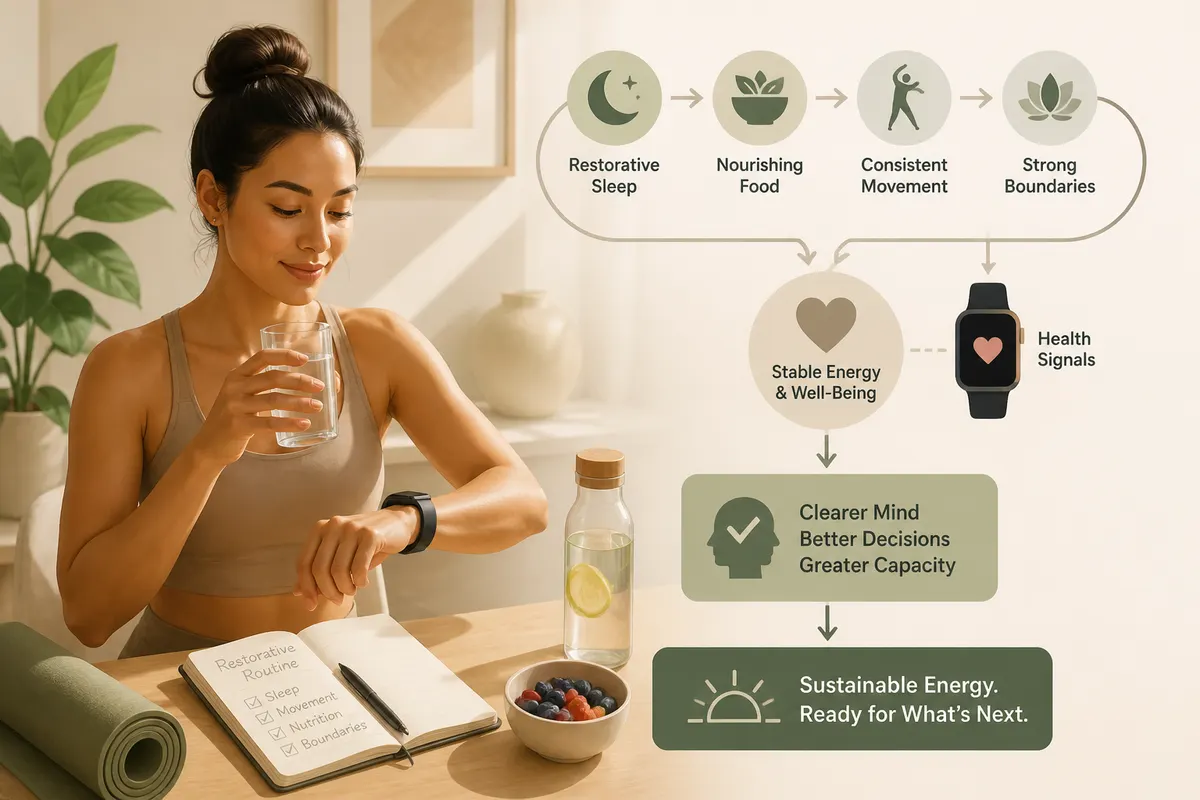
Health is a wealth signal because your energy controls your capacity to make good decisions. When sleep is messy or meals are rushed, you end up making choices that cost you later, like skipping movement, grabbing quick food, or saying yes to plans that drain you. A luxury body routine is about consistency you can actually sustain.
Think about sleep windows, movement variety, and nourishment. You don’t need a complicated program. Pick a realistic sleep target, even if it’s just “in bed by a certain time most nights.” Add movement you enjoy, like a short walk after lunch and a few strength sessions spread through the week. For food, aim for simple structure, like a reliable breakfast option and a meal plan that includes enough protein and fiber to keep you full.
Then, boundaries protect momentum. “Saying yes with intention” means you choose what matters and you decline what doesn’t, without feeling like you have to explain every decision. If your calendar is always full, your money habits usually follow, because you end up stressed and tired. Set one weekly boundary you can keep, like a no-meeting block or one night off from social plans.
- Protect sleep first, then movement, then food consistency.
- Choose one easy workout you can do even on busy days.
- Set one weekly boundary that preserves your energy.
This is how wealth readiness becomes tangible, your mind stays clear, and your spending aligns with your real priorities.
Mindset and measurement: noticing progress without hard metrics

Mindset is the engine behind luxury routines, because it shapes how you interpret your progress. Instead of chasing perfection, track patterns. The wealth-readiness journal is simple: you write what you did, what felt easier, and what you want to adjust next week. Keep it short, like a few lines after dinner, and focus on signals, not self-judgment.
Look for changes like fewer impulse purchases, less time searching for things, more calm mornings, or steadier energy. These are “soft metrics,” but they still matter because they reflect your systems working. If you only measure outcomes like bank balance, you’ll miss the habits that actually get you there.
Tomorrow-proofing is also key. Choose one ritual to carry forward, then make it easier to repeat than to skip. Maybe it’s your first 20 minutes routine, your planned treat rule, or your weekly boundary night. Once you pick it, remove barriers, set reminders, and keep it small enough that you can do it on your worst days too.
- Journal for patterns, not perfection.
- Use “what felt easier” as your main measure.
- Pick one ritual and make it repeatable.
- Adjust weekly, not after a bad day.
You don’t need perfect habits, you need habits that survive real life.
Conclusion
Wealth readiness in 2026 is really about everyday luxury routines that make you feel prepared and steady. It starts with calm mornings, moves into focused work habits, and shows up in travel and hosting through real planning. When you treat your attention and energy like assets, your spending tends to follow, because decisions become clearer.
So take the next small step, pick one ritual from this list, and practice it for a week. If you want a simple place to start, begin with your first 20 minutes, then add one spending boundary and one energy boundary. That combination builds momentum fast. Over time, you’ll notice less stress, fewer impulse reactions, and more “easy” moments that look and feel like luxury, every day.