
Introduction
The “Ready Traveler” mindset grew from travel safety culture, where people were taught to plan ahead and stay composed when things go wrong. Today, it’s just as useful for everyday life, because most stress comes from uncertainty, not from the trip itself. If you want to feel calm at home, steady at work, and quick when plans change, this mindset gives you a simple goal: be ready without being rigid. That means you can handle delays, mistakes, and surprises without spiraling.
Calm readiness also improves decision-making under pressure. When your body is tense, your thinking gets narrow and rushed. When you’re calm, you can scan options, choose the next step, and keep your day moving in a realistic way. So let’s turn that idea into a daily practice you can actually stick with.
Key Takeaways
- Adopt a “calm first” Ready Traveler mindset: pause and stabilize attention before planning or communicating to stop stress from driving decisions.
- Build practical readiness habits and flexible routines (essentials stored, known schedules, backup plans) so surprises don’t spiral into uncertainty.
- Use daily micro-checklists: morning reset with one focus goal, quick pre-departure gear/steps, and a brief evening keep/adjust/prep review.
- Pack mental buffers for likely friction and use fast decision rules (e.g., update then move, focus on next deliverable) to prevent over-explaining and rework.
- When overwhelmed, regulate then act: slow breathing, posture/grounding senses, reframe setbacks as information, and pick the next best action.
Developing the Ready Traveler mindset
Start with “calm first.” Before you plan your route, your tasks, or your message to someone, pause and stabilize your attention. This can be as quick as a 20 second breath reset plus a short check of what you’re feeling. Not to ignore your stress, but to stop it from driving the wheel. Then you can plan with a clearer head.
Next, build “practical readiness habits.” Readiness isn’t secret knowledge. It’s small systems that make your life easier before you need them. For example, you keep your essentials where you can find them, you know your next appointment time, and you have a go-to backup plan if one thing fails. Finally, stay flexible. A ready mindset doesn’t mean you refuse change. It means you adapt without losing control of your next decision.
Create a daily readiness routine

A daily routine makes the Ready Traveler mindset automatic. In the morning, do a quick reset: glance at your day, drink water, and pick one focus goal. Keep it simple, not dramatic. You’re aiming for “good enough clarity,” so you can respond faster later. If you work from home, this can be done right after you sit down, before you open inboxes.
Then use micro-checklists for real-life moments. Before you leave for work, review your bag, keys, and any required items. For errands, list the stops in a logical order and note one “must” item per stop. And for transitions, such as going from work to dinner, identify one task you’ll handle immediately so the rest feels lighter. In the evening review, ask what to keep, what to adjust, and what to prepare for tomorrow. A short reflection beats a long guilt session.
- Morning reset: plan one focus goal, hydrate, and look at top time blocks.
- Micro-checklist: bag or gear, next steps, and one “must” per outing.
- Evening review: keep what worked, adjust what didn’t, prep the next day.
Pack your mind: systems that prevent stress spirals
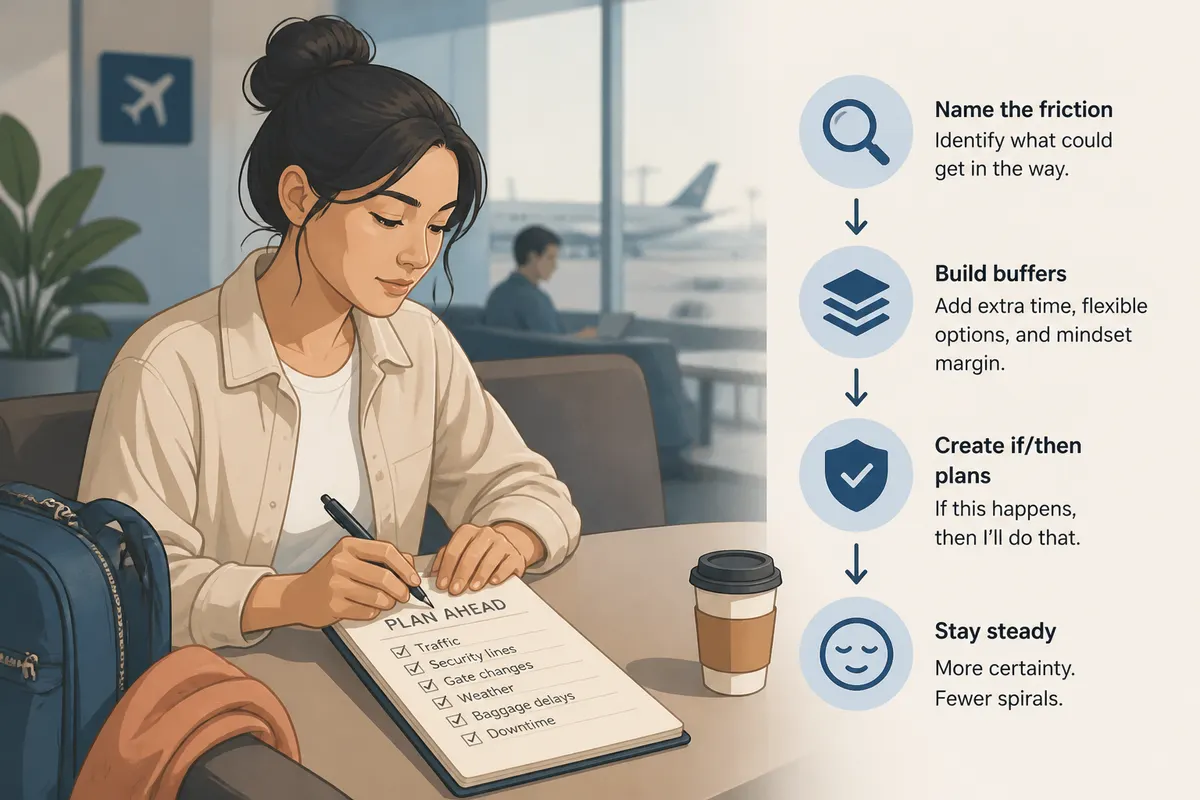
Stress spirals usually start with uncertainty. So build mental buffers for what you can’t control, delays, and “almost ready” moments. Think of it like packing extra layers, not because you expect disaster, but because surprises happen. You can do this by naming the likely friction ahead of time: traffic might run late, a meeting might change, or a form might need one extra step. When you’ve already expected the mess, your brain doesn’t panic when it arrives.
Use simple decision rules when plans change. For example, if you’re running late, decide whether you’ll message first or call first, and which one matters more. If a task takes longer than expected, switch from “finish everything” to “secure the next milestone.” Also, reduce friction with ready-to-go habits and cues, like keeping chargers in one spot, storing receipts in one folder, or pre-writing a short template for common messages. Here’s a practical way to choose what to do fast.
| Situation | Fast Decision Rule | What This Prevents |
|---|---|---|
| Running late | Send one clear update, then move to the next required step | Over-explaining, frantic scrambling |
| Plan changes mid-task | Ask, “What’s the next deliverable?” and do that first | Wasted effort, repeated rework |
| Unclear deadline | Confirm the closest time you truly need | Assuming wrong and falling behind |
| Too many small tasks | Pick one “anchor task,” then do two quick wins | Decision fatigue, procrastination loops |
Think of readiness as mental packing: you’re not predicting disaster, you’re reducing the cost of surprise.
Stay calm on the move: respond instead of react
When you’re “on the move,” your nervous system can kick in fast. So regulate first, then act. Use breath to slow your body down. Try a short inhale, longer exhale, and a quick shoulder drop, then straighten your posture. For fast grounding, name five things you can see and three you can feel. It sounds simple because it is, and it helps you regain focus before you reply to a stressful email or tackle a sudden problem.
Now reframe setbacks as information. A missed train or a dropped phone isn’t personal failure, it’s data about what happened. That shift matters because it stops your brain from turning the event into a story that drags you down. Finally, choose the next best action within realistic time. If you only have five minutes, don’t aim to “fix everything.” Choose the smallest move that reduces risk or buys time, like sending a quick “running late” message, asking one clarifying question, or doing a short version of the task right now and finishing later.
- Regulate: breath, posture, then quick grounding with your senses.
- Reframe: treat problems as information, not proof you’re failing.
- Act next: pick the smallest step that moves you forward.
Plan for change: build flexibility into your schedule
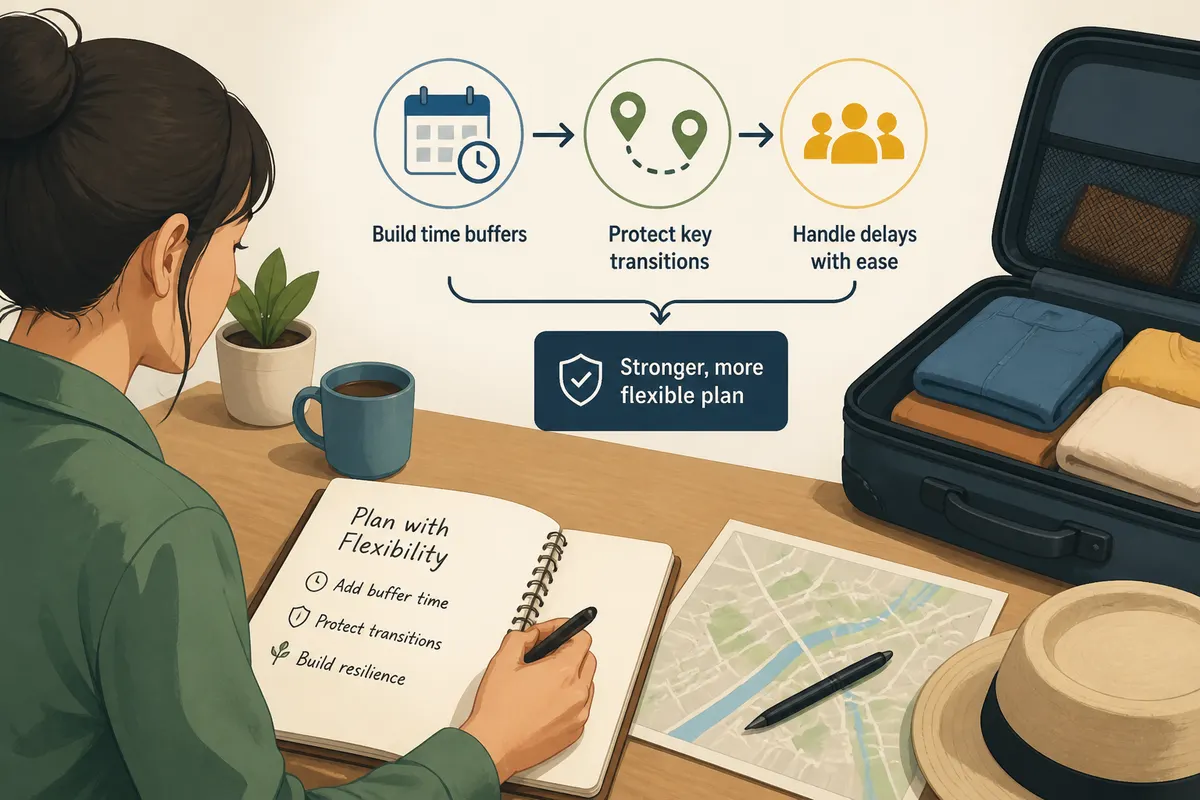
Flexibility starts with time buffers. If you plan your day as a tight race, one delay can cascade into everything. Instead, protect key transitions with extra minutes, especially for commute, meeting start times, and any task that depends on other people. You’re not wasting time, you’re buying resilience. A little buffer turns “everything is ruined” into “I just adjust.”
Then prioritize by impact and constraints, not by stress. When you’re overwhelmed, it’s easy to do the loudest tasks first. But impact means asking what helps the most or prevents bigger problems later. Constraints are the real limits, like deadlines, access to a tool, or whether someone else needs to approve something. For travel-style disruptions, keep a backup option ready, such as a second route, an alternate time slot, or a “minimal version” of your plan. That way, your flexibility is built in, not invented in a panic.
| Scheduling Goal | Do This | Easy Example |
|---|---|---|
| Prevent cascading delays | Add a buffer before and after key appointments | Schedule errands 20 minutes after your meeting ends |
| Reduce stress-based decisions | Rank tasks by impact and dependency | Finish the file others need before replying to low priority messages |
| Handle disruptions fast | Create one “Plan B” move you can do quickly | If a gym class is full, do a short workout you already know |
Apply the Ready Traveler mindset at work and home
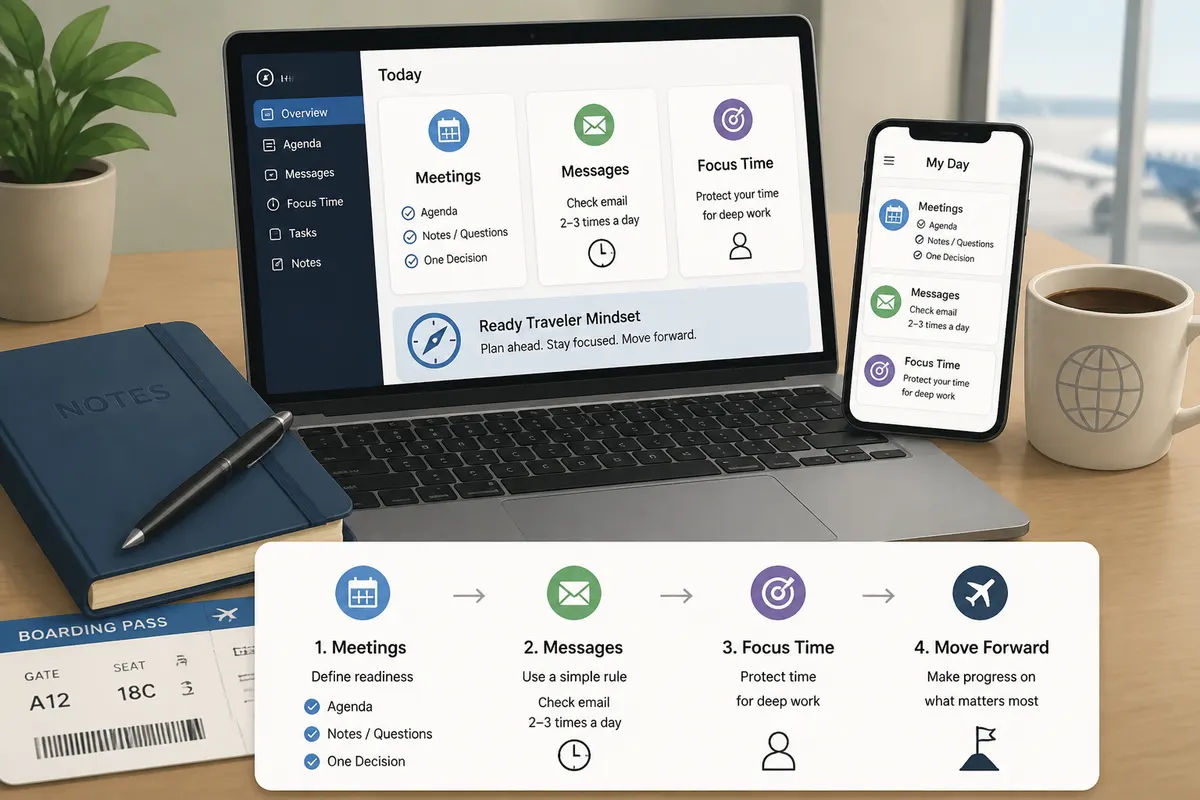
At work, readiness shows up in how you handle meetings, messages, and focus time. For meetings, decide ahead of time what “ready” means: you have the agenda, notes or questions, and the one decision you hope to make. For messages, use a simple rule so you don’t get pulled in every direction. For instance, check email at set times, and when something is urgent, ask yourself what response can happen in under two minutes. Then shift to focus blocks for deeper work, even if they’re short. Consistency beats perfect plans.
At home, readiness means managing essentials and reducing last minute chaos. Keep supplies in predictable places, like keys and chargers by the door, and laundry or cleaning tools where you’ll actually see them. For busy evenings, set up a small “landing zone” for backpacks, mail, and bags, so clutter doesn’t grow into a daily battle. To keep routines sustainable, make small, consistent changes. Try one upgrade per week, like a new pocket for receipts or a quick pre-bed reset of tomorrow’s clothes. That’s how the mindset becomes normal.
- Work readiness: prepare for meetings, use message check rules, protect short focus blocks.
- Home readiness: keep essentials visible and grouped, create a landing zone, do tiny weekly upgrades.
Conclusion
Your next step is simple, practice calm readiness and flexible recovery. Pick one moment today to slow down first, then act. It could be before you reply to a stressful message, before you leave the house, or when you notice plans slipping. Each time you regulate, you’re training your brain to respond instead of react.
Reinforce the Ready Traveler mindset through routine, reflection, and adaptation. In the evening, keep your review short: what helped, what didn’t, and one small adjustment for tomorrow. Then carry that adjustment forward, not as a big overhaul, but as an easy next step. Over time, your days start to feel more controllable, even when life gets messy. And that’s the real point of being ready, calm, and flexible, every day.