
Introduction
A luxury wellness retreat isn’t simply an expensive spa break; it’s a planned stay that gives rest, movement, nourishing meals, and personal attention room in your day. If you’re trying to restore your energy, the right retreat can help you step out of your usual routine and pay closer attention to what leaves you feeling depleted. The setting and program matter, but so does choosing a pace you can enjoy rather than another schedule to keep up with.
This guide shows you how to choose luxury wellness retreats around your needs, from quiet rooms and gentle exercise to food, sleep, travel costs, and downtime. You’ll also see what to check before booking and how to carry useful habits home. A retreat can offer a supportive change of scene, but it isn’t a substitute for medical care when fatigue is persistent or affecting daily life.
Before you begin: Set aside a rough budget, check your available dates, and write down what you want more of: better rest, time outdoors, a calmer routine, or guided wellness activities. Note any health concerns, mobility needs, allergies, and dietary preferences you’ll need to discuss with the retreat. Keep those priorities handy as you compare options.
Key Takeaways
- Start with what you need: Identify whether you’re seeking better rest, time outdoors, movement, sleep support, or fewer daily decisions, then use those priorities to compare retreats.
- Choose a setting that feels restful: Consider travel time, noise, access to nature, room conditions, season, and activities you enjoy; a beautiful destination may not feel restorative if its practical details don’t suit you.
- Leave room for unplanned downtime: Review the schedule, inclusions, and extra costs before booking. Choose activities that interest you, but make sure sessions are optional and there’s time to rest or change plans.
- Favor habits you can continue at home: Choose comfortable movement, sleep practices, and meals that fit your needs without adding pressure. Tell staff about health, mobility, allergy, and dietary requirements in advance.
- Check the full cost and seek care when needed: Compare accommodation, meals, activities, treatments, transport, and schedule flexibility not just the nightly rate. A retreat can provide a supportive change of scene, but it isn’t a substitute for medical care for persistent fatigue.
How Luxury Wellness Retreats Help Restore Your Energy

Step 1: Identify what’s draining you. A retreat can make it easier to pause daily demands and try a steadier rhythm, but the experience works best when it responds to a real need. Notice whether you’re looking for quiet, outdoor time, movement, support with sleep habits, or simply fewer decisions.
Step Away from Everyday Demands
Choose a stay that gives you some distance from work messages, household tasks, and packed social plans. You don’t have to disconnect completely, but setting simple boundaries such as checking email only at a set time can leave more space for the parts of the retreat you came to enjoy.
Build Rest into a Structured Stay
Look for a program that combines useful guidance with unhurried time. Some retreats include assessments or offer a mix of fitness, nutrition, and mind-body practices; Canyon Ranch’s retreat overview gives one example of that integrated approach. A five-day retreat described by Six Senses brings together guided breathwork, contrast therapy, screenings, and restorative experiences. Treat such programs as examples, not a checklist you need to complete.
Choose a Retreat Setting That Supports Deep Rest

Step 2: Pick a setting that suits how you recharge. Think about the kind of surroundings that help you settle in, and check practical details like travel time, noise, and access to nature before booking. A beautiful destination won’t feel restful if getting there is exhausting or the atmosphere doesn’t match your preferences.
Compare Coastal, Mountain, and Countryside Locations
A coastal setting may appeal if you enjoy open views and shoreline walks. A mountain retreat can suit you if you prefer cooler air and trails, while the countryside may offer a quieter pace and easy access to gardens or woodland. Compare the season, likely weather, and activities you’ll actually enjoy rather than choosing only for dramatic photographs.
Look for Quiet Rooms and Access to Nature
Ask whether rooms face busy roads or shared facilities, and find out if you can request a quieter location. Check that outdoor paths or gardens are easy for you to reach, including if you have mobility needs. If you’re sensitive to light or noise, ask about curtains, room location, and any evening entertainment before confirming your stay.
Find Wellness Programs Matched to Your Needs
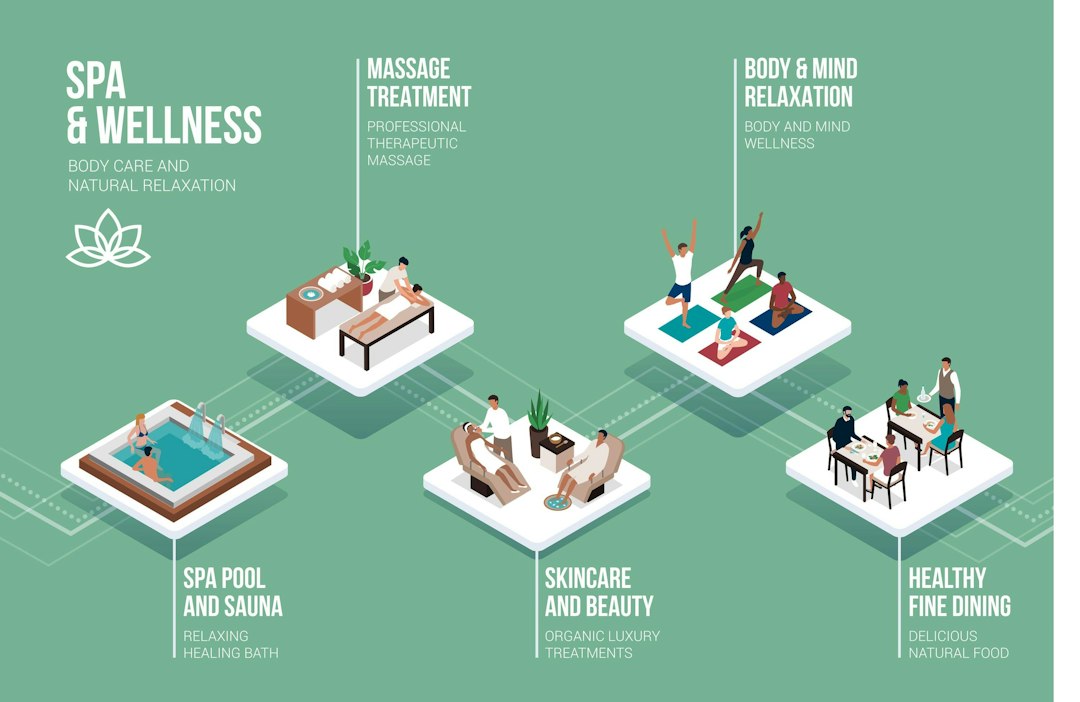
Step 3: Match the program to your priorities. Read the daily schedule and find out what’s included, what costs extra, and whether you need to book activities in advance. A thoughtful program should give you choices, not make you feel that a full calendar is the price of getting value.
Review Spa Treatments and Therapeutic Options
Ask what each treatment involves and whether it’s suitable for your health, comfort, and experience level. If you’re considering massage or another complementary therapy, review guidance from the National Center for Complementary and Integrative Health and discuss relevant concerns with a qualified clinician. Share injuries, pregnancy, allergies, or sensitivities with the retreat team beforehand.
Balance Guided Activities with Personal Downtime
Choose a few activities that genuinely interest you, then leave room to read, nap, or walk without a plan. Before paying, check whether sessions are optional and how easy it is to change your schedule. **If you’re unsure, ask the retreat to show you a sample day.** That simple check can reveal whether the pace feels supportive or overly demanding.
Use Movement and Sleep to Rebuild Daily Energy

Step 4: Choose movement and sleep practices you can continue. A retreat can introduce a calmer routine, but the most useful activities are ones that feel comfortable enough to repeat at home. Start with your current fitness, mobility, and sleep needs rather than signing up for every class.
Choose Gentle Exercise You Can Sustain
Consider easy walks, stretching, swimming, or beginner-friendly yoga if they’re suitable for you. Ask instructors about modifications and mention any health limitations before class. For general guidance on getting active, the World Health Organization’s physical activity advice can help you think about movement as a regular habit, not a retreat-only challenge.
Build a routine around what feels steady and repeatable: a comfortable walk, a regular wind-down, and enough space between scheduled activities.
Create Conditions for Restorative Sleep
Ask whether the retreat offers a quiet room, a consistent evening routine, or support with sleep habits. Keep late activities and screen time in mind when reviewing the schedule, and tell staff if noise or light tends to disturb you. The CDC’s sleep guidance offers general information, but ongoing sleep problems are worth discussing with a health professional.
Eat Well without Turning Wellness into Another Task
Step 5: Find food that supports your preferences without adding pressure. A retreat menu should make it easy to enjoy meals, not turn every choice into a test of discipline. Review sample menus and ask how the kitchen handles your needs before booking.
Explore Fresh, Balanced Retreat Menus
Look for meals that sound satisfying and varied, with options that fit your appetite and routine. Ask whether the menu changes and if you can choose familiar dishes as well as new ones. For broad nutrition information, Harvard’s Healthy Eating Plate offers a practical reference, but your own needs may differ.
Communicate Dietary Needs and Preferences
Tell the retreat about allergies, intolerances, religious requirements, or foods you avoid, and ask how meals are prepared to prevent cross-contact. Share details early rather than waiting until arrival, and confirm that staff have received them. If a need is medically important, explain that clearly and check that the kitchen can accommodate it safely.
Plan a Retreat That Fits Your Budget and Schedule
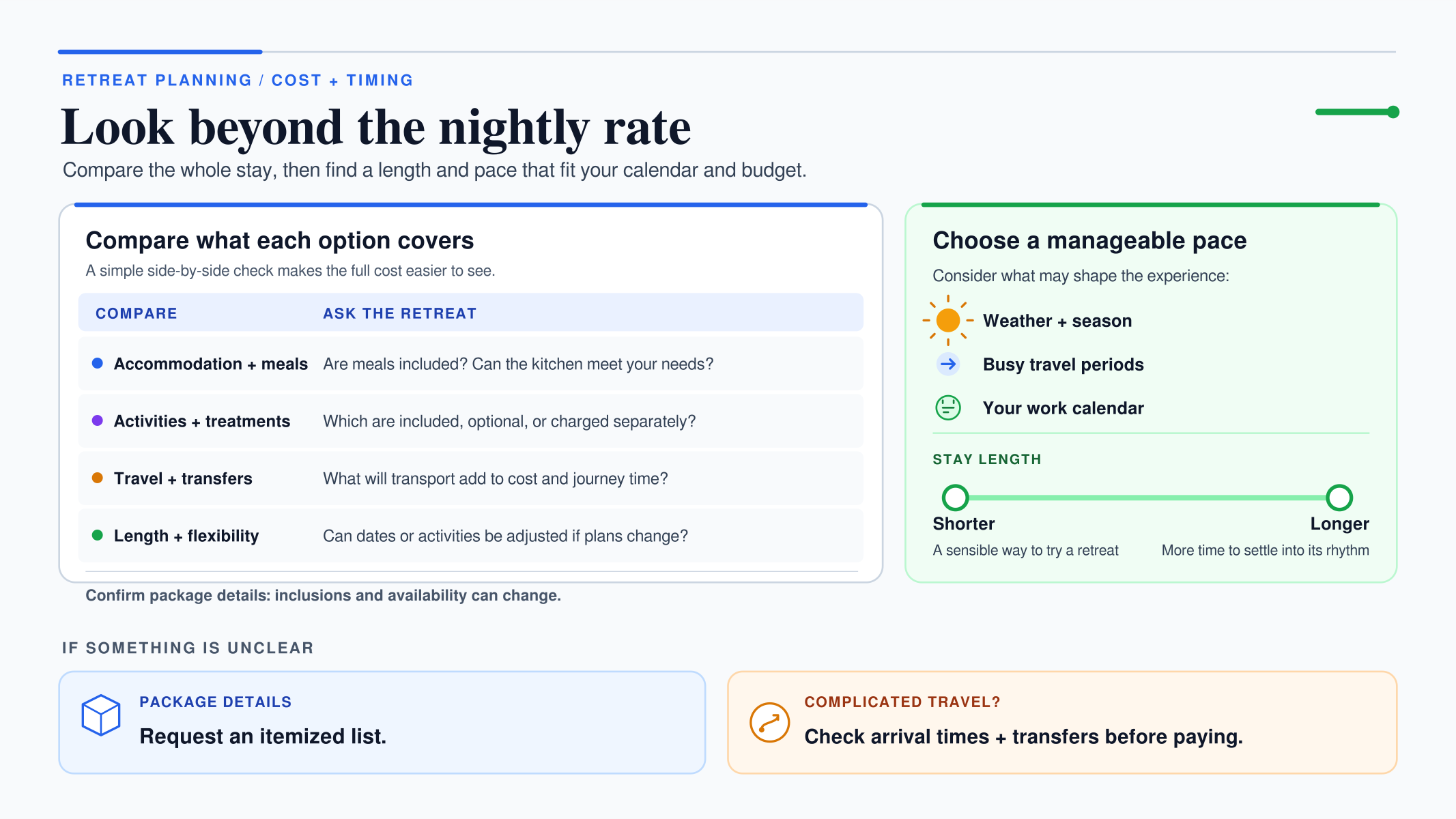
Step 6: Compare the full cost and choose a manageable pace. A nightly rate alone won’t show what your stay will cost. Check inclusions, travel, meals, treatments, and the time you’ll need to arrive and settle in.
Compare Inclusions, Travel Costs, and Length of Stay
Use a simple comparison to spot what each option actually covers. Confirm details with the retreat, since packages and availability can change.
| What to compare | Questions to ask |
|---|---|
| Accommodation and meals | Are meals included, and can the kitchen meet your needs? |
| Activities and treatments | Which sessions are included, optional, or charged separately? |
| Travel and transfers | What will transport add to the cost and journey time? |
| Length and flexibility | Can you adjust dates or activities if plans change? |
Choose a Season and Pace That Feel Manageable
Consider how weather, busy travel periods, and your work calendar may affect the experience. A shorter stay can be a sensible way to try a retreat, while a longer visit may give you more time to settle into its rhythm; choose based on your own schedule and budget. Quick troubleshooting: If the package is unclear, request an itemized list. If travel feels complicated, ask about arrival times and transfers before paying.
Conclusion
To restore your energy at luxury wellness retreats, start with the basics: decide what you need, choose a setting where you can rest, and review the program before booking. Check the room, schedule, food options, and full cost, then select activities that feel supportive rather than demanding. Small practical questions asked in advance can make it much easier to find a stay that fits your needs.
During your visit, give yourself permission to change plans. You can skip a class, ask for a quieter room, or take more downtime if the schedule feels too full. The goal isn’t to complete every treatment or return home with a perfect routine; it’s to notice which parts of the stay help you feel more settled and which habits seem realistic to keep.
Afterward, choose one or two simple practices to bring into ordinary days, such as a regular walk, a calmer evening, or a meal you enjoyed. If low energy continues or affects your daily life, speak with a healthcare professional rather than relying on a retreat alone. A well-chosen stay can offer space to pause and reset, while lasting wellbeing also depends on the choices and support that fit your life at home.
Frequently Asked Questions
Frequently Asked Questions
Can a wellness retreat treat burnout or replace professional care?
How can I tell whether a retreat’s health assessment is appropriate for me?
How long should I stay at a wellness retreat?
How can I make the benefits of a retreat last after I return home?
Is a wellness retreat worthwhile if I still need to work during the stay?
What should I check if I have dietary requirements or a health condition?
How can I check whether a retreat will suit sensory or accessibility needs?
What should I do if I feel more tired during a retreat than before it?
Sources
- Burned Out? These Wellness Retreats Will Help You Reset
https://www.oyster.com/articles/burned-out-these-wellness-retreats-will-help-you-resetOyster describes wellness retreats for resetting after burnout, including a program that begins with a health assessment and lifestyle diagnostics.
- Autistic adults’ reflections upon nature and well-being during …
https://pmc.ncbi.nlm.nih.gov/articles/PMC10140763This study of autistic adults’ reflections on nature and well-being identifies respite in nature and connection amid widespread disconnection as two themes.
- “Give me a break!” A systematic review and meta-analysis on …
https://pmc.ncbi.nlm.nih.gov/articles/PMC9432722This PMC-hosted academic source is a systematic review and meta-analysis titled “Give me a break!”.
- Does paid vacation leave protect against depression among …
https://pmc.ncbi.nlm.nih.gov/articles/PMC7610217This study examines whether paid vacation leave protects against depression and describes how vacations may offer respite from work-related demands and stress.
- Luxury Health & Wellness Retreats
https://www.canyonranch.com/wellness-programs/health-retreatsCanyon Ranch describes health retreats combining integrative medicine, fitness, nutrition, and mind-body practices to support wellbeing.
- five-day retreat described by Six Senses
https://www.sixsenses.com/en/wellness-spa/retreatsSix Senses presents its luxury spa and wellness retreats, emphasizing serene settings and personal care.
- National Center for Complementary and Integrative Health
https://www.nccih.nih.gov/health/massage-therapy-what-you-need-to-knowThe National Center for Complementary and Integrative Health provides an overview of massage therapy.
- World Health Organization’s physical activity advice
https://www.who.int/news-room/fact-sheets/detail/physical-activityThe World Health Organization’s fact sheet covers physical activity.
- CDC’s sleep guidance
https://www.cdc.gov/sleep/about/index.htmlThe CDC provides guidance about sleep.
- Harvard’s Healthy Eating Plate
https://www.hsph.harvard.edu/nutritionsource/healthy-eating-plateHarvard’s Healthy Eating Plate presents a guide to healthy eating.
- The Best New Wellness Hotels in the World: 2024 Hot List
https://www.cntraveler.com/gallery/new-wellness-hotels-hot-listCondé Nast Traveler’s Hot List article highlights new wellness hotels around the world.
- 9 Top Destination Spa and Wellness Resorts in the World
https://theprivatetraveller.com/wellness-journeys/the-best-wellness-retreats-in-the-worldThe Private Traveller’s wellness-resort feature highlights Chenot Palace Weggis, a detox and longevity spa on Lake Lucerne.
- The 7 best wellness retreats in the US
https://www.lonelyplanet.com/articles/wellness-retreats-usaLonely Planet’s article rounds up seven wellness retreats in the United States.