
Introduction
If you don’t solve the wealth mindset problem, money can start to feel like a source of stress instead of a tool. You might work hard, earn more, and still feel stuck, because your beliefs quietly decide what’s “possible” for you. Over time, that gap can turn into a cycle of short-term decisions and long-term regrets.
That’s why this reader guide matters. The Great Divide is the real-world split between people who treat money as something they can learn to grow and people who treat it as a fixed luck game. Let’s connect that divide to everyday habits, so you can update how you think about wealth, opportunity, and progress.
Key Takeaways
- Wealth mindset is how you interpret money and opportunity; abundance thinking treats opportunity as learnable and uses setbacks as feedback, not identity.
- Financial habits often come from old money stories; replace deprivation-based discipline with learning loops that build competence through small adjustments.
- Turn values into budgeting by mapping a few priorities to specific spending and saving goals, then review monthly to decide “no” without guilt.
- Wealth grows via compounding – repeat small actions like automatic saving, timeline-matched investing, and scheduled skill-building, not one-time intensity.
- When motivation fades, rely on systems: automate transfers, use recurring investing reviews, and follow simple rules to avoid decision fatigue.
Wealth mindset starts with how you interpret money and opportunity
Wealth mindset isn’t a fancy personality trait. It’s the way you explain money to yourself, and the meaning you attach to chances that show up in your life. When you see money as “dangerous” or opportunity as “for other people,” you tend to act smaller than your goals. When you see money as information, and opportunity as learnable, your decisions usually get more practical and consistent.
Here’s a simple way to spot the difference. Scarcity thinking often sounds like tight rules, constant worry, or fear of falling behind, even when you’re doing okay. Abundance thinking sounds more like curiosity, patience, and planning ahead, even when things feel uncertain. And when life hits back, try reframing setbacks as feedback, not identity. A lost job or missed investment is not proof you’re “bad with money,” it’s data about what to adjust next.
The beliefs that shape financial behavior

Your spending and saving habits often come from stories you learned long ago. Maybe you believe you’re only “allowed” to enjoy money after you feel fully secure, or that you must “earn it” by suffering first. If you also believe discipline means deprivation, you may cut too much, then burn out. Those stories can quietly drive how you react to bills, raises, and big purchases.
Beliefs also show up in how you respond when you don’t know something yet. A wealth mindset leans toward confidence and competence that are built, not granted. You practice small learning loops, like reviewing what went wrong, testing a new approach, and tracking whether it improves results. That’s a key shift, because the habit of learning beats the feeling of “being smart enough” every time.
As a guiding idea, keep this mindset tension in view: you can respect your current limits while still assuming you can grow. That balance tends to support steady, realistic progress instead of dramatic swings.
Turning values into money decisions
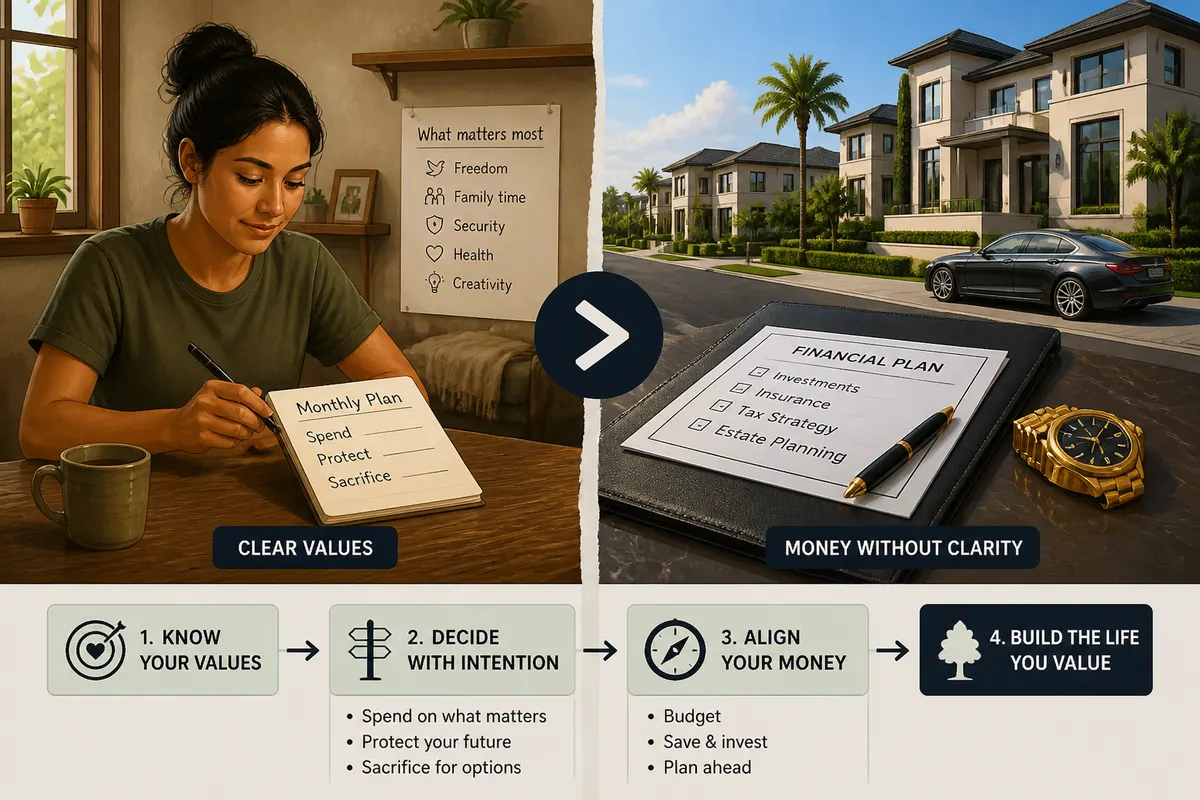
Values are what you care about most, like freedom, family time, security, health, or creativity. When your values are clear, money decisions stop feeling random. You can choose what to spend on now, what to protect later, and what to sacrifice temporarily to keep your future options open. Without that clarity, even a “good budget” can feel pointless.
Start by defining priorities using two buckets. First is lifestyle now, the spending that keeps you energized and aligned. Second is future optionality, the room you want later for emergencies, career shifts, education, or calmer choices. Then treat budgeting as a values system, not punishment, because the job of a budget is to tell your money where to go, before it disappears into surprises.
- Pick a few values, not ten.
- Match each value to one spending category and one saving goal.
- Review monthly, and adjust when your life changes.
When you do this, you can say “no” with confidence, instead of guilt. And you can say “yes” without losing your long-term plan.
Building wealth through compounding habits and consistent actions
Wealth usually grows through compounding, which means small gains that build on each other over time. That can look like steady saving, consistent investing, and ongoing skill-building that improves your earning power. The tricky part is that compounding needs time and repetition, not intensity. A one-time budget sprint helps, but a reliable routine changes your outcomes.
Here are three small decisions that often compound for real people. Saving automatically, even if the amount feels modest. Investing in a way that matches your timeline and risk comfort. And building skills on a schedule, like weekly learning time or a recurring project that improves a work-related ability. If you want a quick mental model, think of your habits as “inputs” that you repeat, and your results as “outputs” that arrive later.
Now, let’s talk about what happens when motivation fades. That’s normal, so build systems that keep you moving even on average weeks. Track your progress, automate the parts that are predictable, and keep decision fatigue low by using simple rules.
- Use automatic transfers for savings.
- Set a recurring investing review, not daily checking.
- Keep a “next action” list for skill-building.
It’s less about feeling inspired and more about staying consistent.
The role of networks, mentors, and social comparison

People don’t just learn money ideas from books. They absorb them from communities, coworkers, families, and peers. Your network can shape your expectations about work, money, and time, including what “normal” looks like. If you’re surrounded by people who assume progress is slow, you may unconsciously lower your targets. If you’re around people who plan, save, and keep learning, you often get clearer on what’s realistic.
Mentors help because they shorten your trial-and-error. A good mentor doesn’t do everything for you, but they can point out what to watch for, what mistakes to avoid, and how to think about tradeoffs. If you don’t have a mentor yet, you can still build that effect by learning from credible professionals, taking structured courses, or joining groups where people discuss goals openly.
Social comparison can go either way. Used badly, it fuels fear and impulsive spending to “keep up.” Used strategically, it becomes a compass. Compare to learn, not to judge yourself. Ask what habits you see, what skills people are building, and what routines help them stay steady.
| Situation | Common pitfall | Wealth mindset move |
|---|---|---|
| Seeing someone buy a bigger home | Comparing your timeline | Break it into steps, then decide your own target |
| Watching peers invest sooner | Feeling behind | Start a small plan now, even if it’s not huge |
| Hearing “you just need discipline” | Beating yourself up | Build systems, track progress, adjust the plan |
Reading outcomes as process: metrics, milestones, and resilience
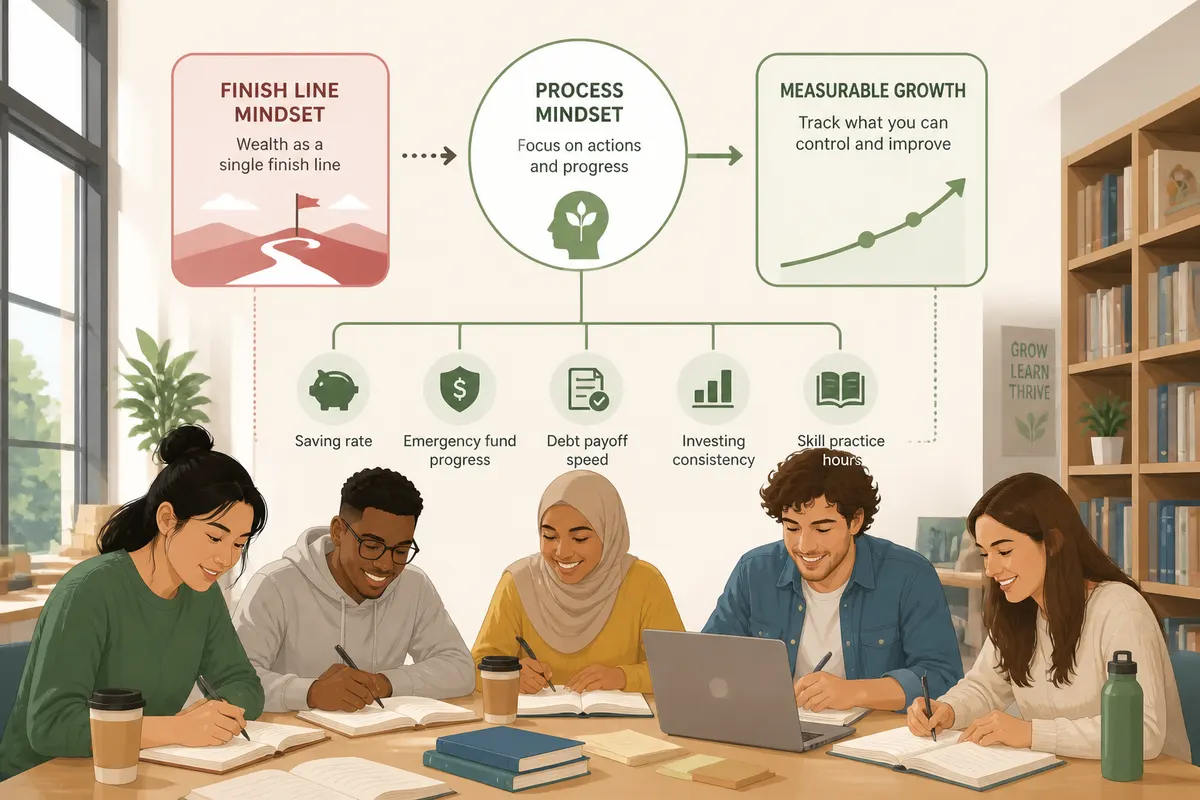
When you treat wealth like a single finish line, you’re likely to get discouraged by normal ups and downs. A wealth mindset shifts your focus to process, which means you measure growth as you go. That might include saving rate, emergency fund progress, debt payoff speed, investing consistency, or skill practice hours. These indicators reflect how your system is performing, not just how you feel on a given month.
To make this easier, choose a few metrics that match your goals. Then set milestones you can actually reach, like “save one month of expenses” or “complete three skill projects this quarter.” Keep the milestones specific enough that you can tell if you’re moving forward, but flexible enough to adapt when your life changes.
- Track inputs: saving, investing, learning, and spending alignment.
- Review monthly, not obsessively.
- Celebrate process wins, like consistent contributions.
Resilience matters too, because setbacks are part of the journey. If you miss a savings target, avoid all-or-nothing thinking, like “I failed, so I’ll quit.” Instead, recover by returning to your next small action and updating your plan based on what went wrong. This is where the wealth mindset really shows, it’s the ability to keep learning without panic.
Think of setbacks as part of the feedback loop, not a verdict on you.
Conclusion
The Great Divide often isn’t about talent. It’s about how you interpret money, what stories guide your choices, and whether you build habits that can run on normal days. If you keep updating your mindset, you get better at turning values into decisions, staying consistent, and using your network wisely.
When you read outcomes as process, you can measure growth, adjust fast, and recover without spiraling. And that’s the point of this wealth mindset reader guide, to help you treat wealth like something you can learn, practice, and improve over time.