
How to Grow Wealth Faster With 8 Wealth Building Strategies
Introduction
Growing wealth faster doesn’t mean chasing risky investments or trying to double your money overnight. It means making more of your income work for your future: setting clear goals, controlling costly debt, investing steadily, and protecting what you build. For you, the right plan should fit your income, responsibilities, and comfort with risk not someone else’s idea of success.
This guide shows you how to put practical wealth building strategies into action, step by step. You’ll learn how to track progress, make room to save, choose a sensible investment approach, and make major spending decisions with your long-term plans in view. These habits won’t remove uncertainty, but they can help you make more deliberate decisions and avoid common setbacks.
Start with the parts you can control. For example, saving $200 each month adds up to $2,400 in a year and $48,000 over 20 years before any investment growth. That simple contribution example isn’t a promise of returns; it shows why regular action matters. As the U.S. Securities and Exchange Commission’s investor education guidance explains, saving and investing over time are central parts of building wealth.
Key Takeaways
- Set goals and track progress: Give each financial goal a target amount and timeline, then review your net worth every few months. Consistent tracking helps distinguish lasting progress from normal investment fluctuations.
- Make saving and debt repayment part of your budget: Choose a sustainable monthly amount, automate savings after payday, and build an accessible emergency fund. Keep required debt payments current and direct extra money toward high-interest balances.
- Invest steadily with a plan that fits your timeline: Choose investments based on when you’ll need the money and your comfort with risk. Diversification can limit the impact of a poor result in one area, but it cannot prevent losses.
- Grow income without letting costs outrun it: Develop skills that support career opportunities and assess side work by its realistic income, expenses, and time demands. Giving extra income a purpose can help direct it toward savings or debt.
- Weigh major costs against your other goals: Compare the ongoing costs of renting and buying, including repairs, taxes, insurance, and fees. When income rises, decide in advance how much of the increase will support financial goals.
Core Wealth Building Strategies for Steady Progress

Build your plan around a few clear measures: what you’re working toward, how long you have, and whether your finances are moving in the right direction. A goal such as “save for a home deposit in seven years” gives you more to work with than “get rich.” Guidance from the California Department of Financial Protection and Innovation also points readers toward mapping their finances, budgeting, and setting goals.
Set Clear Financial Goals and a Realistic Timeline
Step 1: Write down your financial goals. Give each one a target amount, a reason, and a timeline. Separate near-term needs such as replacing a car from long-term plans like retirement, because money needed soon generally shouldn’t depend on the ups and downs of the stock market. If a goal feels too large, divide it into monthly contributions you can review and adjust.
Track Your Net Worth and Measure Progress
Step 2: Record your net worth. Add up assets such as savings and investments, then subtract debts such as loans and credit card balances. Update the total every few months, using the same method each time. A falling balance on expensive debt or a growing savings account can show progress even when investment values move around. Keep a short note on what changed, so you can distinguish lasting improvement from normal market fluctuations.
Build a Budget That Creates Room to Save

A useful budget gives every dollar a purpose without making daily life feel like a punishment. Review a month of bank and card transactions, group spending into essentials, flexible expenses, debt payments, and savings, then choose one realistic change. That could mean cooking at home more often or reviewing a recurring subscription.
Step 3: Set a monthly amount for saving and debt repayment. Put it in your budget before optional spending, then check your plan against your actual transactions. If the amount doesn’t fit, adjust it rather than abandoning the budget. A practical plan you can maintain is more helpful than a strict one you stop using.
Automate Savings and Prioritize an Emergency Fund
Step 4: Arrange an automatic transfer after payday. Send money to a separate savings account before it blends into everyday spending. Build an emergency fund gradually, choosing a goal that reflects your essential bills, job stability, and other support. This reserve can help cover an unexpected repair or income gap without turning to costly borrowing. Keep emergency money accessible rather than investing it in assets that may fall in value when you need to withdraw.
Reduce High-Interest Debt Without Losing Momentum
Step 5: List your debts by balance, interest cost, and minimum payment. Keep making required payments, then direct extra money toward the highest-cost balance while maintaining a modest savings habit. For example, if you owe $3,000 on a high-interest card, paying more than the minimum can reduce the time that balance remains costly. Don’t take on new debt to invest in something uncertain. The SEC’s investor guidance also highlights the importance of being smart about credit card debt.
Invest Consistently for Long-Term Growth

Step 6: Choose an investment approach that fits your timeline and risk comfort. Investing can help your money grow over time, but values can fall as well as rise. Money you may need soon usually calls for a different level of risk from retirement savings that can stay invested for decades. Learn what you own, what it costs, and how easily you can access it before committing.
Consistency matters, but it doesn’t mean ignoring your finances. Set a contribution you can sustain, then review it when your income or goals change. A practical guide from Fidelity likewise emphasizes starting, saving consistently, and taking a long-term view.
Use Diversification to Manage Investment Risk
Spread investments across different types of assets, industries, or regions instead of relying on one company or market. Diversification can reduce the impact of a poor result in one area, though it can’t prevent losses altogether. Broad funds are one way some investors gain exposure to many holdings, but you’ll still want to check fees, risks, and what the fund actually owns. Choose a mix that suits your goals rather than copying another investor’s portfolio.
Take Advantage of Compounding and Tax-Advantaged Accounts
Compounding means investment growth can build on earlier growth when returns remain invested. It doesn’t happen at a guaranteed rate, and investments can lose value, but starting earlier gives contributions more time to grow. If you contribute $200 monthly for 20 years, you’ll have put in $48,000 before any gains, losses, or fees. Check whether workplace or individual retirement accounts offer tax advantages where you live. The Federal Reserve Bank of Dallas’ Building Wealth guide explains the basic role of compound interest.
Grow Your Earning Power and Increase Income

Saving more isn’t the only way to increase the amount you can invest. Improving your earning power may create more room for goals, especially when you direct some of any extra income toward savings or debt instead of immediately raising regular spending. Start by looking at the work you already do and the skills your next career step requires.
Develop Skills That Support Career Advancement
List skills that could help you earn a promotion, move into a higher-paying role, or take on more responsibility. Ask a manager or experienced colleague what skills matter in your field, then compare training costs with likely career benefits. A course isn’t automatically worthwhile just because it promises a credential. Step 7: Choose one skill to develop and set a practical learning plan. Track applications, completed projects, or new responsibilities as signs of progress.
Evaluate Side Income and Small Business Opportunities
A side project can add income, but it also takes time and may involve expenses, taxes, or uneven demand. Before starting, estimate the costs, hours, and realistic income you’d need for the work to make sense. Avoid putting essential savings at risk or borrowing heavily before you’ve tested whether customers want what you offer.
Extra income can support wealth building when you give it a clear purpose before it becomes part of your everyday spending.
Try a small, low-cost version first, then review what you earned after expenses. A Navy Federal guide to building wealth also treats increasing income as one part of a broader financial foundation.
Make Housing and Major Purchases Work for Your Plan
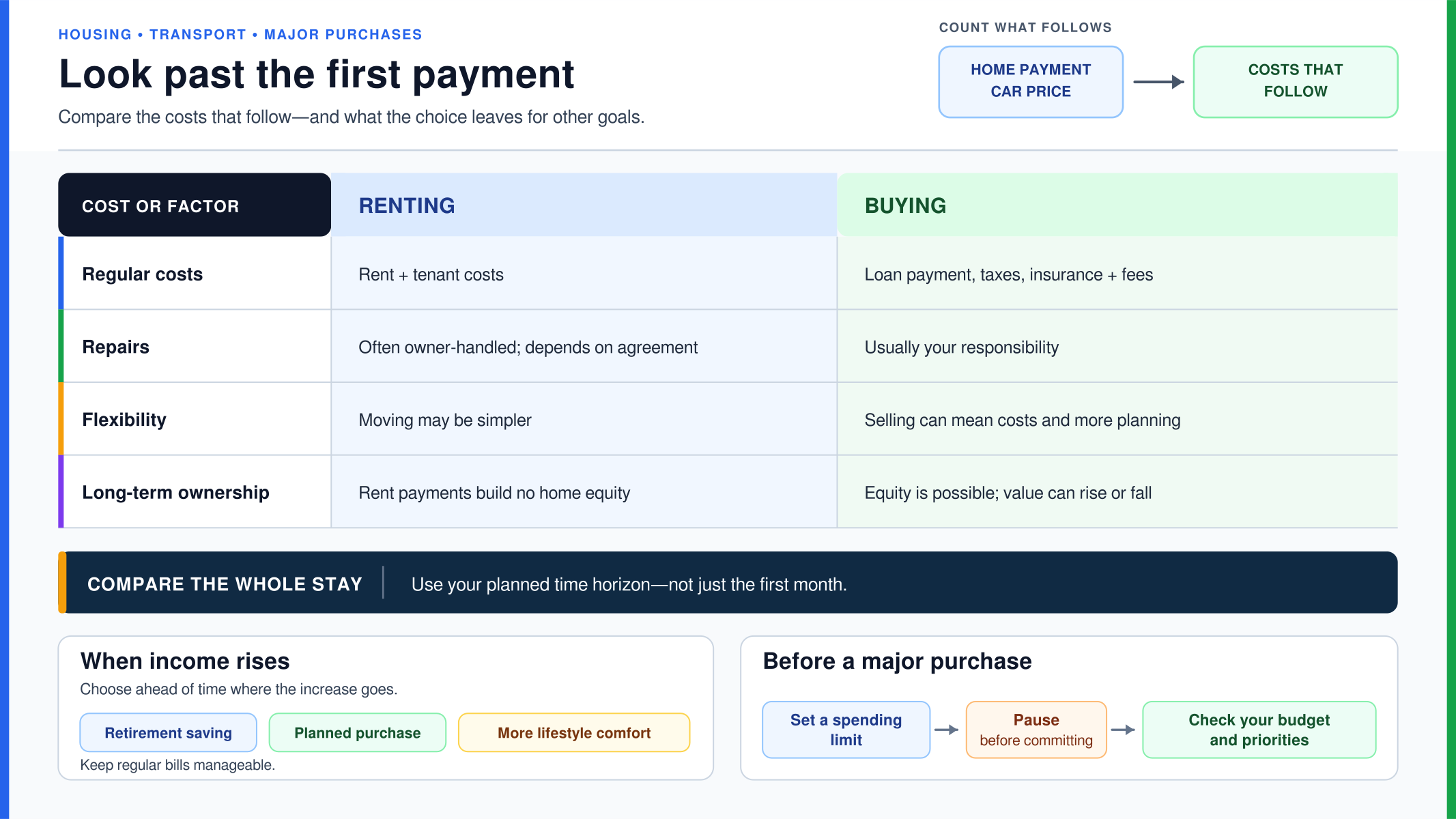
Housing and transportation can shape how much you have left to save, so compare the full cost before making a large commitment. Don’t judge a home only by its monthly loan payment or a car only by its purchase price. Look at the expenses that follow, and consider how the decision affects your other goals.
Compare the Full Costs of Renting and Buying
Renting and buying each have trade-offs. Buying may build ownership over time, but it also brings upkeep, insurance, taxes, and transaction costs; renting may offer flexibility, though rent can change and doesn’t create home equity. Use a comparison like this to organize your decision:
| Cost or factor | Renting | Buying |
|---|---|---|
| Regular housing cost | Rent and tenant costs | Loan payment, taxes, insurance, and fees |
| Repairs | Often handled by the property owner, depending on your agreement | Usually your responsibility |
| Flexibility | May make moving simpler | Can involve selling costs and more planning |
| Long-term ownership | No home equity from rent payments | Potential equity, but value can rise or fall |
Compare expected costs over the time you plan to stay, not just the first month’s payment.
Avoid Lifestyle Inflation as Your Income Rises
When your pay increases, decide in advance how much will go toward goals and how much can support a more comfortable lifestyle. For instance, you might direct part of a raise toward retirement contributions and part toward a planned purchase, while keeping regular bills manageable. Step 8: Set a spending limit before committing to a major purchase. That small pause helps you check whether the purchase fits your budget and priorities.
Protect Wealth and Review Your Plan Regularly
Step 9: Review your plan every few months and after major life changes. Check your savings, debts, investment mix, beneficiaries, and insurance coverage. The right protection depends on your circumstances, so consider whether health, home, auto, disability, or life coverage fits your needs. Don’t buy coverage you don’t understand; read the terms and ask a qualified professional about gaps. A Guardian Life overview of investment-based wealth building also discusses diversification, compounding, and tax efficiency. For a broader checklist, see Investopedia’s personal wealth guide. Keep records in one secure place so you can make changes promptly.
Conclusion
Growing wealth faster is less about finding a shortcut and more about making good financial decisions repeatable. Set goals with timelines, track your net worth, create room to save, and deal with high-interest debt. Then invest consistently in a way that matches your time horizon and risk comfort. Those steps give you a foundation for making progress without assuming that any investment will deliver guaranteed returns.
Start with one action today: write down a goal, review your last month of spending, or arrange a small automatic transfer. When that habit feels steady, take the next step. As your income, responsibilities, and plans change, update your budget and investment choices instead of treating the first version as permanent. If a decision involves complex tax, legal, or investment questions, consider speaking with a qualified professional who understands your situation.
Wealth building strategies work best when they support the life you want, not when they push you into avoidable risk. Keep your plan clear, your spending intentional, and your reviews regular. Progress may not look dramatic month to month, but steady contributions, manageable debt, and careful choices can help you build a stronger financial future over time.
Frequently Asked Questions
Frequently Asked Questions
Is it faster to build wealth by earning more or spending less?
How can I increase my income to build wealth faster?
Can I build wealth if my income is irregular?
How do I avoid lifestyle inflation when my income increases?
How can I tell whether a wealth-building opportunity is too risky or a scam?
Do I need to buy a home to build wealth?
Should I spend money on education or training to improve my finances?
What should I protect before focusing on faster wealth growth?
Sources
- How to Build Wealth Fast- This Chart Shows What it Takes
https://www.lynalden.com/build-wealthLyn Alden’s article outlines five tactics for building wealth, including paying off high-interest debt, establishing an emergency fund, and cutting spending.
- Build Wealth Over Time Through Saving and Investing
https://www.investor.gov/build-wealth-over-time-through-saving-and-investingInvestor.gov introduces saving and investing as ways to build wealth over time.
- How to Build Wealth: 9 Essential Steps
https://www.navyfederal.org/makingcents/investing/steps-to-start-building-wealth.htmlNavy Federal outlines nine steps for building personal wealth.
- How to build wealth through investments: A practical guide
https://www.guardianlife.com/wealth-management/how-to-build-wealth-through-investmentsGuardian Life’s guide describes long-term wealth building through investing, including compounding, diversification, tax efficiency, and consistent contributions.
- 3 effective strategies for building wealth
https://www.fidelity.com/learning-center/wealth-management-insights/3-effective-strategies-to-building-wealthFidelity presents three strategies for building wealth.
- Building Wealth
https://www.dallasfed.org/~/media/documents/cd/wealth/BuildingWealth.pdfThe Dallas Fed’s Building Wealth publication discusses how compound interest can help build wealth.
- California Department of Financial Protection and Innovation
https://dfpi.ca.gov/news/insights/five-steps-to-building-generational-wealthThe California Department of Financial Protection and Innovation outlines five steps toward generational wealth, from paying off debts to sharing financial wisdom.
- Investopedia’s personal wealth guide
https://www.investopedia.com/managing-wealth/simple-steps-building-wealthInvestopedia’s personal wealth guide covers managing wealth and building it through simple steps.
- 10 Tips For Money Management & Building Personal Wealth
https://www.localbank.com/resources-and-community/10-tips-for-money-management-and-building-personal-wealthLocal Bank offers ten tips on money management and building personal wealth.